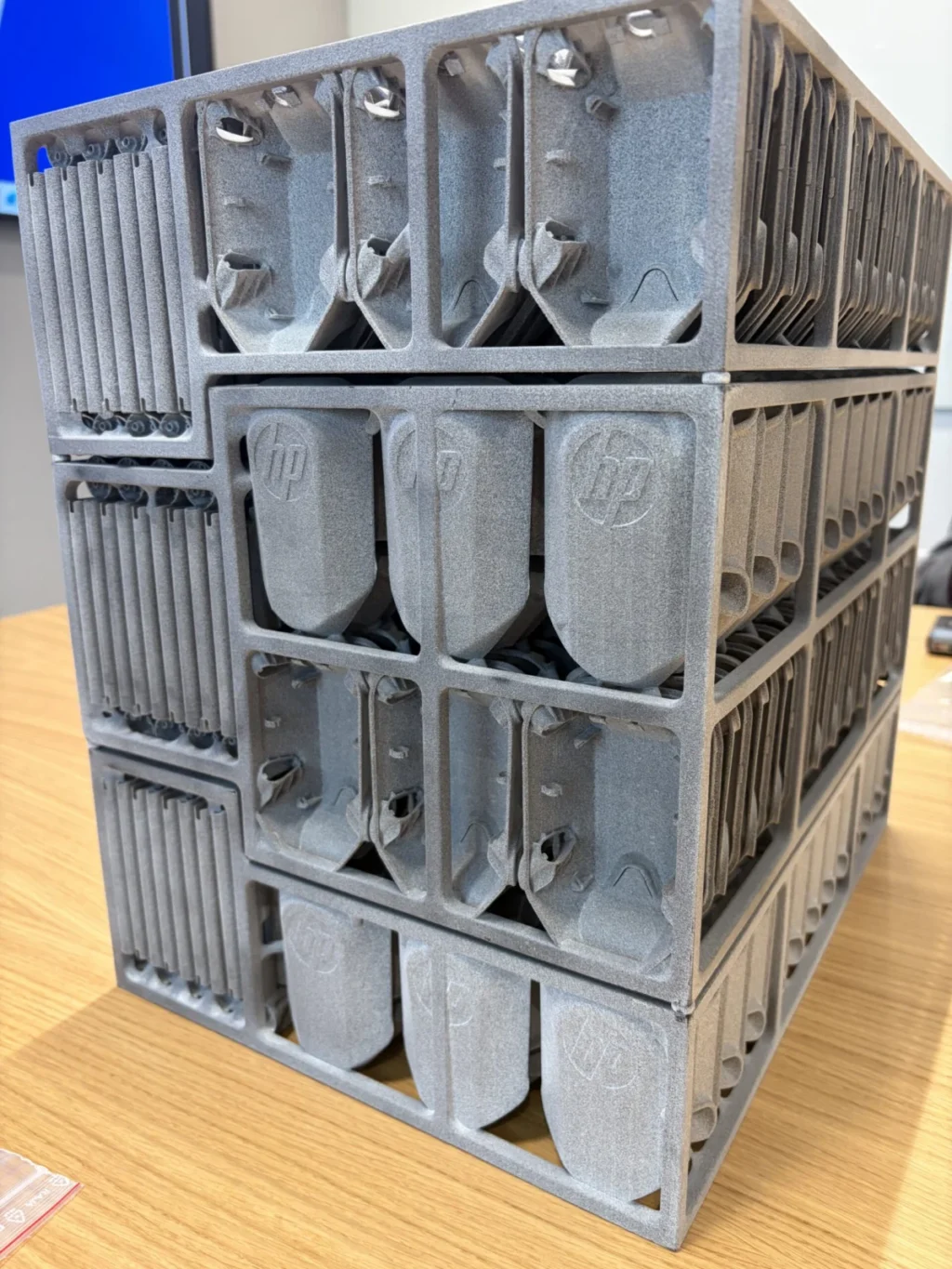
At this year’s RAPID event in Boston, a pivotal gathering for the additive manufacturing (AM) industry, HP Additive Manufacturing Solutions marked a significant milestone: ten years of innovation and growth in the 3D printing sector. The company used this occasion to unveil a comprehensive portfolio of advancements designed to broaden access, enhance performance, and drive deeper integration of additive manufacturing across diverse industries. These announcements, revealed amidst the dynamic atmosphere of RAPID, underscore HP’s commitment to transforming how products are conceived, designed, and manufactured.
The suite of innovations introduced includes the new entry-level Multi Jet Fusion (MJF) 1200 system, aimed at democratizing access to advanced 3D printing capabilities. Complementing this, HP showcased new materials and enhanced powder handling solutions for its Metal Jet platform, signaling progress in metal additive manufacturing. For the high-productivity Jet Fusion 5600 system, the company highlighted a new High Productivity print mode and the intriguing Dual Tone technology. Furthermore, the Industrial Filament 600 High Temperature (HP IF 600HT) 3D printer, a testament to HP’s expanding material capabilities, achieved general availability in the U.S. and Canada.

These announcements followed an exclusive opportunity for a select group of manufacturing industry journalists, including this author, to experience these innovations firsthand at HP’s state-of-the-art R&D Center of Excellence in Vancouver, Washington. This facility, a hub of innovation, provided a deep dive into HP’s additive manufacturing journey and its strategic direction.
HP’s Additive Manufacturing Journey: From Vision to Market Leadership
The sprawling 225,000-square-foot R&D Center of Excellence in Vancouver, Washington, serves as the nerve center for HP’s additive manufacturing endeavors. Strategically located within the "Silicon Forest" and a mere 15 minutes from Portland International Airport, this facility benefits from its proximity to a vibrant ecosystem of academic institutions and a skilled workforce. Alex Moñino, Senior Vice President and General Manager of HP Additive Manufacturing Solutions, described the location as "very desirable," highlighting its contribution to attracting top talent and fostering innovation.
HP’s foray into 3D printing began with a grand ambition: not merely to build sophisticated machines, but to fundamentally "change how things are made." Founded in 1939 with a modest capital of $538, HP has evolved into a global technology powerhouse with operations in over 180 countries and annual revenues exceeding $50 billion. The company’s additive manufacturing division, established with this transformative vision, has consistently pushed the boundaries of what’s possible.
The early days of HP’s AM business saw its first unit adopted by Materialise, a key player in the additive manufacturing software and services sector. The company solidified its presence with the opening of its Barcelona headquarters in 2018. In the last three years, HP has strategically shifted its focus from hardware sales to a more applications-driven approach, a move that has proven exceptionally profitable. Moñino reported a remarkable 30% year-over-year growth for the second consecutive year, fueled by significant traction in sectors such as automotive, consumer goods, drones, orthotics & prosthetics (O&P), and robotics. This expansion is largely driven by service bureaus, which constitute approximately 60% of HP’s customer base, followed closely by in-house development teams.
The scale of HP’s operations is staggering. "We’ve printed over six million parts in the last month," Moñino stated, underscoring a demand that currently outpaces supply. This "fantastic problem to have," as Moñino described it, reflects the growing confidence and reliance on additive manufacturing for production-level output.
The Science Behind Multi Jet Fusion (MJF)
Clara Remacha, Head of Product Management for HP 3D Printing Polymers, offered an insightful explanation of the core technology driving HP’s success: Multi Jet Fusion (MJF). Addressing the needs of new entrants, particularly those accustomed to Fused Deposition Modeling (FDM), Remacha elucidated the distinct advantages of MJF.
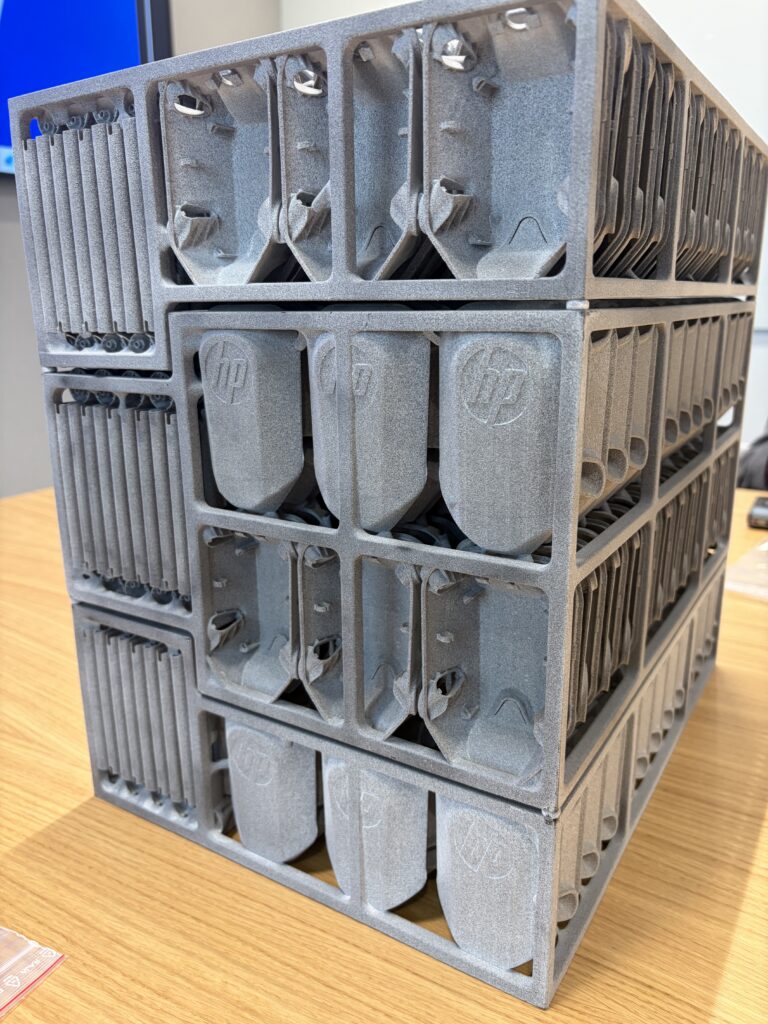
MJF operates on a powder bed fusion principle. In this process, after a layer is fused by an infrared lamp, a new layer of powder is applied, and the components are essentially buried within this powder bed. "Once you’ve done the top layer, you lose control; it’s just physics from that point on," Remacha explained. "But you do have control over the top layer." This precise control over the fusing process is a key differentiator.
HP employs infrared lamps for area-based fusing, a method that contributes significantly to the technology’s inherent productivity. Unlike point-based fusing, which is highly dependent on part geometry and packing density, area-based fusing offers predictable and consistent results regardless of these variables. This allows for faster print speeds and higher throughput. Furthermore, MJF’s process utilizes less reactive materials due to its efficient fusing mechanism.
A critical element of MJF’s precision lies in its use of two proprietary agents: a detailing agent and a fusing agent. The printer dynamically adjusts the application of these agents "on the fly," precisely controlling the fusion process at a voxel level. This sophisticated approach enables the creation of highly detailed and robust parts. Over the past decade, HP has achieved a remarkable reduction in its cost per part, exceeding 50%. "We are one of the most competitive technologies for powder," Remacha asserted, a claim substantiated by industry adoption.
The growing confidence in HP’s MJF technology is vividly illustrated by the significant investment from ADDMAN, a prominent U.S. 3D printing services provider. ADDMAN recently announced its intention to install an additional 81 HP Jet Fusion 5620 Pro printers, expanding its MJF fleet to over 125 systems. The company operates its HP printers around the clock, running three shifts daily, a testament to the technology’s reliability and scalability for production environments.
Customer Voices: The Impact of MJF in Real-World Applications
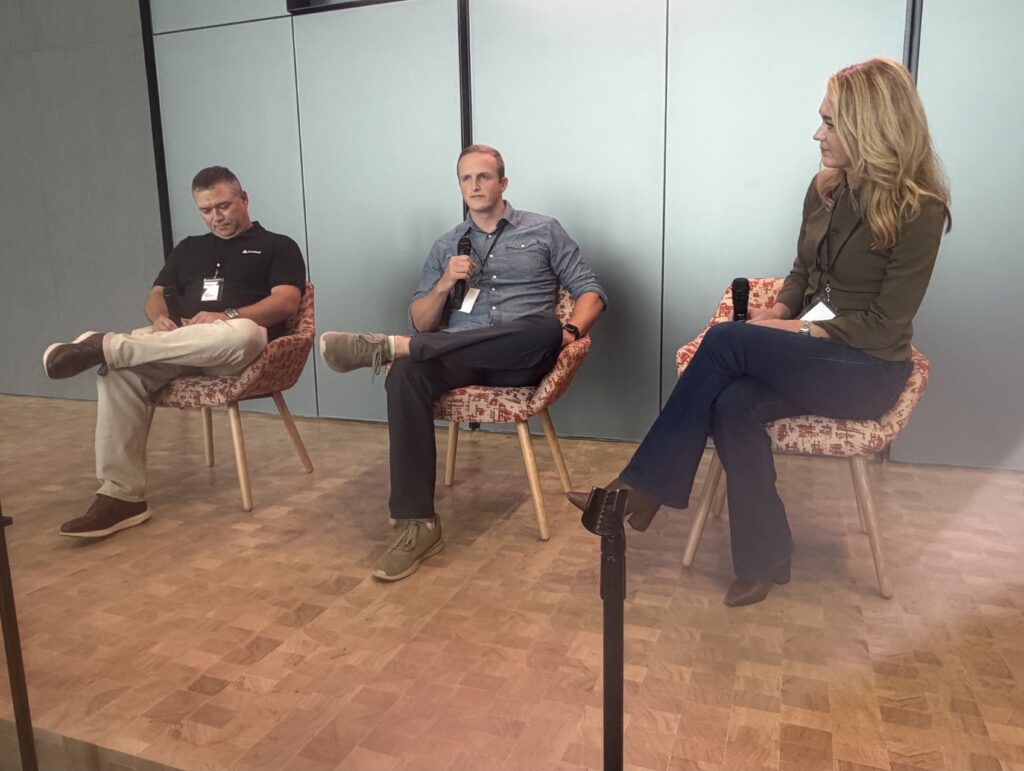
The significance of MJF technology was further amplified during a customer panel at HP’s Vancouver facility. Keith Schneider, General Manager at ADDMAN Polymer, and Cody Laursen, Founder and CEO of Streamline 3D, shared their experiences, moderated by Katelyn Lennon, HP’s Senior AMS Campaign Manager. Both companies have been leveraging MJF for approximately five years, a period during which additive manufacturing has transitioned from a niche technology to a recognized production method.
Laursen emphasized the speed at which MJF enables parts to reach customers, stating, "Now, additive is recognized as a legitimate way to make parts at a high scale, much more than 5 years ago." Schneider echoed this sentiment, highlighting ADDMAN’s focus on scalability and the increasing adoption of MJF as production demands rise.
When asked about business optimization through MJF, Laursen projected a future of continued improvement: "It will keep getting faster and less expensive as time goes on." Schneider pointed to the strategic advantage of managing a "queue of different parts you can pull from so you can maximize the build," illustrating the efficiency gains from optimized print job management. While neither ADDMAN nor Streamline 3D are the primary target market for the new 1200 system, Schneider acknowledged its value as a "great entry point into the technology."
Charting the Course: HP’s Vision for Additive Manufacturing’s Future
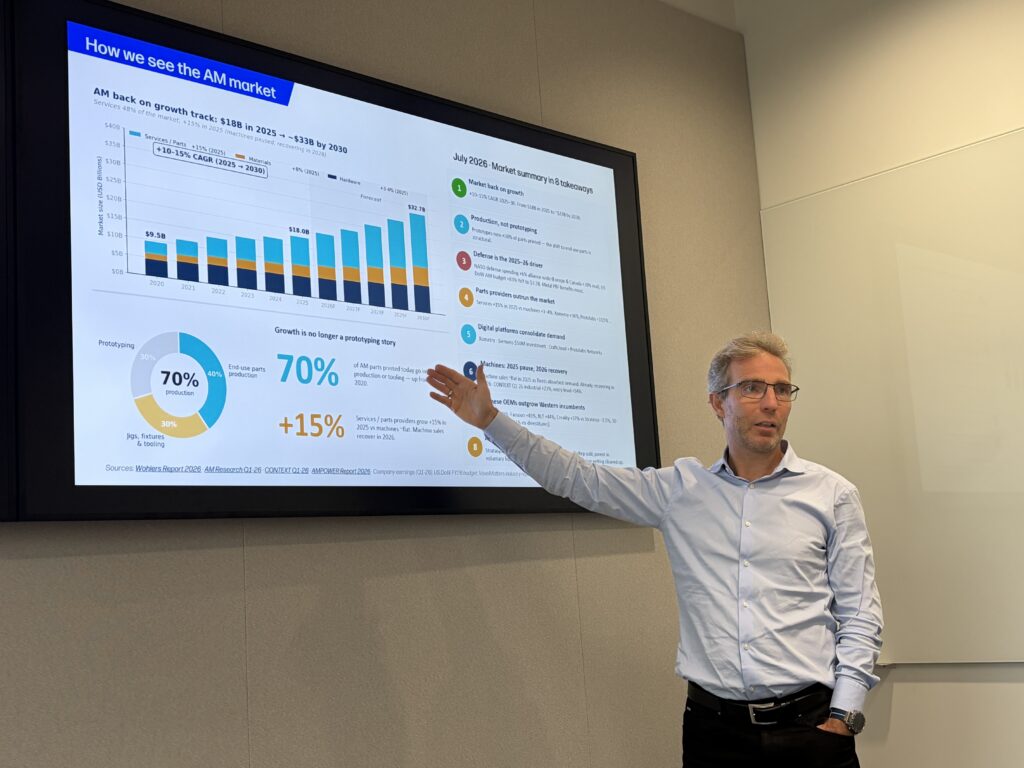
François Minec, Vice President & Global Head of Sales and Business Development for HP AM Solutions, provided a forward-looking perspective on the industry and HP’s strategic objectives. He observed a global recovery in manufacturing and a resurgence in additive manufacturing’s growth trajectory. Minec articulated a deliberate approach, stating, "For years, the 3D printing industry has been promising a lot and making crazy claims. HP is taking a stand. We want to make sure we’re trusted, so we’re under-promising and over-delivering."
HP’s ambition is to unlock the full potential of additive manufacturing by accelerating adoption, maintaining its leadership position, exploring new markets, and significantly reducing the total cost of ownership (TCO) by 50% within the next three years.
Several upcoming product developments are poised to support these goals. The Dual Tone mode, set to be released as a free upgrade for the 5600 system in early 2027, will enable the production of two-tone white and grey parts with integrated surface features. This capability promises to streamline post-processing and enhance the customization of medical devices, particularly in orthotics and prosthetics.
HP is also actively expanding its material portfolio. New polymer materials in development include PA12 W (true white), PA12 S (enhanced surface smoothness in partnership with Arkema), and PA12 FR (flame retardant, developed with Evonik). In the realm of metals, HP is collaborating with industry leaders such as GKN Additive (for copper applications) and Continuum and INDO-MIM (for nickel superalloys), signaling a robust commitment to metal additive manufacturing.
Expanding Horizons: HP’s Industrial Filament and the MJF 1200
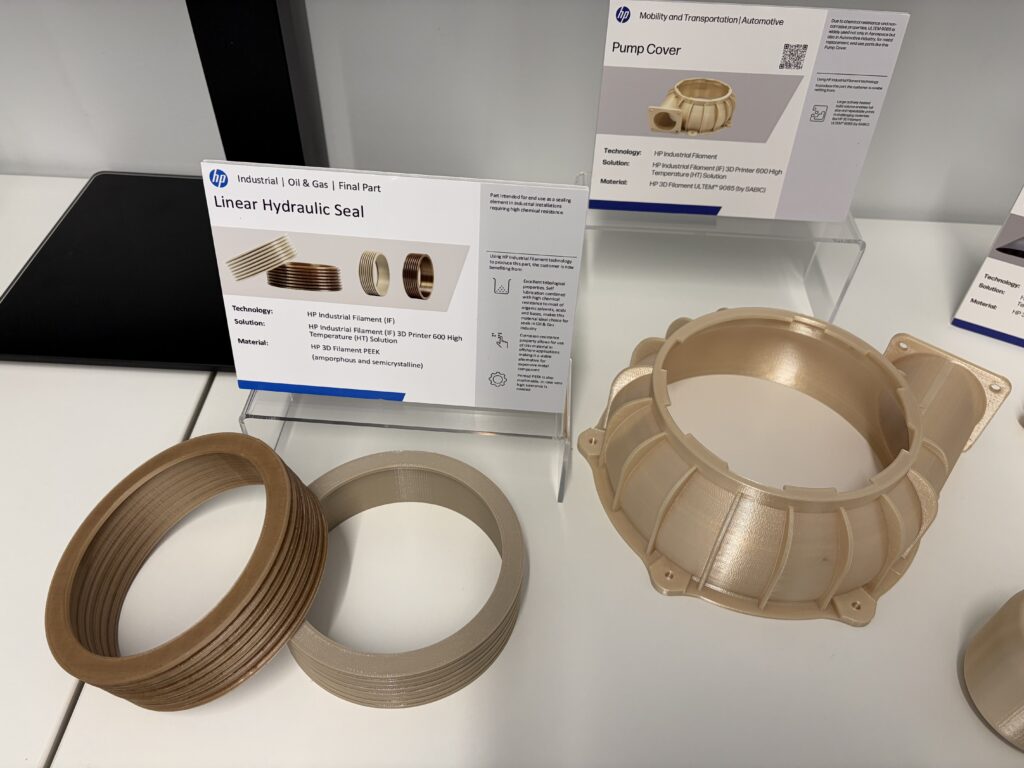
Ferran Vilanova, Director of 3D Business, highlighted the significant market opportunity for high-temperature materials like PEEK and ULTEM 9085, acknowledging their cost but also their indispensability for certain high-performance applications. "But we’re missing out on a big chunk of the market if we’re not working with this," he stated.
In response, HP launched the HP IF 600HT earlier this year, an open materials platform designed to address this need. The system features three distinct print modules to accommodate various temperature requirements and is complemented by a Material Management System (MMS). This platform leverages HP’s established filament technology while incorporating features tailored for industrial environments in sectors like aerospace, defense, railway, and motorsports.
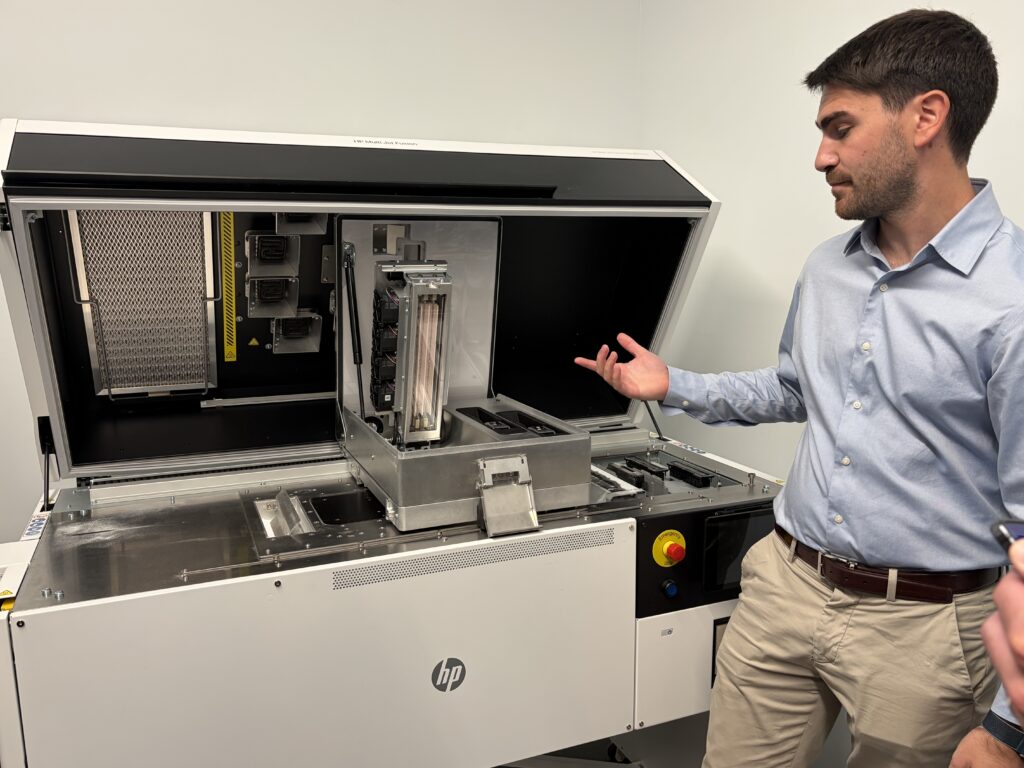
The unofficial star of HP’s recent announcements is the MJF 1200 system, detailed by Product Manager Marc Garcia. Addressing the persistent demand for greater accessibility, Garcia explained the motivation behind the 1200’s development: "We kept hearing one thing—how can we bring this technology to everyone?" The previous MJF systems, while powerful, presented challenges in terms of office integration and cost for entry-level users seeking professional-grade solutions. A hackathon initiated by HP several years ago spurred the creation of a more compact and accessible MJF system, culminating in the 1200.
The MJF 1200 is designed for simplicity and ease of use. It features an integrated carriage and can operate with standard electrical outlets. Its 12-liter build volume accommodates gravity-feed and manual bucket management, simplifying material handling compared to the pneumatic transport systems found in larger machines. Despite its compact design, the 1200 inherits proven HP technologies, including a split workflow, electronics derived from HP’s 2D printing division, automated unpacking integrated into the MMS, and an onboard camera.
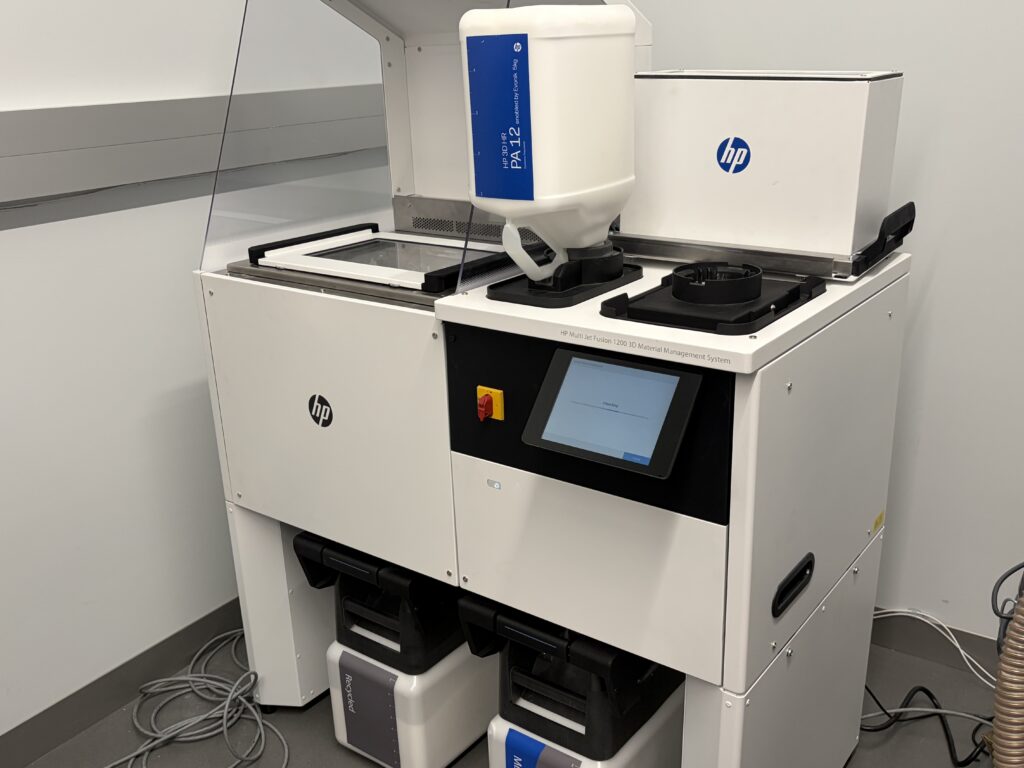
The MJF 1200 is priced competitively, with the printer, Magics build prep software, and unpacking station available for approximately $60,000, or around $48,000 for the printer alone. Initially launching with PA12 material, HP plans to introduce additional material options. Garcia reported a "pleasant surprise" in the initial order volume for the 1200, suggesting that the system might enter allocation mode sooner than anticipated. The primary demographic expressing interest in the 1200 is small to medium-sized companies, a segment HP has historically found challenging to reach.
HP encapsulates the MJF 1200’s value proposition with three key attributes: strong, easy, and fast. The true innovation, however, lies in the Material Management System (MMS). Garcia highlighted that customer interest often centers on the automation of post-processing tasks like unpacking and depowdering. The MMS, utilizing quiet vibrations, enables the recovery and reuse of approximately 95% of printed powder, contributing to material efficiency and sustainability.
Applications Taking Flight: MJF’s Impact Across Industries
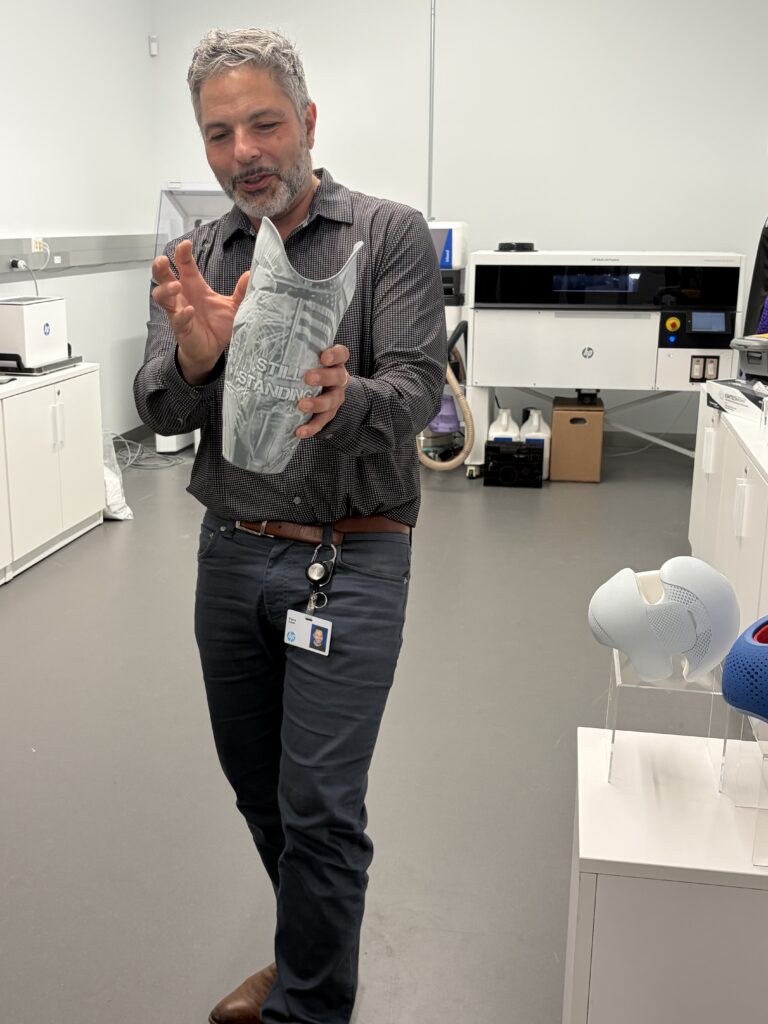
During the visit to the Vancouver site, attendees were presented with a diverse array of applications enabled by MJF technology. Brian Ingold, Global Head of Business Development & Applications Solutions, noted that the orthotics and prosthetics (O&P) sector has "crossed the chasm" in its adoption of additive manufacturing, with an estimated 7% of O&P printing currently utilizing MJF. "It’s a great success story. We consider ourselves part of the O&P industry," Ingold remarked.
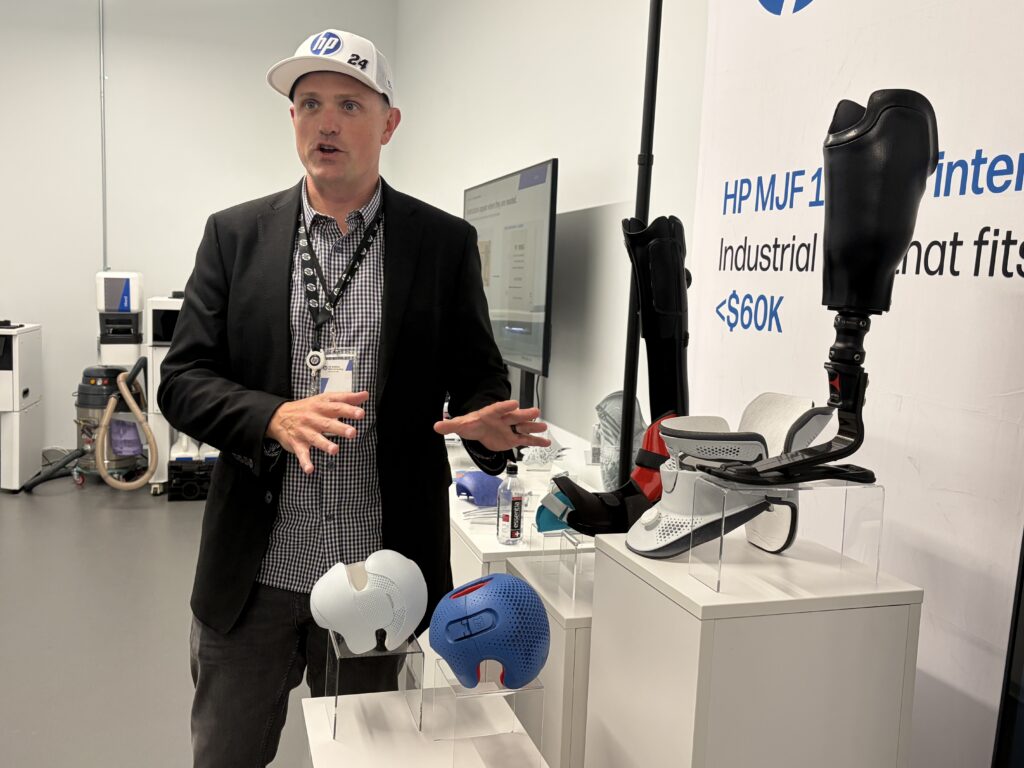
Pierre Kaiser, Head of 3D Design at HP, showcased the potential for highly customized medical devices, such as 3D-printed neck braces that can be "medically designed for every patient in a unique way." He demonstrated a brace with an integrated mechanism allowing patients to wear it while eating. HP’s collaboration with the Veterans Affairs (VA), described as "probably the largest O&P provider in the world," further solidifies its commitment to this field. The new Dual Tone technology is particularly valuable for O&P applications, offering enhanced customization and aesthetic integration.
Ingold also presented innovative applications in the drone sector. He showcased a lightweight, foam-light drone design that, while complex to assemble, can be optimized with AI. By having ChatGPT "read" the assembly manual and use Dual Tone technology to embed assembly instructions directly onto each part, HP is revolutionizing the assembly process. Furthermore, Ingold demonstrated a build volume filled with quadcopter parts, illustrating HP’s capacity to print approximately 130 parts per quadcopter simultaneously. The company’s ambition extends to the development of underwater drones (UUVs).
Matthew Smith, Principal Applications Engineer, provided insights into the advancements in metal additive manufacturing using HP’s Metal Jet technology. He highlighted the increasing use of metal AM for applications demanding "more complexity in smaller spaces," such as intricate manifolds and piping systems.
Sustained Momentum and Future Outlook
In a one-on-one conversation, Moñino reiterated the strong momentum HP is experiencing, particularly in the U.S., as evidenced by the significant ADDMAN investment. "We have a strong funnel across the world and in particular the U.S.," he stated. His primary focus remains on enabling supply to meet burgeoning demand, describing it as "my biggest job right now as a general manager."
Looking ahead, Moñino emphasized HP’s commitment to "enabling demand of parts" by focusing on applications "application by application, segment by segment." This strategy involves empowering engineering teams and leveraging digital platforms like Xometry to make MJF the preferred choice. The #HPMadewithMJF campaign aims to raise awareness among engineers who may not yet be fully acquainted with the technology’s capabilities.
HP’s strategic approach to market engagement involves a balanced presence at both broad industry shows and specialized vertical events, such as XPONENTIAL for drones and the American Academy of Orthotics & Prosthetics (AAOP) conference. The company is also actively participating in robotics shows, recognizing the sector’s rapid expansion. "It’s about being present in the segments," Moñino concluded, underscoring that sustained business growth is driven by targeted application development rather than simply maximizing printer sales. This focus on applications ensures that HP’s innovations are not just technological advancements but solutions that address real-world manufacturing challenges.