In the pursuit of understanding the fundamental building blocks of the universe, researchers at the European Organization for Nuclear Research (CERN) have uncovered a persistent and significant anomaly that could signal the existence of physics beyond our current scientific framework. A new analysis from the Large Hadron Collider beauty (LHCb) experiment, published in the prestigious journal Physical Review Letters, has identified a four-standard deviation discrepancy in the decay of a specific subatomic particle known as the B meson. This finding, centered on the angular distribution of decay products, reinforces a decade-long trend of observations that suggest the Standard Model of particle physics—the prevailing "instruction manual" for the universe—may be incomplete.
The Standard Model has served as the bedrock of particle physics for over half a century, successfully predicting the existence of the Higgs boson and detailing how quarks, leptons, and gauge bosons interact through three of the four fundamental forces: electromagnetism, the weak force, and the strong force. However, despite its immense success, the model remains silent on several cosmic mysteries. It offers no explanation for dark matter, which constitutes the majority of the universe’s mass, nor does it account for the prevalence of matter over antimatter or provide a quantum-scale description of gravity. These gaps have led physicists to search for "cracks" in the model—subtle deviations in particle behavior that could hint at the presence of undiscovered particles or forces.
The Significance of the Beauty Quark in High-Energy Physics
The focus of this latest breakthrough is the "beauty quark" (or b quark), a third-generation elementary particle that is significantly heavier than the up and down quarks found within protons and neutrons. Because of their high mass and relatively long lifespan in the context of subatomic timescales, beauty quarks are ideal candidates for probing new physics. When beauty quarks are produced in high-energy collisions at the Large Hadron Collider (LHC), they often form B mesons, which quickly decay into other particles.
The specific decay channel under scrutiny involves a B meson transforming into a K* (K-star) meson and two muons. In the Standard Model, this process is exceptionally rare and occurs only through complex "loop" diagrams—quantum processes where virtual particles flicker in and out of existence. These virtual particles act as intermediaries, and if unknown particles such as leptoquarks or new Z’ bosons exist, they could theoretically enter these loops, exerting a measurable influence on the decay rate and the trajectory of the resulting particles.
Statistical Tension and the Four-Sigma Discrepancy
In particle physics, the "gold standard" for a discovery is a five-standard deviation result, commonly referred to as five-sigma. This threshold indicates a probability of approximately one in 3.5 million that the observed result is a statistical fluke. The current LHCb finding sits at four-sigma, which translates to a p-value of roughly 0.003 percent. While not yet meeting the formal criteria for a "discovery," a four-sigma result is considered "strong evidence" and is of immense interest to the global scientific community.
The discrepancy was specifically observed in the angular distribution of the B → Kμ⁺μ⁻ decay. Rather than just looking at how often the decay occurs, researchers analyzed the specific angles at which the K meson and the two muons fly away from each other. The Standard Model provides a precise prediction for this geometric pattern. However, the data collected by LHCb shows a systematic shift away from these predictions.
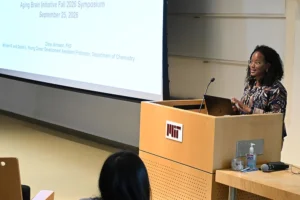
To ensure the validity of these findings, the analysis was conducted using a "blind" methodology by two independent teams. One of these teams was led by Eluned Smith, an assistant professor of physics at the Massachusetts Institute of Technology (MIT) and a researcher at the Laboratory for Nuclear Science. By performing the analysis independently and comparing results only at the final stage, the researchers minimized the risk of human bias or systematic errors influencing the outcome.
A Decade of Anomalies: A Chronology of Discovery
The recent four-sigma result does not exist in a vacuum; it is the latest entry in a series of "flavor anomalies" that have intrigued physicists since the early 2010s. The timeline of these observations highlights a consistent pattern of tension with the Standard Model:
- 2013: The LHCb experiment first reports a tension in the angular distribution of B → K*μ⁺μ⁻ decays, specifically in an observable known as P5′. This initial hint sparked a wave of theoretical papers suggesting new physics.
- 2015: Further data from the LHC’s first run (Run 1) confirmed that the P5′ anomaly remained, maintaining a statistical significance of approximately three to four sigma.
- 2017-2019: Measurements of "lepton universality"—the idea that the Standard Model should treat electrons and muons identically—showed signs of breaking in B meson decays. These measurements (RK and RK*) suggested that B mesons might decay into electrons more frequently than muons, a direct violation of Standard Model principles.
- 2022: A refined analysis of the lepton universality measurements brought the results closer to the Standard Model, dampening some of the initial excitement. However, the angular distribution anomalies in the muon-specific channels, like the one reported today, remained stubbornly present.
- 2024: The latest analysis, incorporating more sophisticated theoretical modeling and a larger dataset, reinforces the four-sigma discrepancy in the angular observables, shifting the focus back to the potential existence of new heavy particles.
Theoretical Implications and the Search for New Forces
If the four-sigma discrepancy is eventually confirmed as a sign of new physics, it would necessitate a radical revision of our understanding of the universe. Theoretical physicists have already begun proposing models to explain these observations. Two primary candidates for the "new physics" are:
- Leptoquarks: These are hypothetical particles that would allow quarks and leptons to interact directly. They are predicted by many Grand Unified Theories (GUTs) which seek to combine the strong, weak, and electromagnetic forces into a single framework.
- Z’ (Z-prime) Bosons: These would be heavy, neutral carrier particles for a previously undiscovered fifth fundamental force. Unlike the standard Z boson, which mediates the weak force, a Z’ boson might couple more strongly to the third generation of particles, such as beauty quarks and muons.
However, researchers remain cautious. Professor Eluned Smith noted that the discrepancy could also stem from "subtle limitations in our theoretical calculations of strong-interaction dynamics." The strong force, which governs how quarks are bound within mesons, is notoriously difficult to calculate with high precision. If the theoretical "baseline" for the Standard Model is slightly off due to these complex hadronic effects, what looks like new physics could simply be a misunderstanding of the strong force’s behavior at low energies.
The Future of LHCb: Run 3 and AI-Driven Upgrades
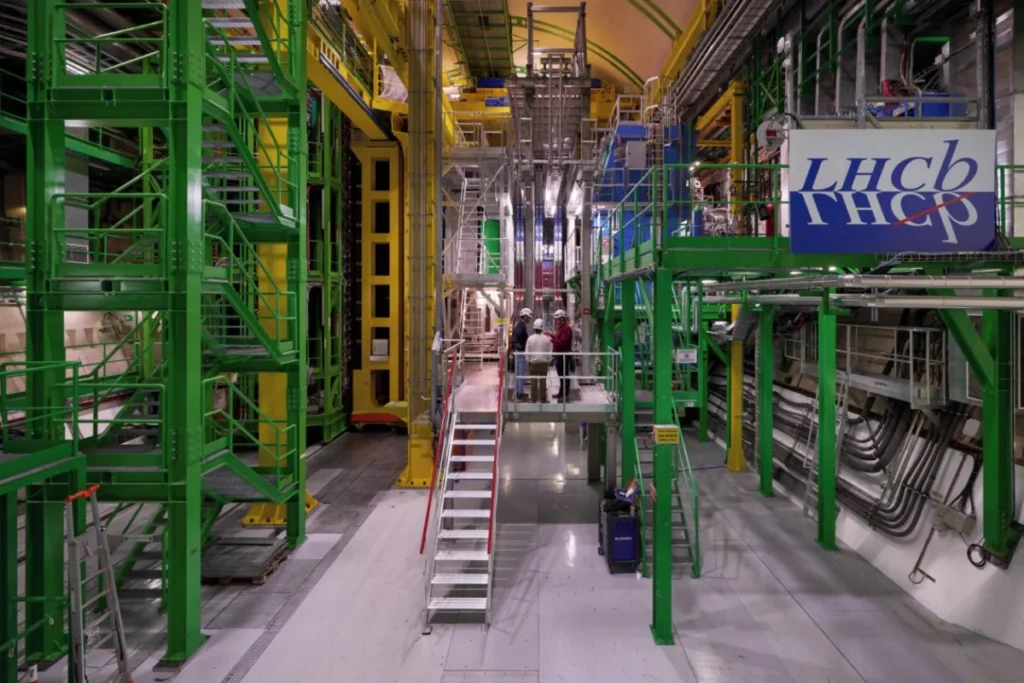
The resolution of this mystery lies in more data and better technology. The LHC is currently in its third operational period, known as Run 3, which began in 2022. This phase features a significantly upgraded LHCb detector capable of handling much higher collision rates.
One of the most critical upgrades is the implementation of a fully software-based real-time event selection system, or "trigger." In previous runs, the experiment relied on hardware triggers that filtered out many potentially interesting decays to manage data flow. The new software trigger allows the experiment to record beauty decays at a much higher rate, providing the statistical power needed to push the current four-sigma result toward the definitive five-sigma threshold.
Looking further ahead, the scientific community is preparing for the "High-Luminosity LHC" era and the LHCb Upgrade II. Professor Smith and her colleagues are currently developing low-latency artificial intelligence (AI) systems. These AI algorithms will be integrated directly into the front-end electronics of the detector, performing real-time data processing and compression in high-radiation environments. This technology will allow the experiment to collect data at rates up to 40 times higher than the original detector design, offering an unprecedented look at the rarest subatomic processes.
Impact on the Global Scientific Landscape
The implications of these findings extend far beyond the walls of the CERN laboratory in Geneva. The search for physics beyond the Standard Model is a global endeavor involving thousands of scientists and billions of dollars in infrastructure. A confirmed discovery would represent the first time since the mid-20th century that a fundamentally new force or particle has been identified that does not fit within the existing theoretical framework.
For the academic community, the four-sigma result provides a clear roadmap for future research. It validates the "indirect search" strategy—using high-precision measurements of rare decays to look for the ghosts of heavy particles—complementing the "direct search" strategy used by other LHC experiments like ATLAS and CMS, which aim to produce new particles directly by smashing protons together at the highest possible energies.
As the LHC continues to probe the frontiers of the subatomic world, the persistent anomalies in beauty quark decays remain the most promising lead in the quest to solve the greatest mysteries of the cosmos. Whether the current discrepancy is the first glimpse of a new layer of reality or a final lesson in the complexities of the strong force, it ensures that the coming years will be among the most pivotal in the history of particle physics.