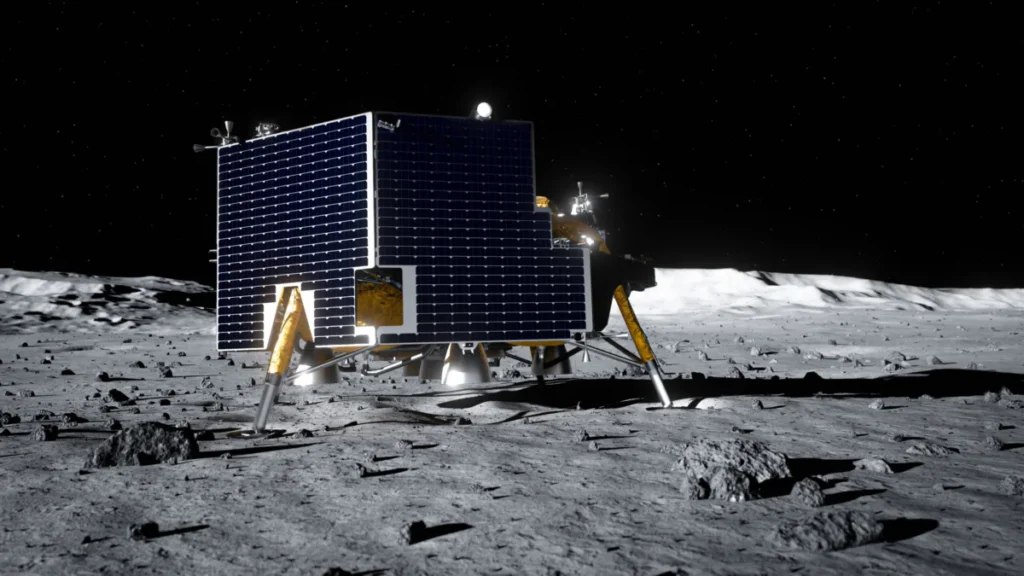
The ambitious timeline for robotic lunar landings, crucial stepping stones for NASA’s long-term Moon Base program, is experiencing significant shifts, with several key missions now slated for 2027. While Voyager Technologies’ Griffin lander remains on track for a potential November launch, the subsequent missions from Blue Origin and Intuitive Machines have been pushed back, impacting the initial phases of lunar surface exploration and infrastructure development. This recalibration of schedules, as detailed by NASA’s Moon Base program manager Carlos García-Galán at the Glenn Space Technology Symposium in Ohio, underscores the inherent complexities and evolving challenges in establishing a sustained human presence on the Moon.
Key Lander Missions Shift to 2027
Originally envisioned as part of a robust 2024 deployment, the lunar landing schedule has been significantly altered. Griffin, developed by Voyager Technologies, is currently the sole lander aiming for a 2024 touchdown, with its launch window opening no earlier than November. This mission is poised to explore Mons Mouton, a strategically important high-altitude site near the lunar south pole. Its payload includes a robotic FLIP rover from Astrolab, designed to test critical hardware for future crewed rovers. The primary objectives for Griffin are to validate the reliability of lunar access and gather vital ground truth data from the landing zone, information essential for selecting future base locations.
However, the progress of other significant lunar landers has encountered setbacks. Blue Origin’s Mark 1 Endurance and Intuitive Machines’ Nova-C Trinity, both initially slated for this year, are now projected for launch in "the first part of 2027." Firefly Aerospace’s Blue Ghost 2, the fourth lander in this initial cohort, is scheduled for a later launch in 2027. These delays, while pushing back immediate lunar surface capabilities, are being managed within the broader context of NASA’s long-term lunar exploration strategy.
The Ripple Effect of Delays: Understanding the Causes
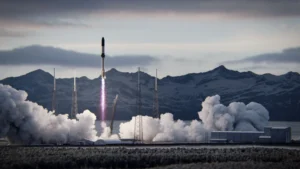
The primary driver behind the delay of Blue Origin’s Mark 1 Endurance mission has been publicly attributed to the May explosion of a New Glenn rocket on its Florida launch pad. This incident has necessitated a comprehensive review and rebuilding of critical launch infrastructure. David Limp, Blue Origin’s CEO, acknowledged the impact of this event, stating in a recent X post that the company is making "incredible progress" in its recovery efforts. Despite this setback, NASA Administrator Jared Isaacman reiterated in June that launching Mark 1 aboard the New Glenn rocket remains "Plan A." However, the agency is actively exploring alternative launch solutions as a contingency measure, reflecting a pragmatic approach to ensuring mission success.
Intuitive Machines has also revised its launch schedule for the Nova-C Trinity. Steve Altemus, CEO and President of Intuitive Machines, indicated during an August earnings call that the Nova-C launch is now anticipated for "the first quarter of 2027." This adjustment allows for further refinement of the spacecraft and integration with its launch vehicle.
Mission Objectives and Technological Demonstrations
The delayed landers are not merely symbolic; they represent critical technology demonstrations for NASA’s overarching Moon Base initiative. The ambitious goal is to have initial elements of a lunar surface base in place by 2030. The current phase, extending through 2029, is dedicated to these crucial technology demonstrations and the meticulous site selection process for the base.
Griffin’s Role in Early Exploration
Voyager Technologies’ Griffin lander is set to make a significant contribution to this preparatory phase. Its landing at Mons Mouton is strategically chosen for its elevated vantage point, offering potential advantages for communication and scientific observation. The inclusion of the Astrolab FLIP rover signifies a move towards more sophisticated robotic surface operations, testing the capabilities needed for extended exploration and resource utilization. The successful deployment and operation of this rover will provide invaluable data on the lunar environment, including its regolith properties, thermal variations, and potential hazards, all of which are crucial for designing safe and sustainable habitats.
Nova-C and Blue Ghost 2: Progress and Objectives
The Intuitive Machines Nova-C lander, currently in its final assembly stages, has already undergone initial power-on tests. Its mission targets the Reiner Gamma area, a region of significant scientific interest on the Moon. The spacecraft’s readiness for a 2027 launch indicates a strong trajectory for its technological demonstrations.
Similarly, Blue Origin’s Mark 1 lander is reported to be largely assembled. Jacki Cortese, Blue Origin’s Senior Director of Civil Space, outlined the next critical milestone: fueling the lander for pre-encapsulation testing. This step is vital before the lander is integrated with its launch vehicle for its early 2027 flight. Cortese emphasized the inherent risks and rewards associated with the maiden flight of any lunar lander, highlighting the pioneering nature of these missions.
The Phased Approach to a Lunar Base
Carlos García-Galán elaborated on the strategic, phased approach NASA is employing for its Moon Base program. Phase One, spanning until 2029, is characterized by a distributed network of assets across vast lunar expanses. This strategy is driven by the necessity of deploying multiple landers to validate the reliability of lunar landings from diverse locations. The data gathered from these varied landing sites will be instrumental in identifying an optimal location for the base, considering factors such as consistent solar illumination for power generation, stable thermal conditions, and unobstructed communication pathways to Earth.
"Phase One is going to look like a scattered set of assets across hundreds of square miles," García-Galán stated, "because we need multiple landers to demonstrate that we can land reliably and to get the ground truth data from different locations, so we can pick an area that we think is going to be amenable to a habitation site because of the lighting or thermal conditions and a direct line of sight to Earth."
Following this intensive demonstration and site selection period, Phase Two will transition to the actual construction and expansion of lunar infrastructure. This marks a significant shift from testing and validation to tangible development of a permanent or semi-permanent human outpost.
Broader Context and Implications for Lunar Exploration
The delays in these robotic landing missions, while presenting immediate timeline challenges, do not fundamentally alter NASA’s long-term vision for lunar exploration and the establishment of a sustained presence. Instead, they highlight the intricate interplay of technological development, launch vehicle reliability, and programmatic execution that defines deep space missions.
The Artemis Program’s Interdependence
These robotic missions are integral components of the broader Artemis program, which aims to return humans to the Moon and establish a sustainable lunar presence. The success of the Artemis missions, including the human landings and the subsequent construction of a base, is critically dependent on the reliable performance of these precursor robotic missions. They provide essential data, test key technologies, and pave the way for the complex logistical operations required for human expeditions.
The Role of Commercial Partnerships
The involvement of commercial entities like Voyager Technologies, Blue Origin, Intuitive Machines, and Firefly Aerospace underscores NASA’s strategy of leveraging private sector innovation and capabilities. This public-private partnership model is crucial for driving down costs, accelerating development, and fostering a robust lunar economy. The challenges encountered by these companies, such as the New Glenn rocket incident, are not isolated to NASA’s program but reflect the broader realities of the burgeoning space industry.
Technological Advancements and Future Prospects
The delays also provide valuable time for further technological maturation. As engineers and scientists refine their designs and address any unforeseen issues, the resulting landers and their payloads are likely to be more robust and capable. This iterative process of development and testing is a hallmark of complex space exploration endeavors.
The successful deployment of these landers will not only support the Moon Base initiative but also contribute to a wealth of scientific knowledge. The data collected from various lunar regions will enhance our understanding of the Moon’s geological history, its potential for in-situ resource utilization (ISRU), and its role in the evolution of the solar system. Furthermore, the experience gained from operating complex robotic systems on the lunar surface will be invaluable for future missions to Mars and beyond.
The recalibration of launch schedules for these critical lunar landers signals a pragmatic adaptation to the realities of space exploration. While the timeline for establishing a sustained human presence on the Moon may be subject to adjustments, the underlying commitment to this ambitious goal remains unwavering. The successful execution of these robotic missions, despite their revised timelines, will be a testament to human ingenuity and perseverance in pushing the boundaries of exploration.