The ordinary graphite found in the common pencil, long considered a simple and well-understood material, has revealed a hidden layer of quantum complexity that could redefine the study of condensed matter physics. In a groundbreaking study published in the journal Nature, a research team led by the Massachusetts Institute of Technology (MIT) has identified that a specific microscopic arrangement of natural graphite can host multiple distinct superconducting states. This discovery is particularly significant because while thousands of materials are known to exhibit superconductivity—a state where electrons flow with zero electrical resistance—it is exceedingly rare for a single material to possess several different forms of this phenomenon.
The research focuses on rhombohedral graphene, a naturally occurring but difficult-to-isolate structure within graphite. Unlike the more common hexagonal stacking of carbon atoms, rhombohedral graphene consists of layers stacked in a precise, staircase-like offset. The team’s findings indicate that this material not only supports unconventional superconductivity but that these states are remarkably resilient to, and even enhanced by, powerful magnetic fields. This behavior contradicts the standard understanding of superconductivity, where magnetic fields typically disrupt the delicate pairing of electrons and destroy the zero-resistance state.
The Evolution of Graphene Research and the Rhombohedral Discovery
To understand the significance of this discovery, it is necessary to look at the trajectory of two-dimensional material science over the last two decades. Since the isolation of graphene in 2004, physicists have been fascinated by its "wonder material" properties, including its immense strength and high electrical conductivity. However, a major turning point occurred in 2018 with the discovery of "magic-angle" twisted bilayer graphene. By stacking two sheets of graphene and twisting them at a specific angle (approximately 1.1 degrees), researchers found they could induce superconductivity and other exotic electronic states.
While the "magic-angle" approach relies on artificial manipulation and precise engineering of the stack, the team led by Long Ju, the Lawrence C. and Sarah W. Biedenharn Associate Professor of Physics at MIT, chose a different path. Instead of twisting layers, they investigated naturally occurring configurations within graphite. Graphite is essentially a thick stack of graphene layers. While most of these layers align in a stable hexagonal pattern (ABAB), occasionally, sections form a rhombohedral pattern (ABCABC).
This rhombohedral configuration, though found in nature, is notoriously difficult to isolate. It is metastable, meaning it can easily collapse back into the standard hexagonal form during handling. The MIT team developed sophisticated techniques to identify and extract these specific flakes, focusing on samples containing four or five layers of graphene. By using the "Scotch tape method"—the same exfoliation technique used by the original discoverers of graphene—the researchers searched for the telltale signatures of rhombohedral stacking under high-powered microscopy before isolating the samples for experimentation.
Experimental Methodology: Tuning the Quantum Knobs
The discovery of multiple superconducting states was made possible by the researchers’ ability to "tune" the material using external experimental parameters, which Long Ju describes as "knobs." These knobs include the application of vertical electric fields, changes in electron density, and exposure to varying temperatures and magnetic fields.
In previous experiments, Ju’s group had observed superconductivity by "doping" the rhombohedral graphene—adding electrons to the system to see how they behaved. For the current study, they decided to explore the opposite regime: removing electrons to create "holes" (positive charge carriers) and lowering the electron density to near-zero levels.
To conduct these measurements, the MIT team collaborated with Dominik Zumbühl’s group at the University of Basel in Switzerland. The Swiss laboratory provided the specialized cryogenic equipment necessary to reach ultracold temperatures, specifically in the millikelvin range—just a fraction of a degree above absolute zero. At these temperatures, the thermal noise that usually masks quantum effects is silenced, allowing the researchers to observe the pure electronic behavior of the carbon atoms.
As the team progressively lowered the electron density and applied an external electric current, they monitored the voltage across the sample. When the voltage dropped to zero despite a current being present, it signaled the onset of superconductivity. By carefully adjusting the electron density and the displacement field (the electric field applied perpendicular to the sheets), they identified four distinct superconducting states emerging in the same material.
Resilience and Enhancement Under Magnetic Fields
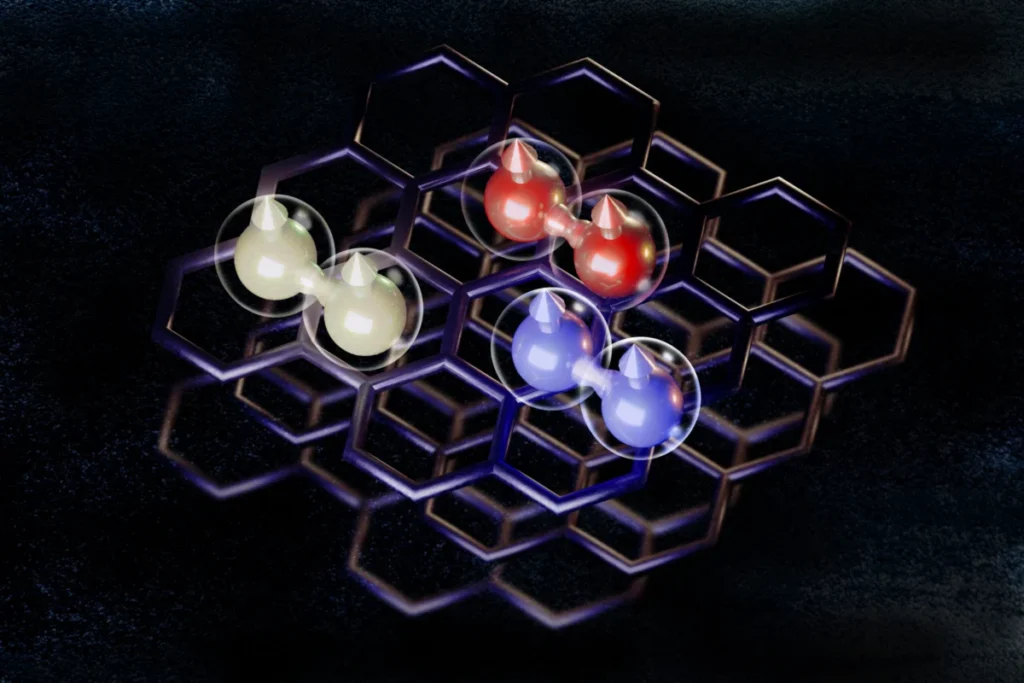
Perhaps the most startling aspect of the study is how these superconducting states reacted to magnetic fields. In conventional superconductors, such as the lead or niobium used in medical MRI machines, a magnetic field is the "enemy." Superconductivity relies on the formation of Cooper pairs—pairs of electrons that link up to glide through the atomic lattice. In most materials, these electrons have opposite spins (one up, one down), known as a "singlet" state. A magnetic field exerts a force on these spins, attempting to align them both in the same direction. If the field is strong enough, it breaks the pair, and the material reverts to a normal, resistive state.
In the MIT experiments, the researchers applied magnetic fields in two different orientations: parallel to the graphene sheets and perpendicular to them.
- Parallel Fields: The researchers found that three of the four superconducting states persisted even when exposed to a parallel magnetic field of up to 9 Tesla. For context, this is approximately 180,000 times stronger than the Earth’s magnetic field. Such resilience is a hallmark of "unconventional" superconductivity.
- Perpendicular Fields: When the field was applied perpendicularly, the team observed an even more "exotic" phenomenon. At a specific electron density, the superconductivity was not only preserved but actually grew stronger. The transition temperature—the point at which the material becomes superconducting—increased from 55 millikelvin to roughly 90 millikelvin. Furthermore, the material was able to carry 50 to 60 percent more current before the superconducting state collapsed.
"From a fundamental physics point of view, it’s very exotic that a magnetic field doesn’t kill superconductivity, and instead it boosts it," Long Ju noted. This suggests that the electrons in rhombohedral graphene may be pairing in a "triplet" state, where their spins are already aligned in the same direction. If the spins are already aligned, a magnetic field would not pull them apart; instead, it might stabilize the configuration.
Chronology of Discovery and Peer Collaboration
The findings published today represent the culmination of several years of intensive research into 2D carbon structures.
- 2021-2023: Long Ju’s lab at MIT begins focusing on rhombohedral graphene, moving away from the "twisted" graphene trend to explore natural stacking. They successfully isolate four-layer and five-layer samples.
- Early 2024: The group reports the discovery of a "chiral" form of superconductivity in rhombohedral graphene, where the electrons follow a specific handedness. They also report the observation of fractional electron charges, a phenomenon where electrons appear to split into smaller units.
- Late 2024 (Current Study): In collaboration with the University of Basel, Florida State University, and the National Institute for Materials Science in Japan, the team conducts high-field, ultracold experiments that reveal the four-state system and the magnetic enhancement effect.
The study’s co-first authors, Junseok Seo and Shenyong Ye of MIT, along with Armel Cotten from the University of Basel, performed the bulk of the device fabrication and data collection. The work was supported by the U.S. Office of Naval Research, highlighting the potential strategic importance of these materials in future sensing and computing technologies.
Technical Analysis and Broader Implications
The discovery of multiple superconducting states in a single, simple material like carbon has profound implications for both theoretical physics and practical engineering.
Theoretical Significance:
The fact that rhombohedral graphene hosts multiple states suggests that it is a highly tunable platform for studying quantum phase transitions. In most materials, you have one type of superconductivity, and that is it. In this system, researchers can jump between different superconducting "flavors" just by changing a voltage. This allows for a direct comparison of different pairing mechanisms within the exact same atomic lattice, providing a "clean" environment for testing theories that were previously purely mathematical.
Quantum Computing Potential:
Unconventional superconductors, particularly those that exhibit triplet pairing or chiral properties, are of intense interest for the development of topological quantum computers. These computers would use "Majorana fermions"—quasiparticles that are their own antiparticles—to store information in a way that is protected from environmental noise. Rhombohedral graphene’s ability to maintain superconductivity under high magnetic fields makes it a candidate for the platforms needed to host these elusive particles.
Material Simplicity:
The lead author, Junseok Seo, emphasized that the beauty of the discovery lies in the material’s simplicity. "We’re not only dealing with what nature gives us, but we’re applying additional controls to change it to something that nature does not give us, but that can exist in the same material," Seo stated. By using crystalline carbon—the same element found in coal and diamonds—researchers are proving that the most exotic physics do not necessarily require the most complex chemical compounds.
Conclusion and Future Outlook
The MIT-led study has effectively turned the "boring" pencil lead into a laboratory for high-energy physics. By demonstrating that rhombohedral graphene can host a family of unconventional superconducting states that thrive in magnetic fields, the researchers have opened a new frontier in 2D materials.
The next steps for the team involve deeper investigations into the microscopic origins of these states. While the "aligned spin" hypothesis provides a compelling explanation for the magnetic resilience, further spectroscopy and theoretical modeling are required to confirm the exact nature of the electron pairs. Additionally, the team plans to explore whether these properties can be maintained at slightly higher temperatures or if other natural stacking sequences (such as six or seven layers) yield even more complex phases.
As the scientific community absorbs these "nutritional" experimental results, as Long Ju described them, the focus on rhombohedral structures is likely to intensify. The discovery proves that even in the most well-trodden materials, nature still holds secrets that can be unlocked with the right "knobs" and a willingness to look beyond the obvious. This work, carried out in part at the state-of-the-art MIT.nano facility, underscores the continuing importance of precision instrumentation in revealing the quantum architecture of our world.