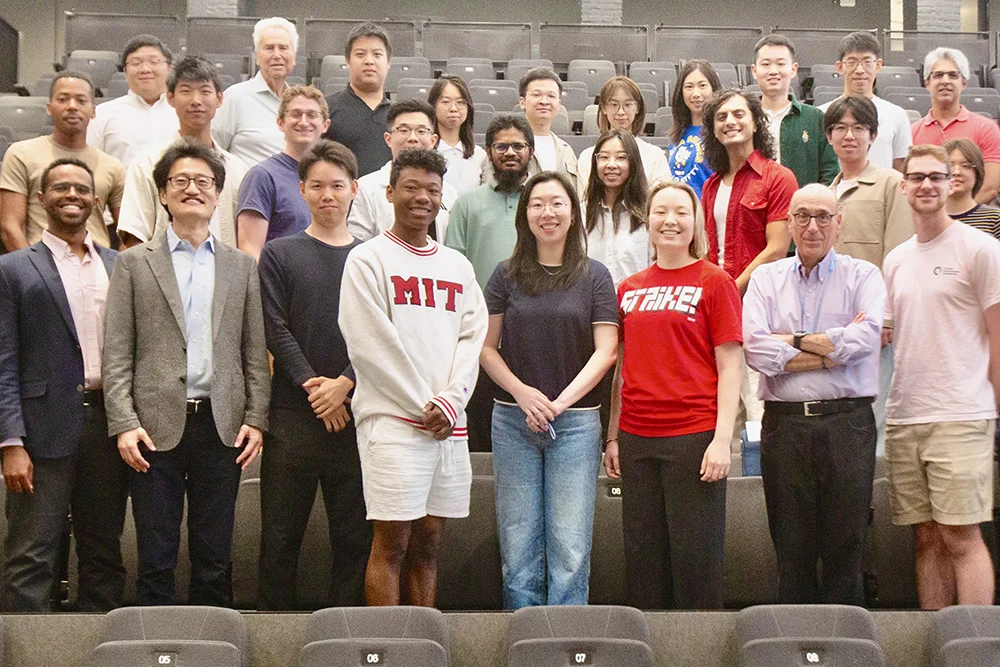
The MIT Transit Lab has been awarded $2.1 million from Google.org as part of its Impact Challenge: AI for Government Innovation. This significant funding, announced on September 15th, will propel the development of the Public Transit Intelligence Hub (PTIQ), an ambitious project designed to revolutionize public transportation operations and passenger experience through the strategic integration of artificial intelligence. The Transit Lab was among only 15 projects worldwide selected to receive support from Google.org, the philanthropic arm of the technology giant, which aims to empower organizations to leverage AI for societal benefit across critical sectors like health, resilience, and economic development.
A New Era for Transit Operations Centers
At the heart of the PTIQ initiative lies the ambition to consolidate the disparate systems that currently manage public transportation. Modern transit control centers, often depicted in popular culture as akin to NASA mission control rooms, are a hive of activity. Staff meticulously monitor a vast array of real-time data streams—from radio communications and camera feeds of stations and operations, to the precise locations of transit vehicles, passenger volumes, and even intricate traffic and road conditions. However, this torrent of information is frequently fragmented, lacking a cohesive, centralized platform that provides an overarching awareness of the entire network’s status. This fragmentation can create an intensely demanding work environment for transit personnel, whose critical, on-the-spot decisions directly impact the daily commutes of thousands of passengers.
The PTIQ project seeks to rectify this operational bottleneck by creating a unified, AI-orchestrated platform. This innovative system will seamlessly integrate real-time monitoring, operational control, and passenger communication channels, empowering transit control center staff with enhanced situational awareness and the ability to make more informed, agile decisions. Simultaneously, it promises to deliver more immediate and accurate information to passengers, thereby improving their overall transit journey.
Strategic Vision and Leadership
Awad Abdelhalim, Associate Director of the MIT Transit Lab and a co-principal investigator, project director, and technical lead for PTIQ, articulated the core mission of the project: "Public transportation agencies are required to make decisions around the clock regarding real-time operations, control, and passenger communication. Our goal isn’t to automate those decisions, but to make sure the people making them have the best information possible. By unifying and streamlining data and information flow from fragmented and siloed internal systems, PTIQ will improve the experience of both riders and the transit workforce."
The project’s leadership team is comprised of distinguished academics and seasoned transit professionals. Jinhua Zhao, the MIT Class of 1941 Professor of City and Transportation, Head of the MIT Department of Urban Studies and Planning, and Founder and Director of the MIT Mobility Initiative (MMI), serves as the other co-principal investigator. The day-to-day management of the PTIQ program falls to MIT Lecturer Jim Aloisi, who also directs the Transit Research Consortium. This consortium, a crucial component of the project, brings together researchers from the Transit Lab, MMI, and Northeastern University, where Professor Haris Koutsopoulos leads the technical contributions.
Google.org’s Commitment and Expertise
Google.org’s involvement extends beyond financial support. In addition to the $2.1 million in funding, the philanthropic arm of Google will provide invaluable pro bono assistance, offering the expertise of its own engineers and AI product specialists. This collaborative approach underscores Google.org’s commitment to bridging the gap between the potential of AI and its practical implementation in public services.
Maggie Johnson, Global Head of Google.org, emphasized this philosophy: "AI holds incredible potential to transform public services, but there is often a gap between promise and practice. By equipping the 15 selected organizations with funding and pro bono support from Google’s own AI experts, we are empowering the people closest to the problem to show what is truly possible. Together, we can ensure that AI makes a profound, positive difference in the everyday lives of communities worldwide."
Building on Decades of Applied Research
The PTIQ project is not built on a nascent concept but rather on a foundation of decades of applied research and collaborative efforts with transit agencies across major metropolitan areas globally. This extensive experience has provided the MIT team with deep insights into the practical challenges and institutional realities of public transportation.
The PTIQ’s decision support interface for control center staff will leverage a sophisticated array of tools, including predictive models, optimization engines, and advanced large language model-based contextual reasoning. However, the project’s design explicitly preserves human agency. The ultimate decision-making authority will remain with transit staff, who are best positioned to weigh the complex trade-offs inherent in operational decisions, especially during unpredictable events.
Navigating the Institutional Landscape of AI Adoption
Jinhua Zhao highlighted a critical observation from years of engagement with transit agencies: "The hard part of integrating AI in transit is not the technology; it’s the institution. AI is evaluated on benchmarks. Public transit is assessed in the control center and on the streets. Over decades of work with transit agencies in Washington, D.C., Chicago, London, Boston, Tokyo, and Hong Kong, we have learned to ask a different question. Not whether AI can do this, but whether it can work in the organization and whether the staff trust it. PTIQ is designed to ground AI in the institutional reality and behavioral nuances of a transit agency, and bring machine intelligence and human judgment into one place."
This perspective is further elaborated by Awad Abdelhalim, who noted the limitations of current AI evaluation methods: "Currently, the evaluation of AI models relies heavily on deterministic, objective tasks, such as solving mathematical equations or generating code. However, the vast majority of real-world operational tasks – like delivering public transit services – are highly dynamic, multi-stakeholder, and lack a single correct objective answer. These complex spatiotemporal environments are the ultimate testbed for evaluating what AI systems can add to society."
Tangible Benefits for the Transit Ecosystem
The PTIQ initiative is poised to deliver transformative improvements across the entire public transit ecosystem. For the transit workforce, it promises a less stressful and more effective working environment. By providing clear, actionable insights, the platform will empower staff to manage operations with greater confidence and efficiency.
For transit riders, the benefits will manifest as more reliable service, reduced delays, and improved communication. Passengers can expect to receive timely updates on service disruptions, optimized crowd management at stations and stops, and a generally smoother, more predictable travel experience.
Jim Aloisi, a former Secretary of Transportation for the Commonwealth of Massachusetts and a key figure in the project, underscored these anticipated outcomes: "We expect that PTIQ will take what is largely a siloed environment and connect it in ways that provide powerful benefits for the agency workforce and its riders. [Doing this by] improving response time, reducing platform and bus stop crowding, providing riders with higher quality and timely information, and supporting agency staff – from dispatchers to vehicle operators and communications staff – with high-quality, reliable, real-time information and solution sets."
Broader Implications and the Future of Urban Mobility
The success of the PTIQ project could serve as a powerful precedent for the adoption of AI in other complex public service sectors. By demonstrating a method for integrating AI that respects institutional realities and human judgment, the MIT Transit Lab and Google.org are not only advancing public transportation but also contributing to a more nuanced understanding of how advanced technologies can be effectively and ethically deployed to solve societal challenges.
The funding from Google.org represents a significant investment in the future of urban mobility, recognizing the vital role that efficient and responsive public transit plays in creating sustainable, equitable, and livable cities. As urban populations continue to grow, the ability of transit agencies to adapt to dynamic conditions and provide reliable service will be paramount. The PTIQ, with its focus on intelligent data integration and human-centered AI deployment, is positioned to be a critical component in meeting these evolving demands. The three-year project timeline suggests a phased development and testing approach, with initial pilot programs likely to inform broader rollout strategies. The collaborative nature of the project, involving academia, industry, and public service entities, further strengthens its potential for lasting impact.