The National Academy of Sciences (NAS) has announced the election of 120 new members and 25 international members in recognition of their distinguished and continuing achievements in original research. Among the 2026 cohort are six esteemed faculty members from the Massachusetts Institute of Technology (MIT), alongside ten alumni of the institute. This announcement marks a significant milestone for the academic community, reinforcing MIT’s position as a global leader in scientific innovation, economic theory, and engineering excellence. Membership in the NAS is widely considered one of the highest honors a scientist can achieve, serving as a testament to a lifetime of dedication to the advancement of human knowledge.
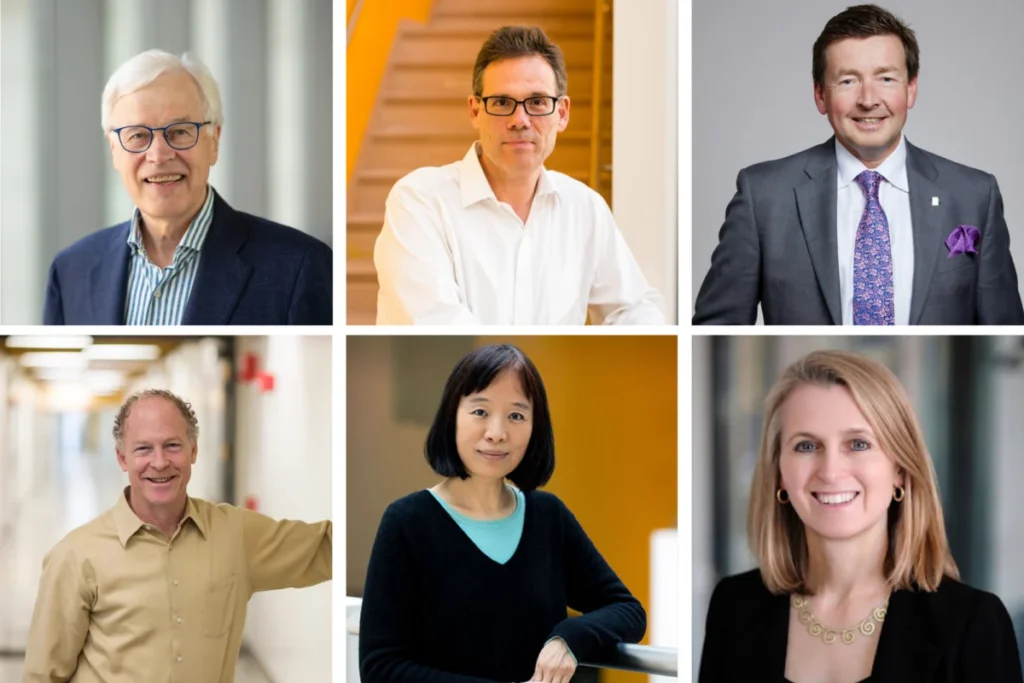
The 2026 election brings the total number of active NAS members to approximately 2,600, with international members totaling around 500. The newly elected MIT faculty members include Bengt Holmström, Michale Fee, Gareth McKinley, Keith Nelson, Fan Wang, and Catherine Wolfram. Their work spans a diverse array of disciplines, ranging from the intricacies of neural circuits and the mechanics of complex fluids to the foundational theories of economic contracts and the urgent challenges of global climate policy.
The Historical Significance and Role of the National Academy of Sciences
The National Academy of Sciences is a private, nonprofit institution with a storied history that dates back to the mid-19th century. It was established under a congressional charter signed by President Abraham Lincoln on March 3, 1863, amidst the turmoil of the American Civil War. The original mandate was to provide independent, objective advice to the nation on matters related to science and technology. Over the decades, the NAS has evolved into a cornerstone of the American scientific establishment, working in tandem with the National Academy of Engineering (NAE) and the National Academy of Medicine (NAM).
Together, these three academies provide critical policy advice to the federal government and other organizations through the National Research Council. Election to the NAS is not merely an honorary title; it carries a responsibility to contribute to the collective expertise that informs national decisions on public health, environmental safety, and technological competitiveness. The rigorous selection process involves a formal nomination by current members followed by an extensive review of the candidate’s scientific contributions, culminating in a final vote during the academy’s annual meeting.
Profiles of the Newly Elected MIT Faculty
Bengt Holmström: A Pioneer in Economic Incentives
Bengt Holmström, the Paul A. Samuelson Professor of Economics, emeritus, is perhaps best known for his revolutionary work in contract theory. His research has provided the theoretical framework for understanding how contracts and incentives affect corporate governance, executive compensation, and liquidity in financial markets. In 2016, Holmström was awarded the Sveriges Riksbank Prize in Economic Sciences in Memory of Alfred Nobel, sharing the honor with Oliver Hart of Harvard University.
Holmström’s career at MIT began in 1994, following faculty positions at Northwestern University and Yale University. His research addressed the "principal-agent problem," exploring how to design contracts that align the interests of stakeholders when one party has more information than the other. His work has had profound implications for how modern firms are structured and how they navigate financial crises. Beyond the Nobel, his accolades include the Stephen A. Ross Prize in Financial Economics and membership in the American Academy of Arts and Sciences.
Michale S. Fee: Unlocking the Secrets of Vocal Learning
Michale S. Fee serves as the Glen V. and Phyllis F. Dorflinger Professor of Neuroscience and the head of the MIT Department of Brain and Cognitive Sciences. As an investigator at the McGovern Institute for Brain Research, Fee has dedicated his career to understanding how the brain learns and executes complex sequential behaviors. His primary model for this research is the zebra finch.
Fee’s research into birdsong has revealed striking parallels between how young birds learn to sing through trial and error and how human infants learn to speak through babbling. By mapping the neural circuits responsible for these behaviors, Fee has provided insights into human brain circuits that are often disrupted in neurodegenerative conditions such as Parkinson’s and Huntington’s diseases. His interdisciplinary background, which includes a PhD in applied physics from Stanford University under Nobel laureate Steven Chu, has allowed him to bring unique perspectives to the field of neuroscience.
Gareth H. McKinley: Advancing the Science of Rheology
Gareth H. McKinley, the School of Engineering Professor of Teaching Innovation, is a leading figure in the study of non-Newtonian fluid dynamics and rheology. His work focuses on the behavior of complex fluids—such as polymers, surfactants, and biomaterials—that do not follow the standard laws of viscosity. These materials are ubiquitous in daily life, appearing in everything from food products to advanced industrial coatings.
McKinley’s contributions extend beyond theoretical research; his group has developed novel instrumentation and open-source code used worldwide by both academia and industry. His leadership roles at MIT, including serving as the former associate head of the Department of Mechanical Engineering, have been complemented by his entrepreneurial success as a co-founder of the Cambridge Polymer Group. His extensive list of honors includes the Bingham Medal and election as a fellow of the Royal Society of London.
Keith A. Nelson: Mastering Light and Matter
Keith A. Nelson, the Haslam and Dewey Professor of Chemistry, has spent over four decades at MIT pushing the boundaries of physical chemistry. His research group focuses on the time-resolved optical study of collective transformations in condensed matter. By using ultra-fast pulses of light across the THz, optical, and X-ray spectral ranges, Nelson is able to observe and control the motion of atoms and molecules in real-time.
Nelson’s work is fundamental to the development of new materials and the understanding of how phase transitions occur at the molecular level. His career has been marked by prestigious recognitions, including the William F. Meggers Award and the Frank Isakson Prize for Optical Effects in Solids. His election to the NAS acknowledges his role in developing techniques that have become essential tools for chemists and physicists globally.
Fan Wang: The Intersection of Sensation and Movement
Fan Wang is a Professor of Brain and Cognitive Sciences and an investigator at the McGovern Institute. Her research utilizes cutting-edge techniques such as optogenetics and in vivo imaging to explore the neural circuits that govern interactions between the brain and the body. One of her most notable discoveries involves identifying specific populations of neurons that can suppress pain without the side effects of traditional anesthesia.
Wang’s work also examines the brain’s role in regulating autonomic functions like heart rate and anxiety. By mapping the circuits that control rhythmic movements, her research has provided a deeper understanding of how emotion and physiology are interconnected. Her academic journey has taken her from Columbia University to faculty positions at Duke University before she joined MIT in 2021.
Catherine D. Wolfram: Shaping Global Energy Policy
Catherine D. Wolfram is the William Barton Rogers Professor in Energy and a professor of applied economics at the MIT Sloan School of Management. Her expertise lies at the intersection of energy markets and environmental regulation. Wolfram’s work has had a significant impact on how governments approach rural electrification, energy efficiency, and carbon border adjustment mechanisms.
Wolfram’s influence extends into the highest levels of government. She previously served as the deputy assistant secretary for climate and energy economics at the U.S. Treasury and currently serves on the COP30 President’s Council. Her research is vital for developing market-based solutions to the climate crisis, ensuring that economic growth and environmental sustainability are not mutually exclusive.
Recognition of MIT Alumni
The 2026 NAS election also honors ten MIT alumni who have made significant contributions to their respective fields at institutions across the globe. This group represents the breadth of MIT’s educational impact:
- Christopher J. Chang PhD ’02: Chemistry
- Cynthia J. Ebinger SM ’86, PhD ’88: Earth, Atmospheric and Planetary Sciences
- Andrew Gelman ’85, ’86: Mathematics and Physics
- Richard L. Greene ’60: Physics
- Chuan He PhD ’00: Chemistry
- Pardis C. Sabeti ’97: Biology/Life Sciences
- Robert J. Shiller SM ’68, PhD ’72: Economics (2013 Nobel Laureate)
- Daniel M. Sigman PhD ’97: Earth, Atmospheric and Planetary Sciences
- Eero Simoncelli SM ’88, PhD ’93: Electrical Engineering and Computer Science
- Salil P. Vadhan PhD ’99: Mathematics
The inclusion of Robert J. Shiller, a Nobel laureate known for his work on asset pricing and market volatility, highlights the caliber of the alumni being recognized. Similarly, Pardis Sabeti has gained international acclaim for her work on the genetics of infectious diseases, particularly during the Ebola and COVID-19 outbreaks.
Broader Implications and Institutional Impact
The election of such a large group of MIT-affiliated scientists to the National Academy of Sciences underscores the institute’s enduring influence on the global scientific landscape. For the university, these honors are more than individual accolades; they reflect an institutional culture that prioritizes high-risk, high-reward research and cross-disciplinary collaboration.
The practical implications of these appointments are substantial. As members of the NAS, these individuals will now play a direct role in advising the U.S. government on some of the most pressing issues of the 21st century. Whether it is Fan Wang’s insights into pain management amidst an opioid crisis, Catherine Wolfram’s guidance on climate finance, or Gareth McKinley’s expertise in material science, the expertise of these scholars will help shape federal policy and research funding priorities for years to come.
Furthermore, the recognition of faculty members who are also dedicated educators—such as Michale Fee and Gareth McKinley, both of whom have received numerous teaching awards—highlights the synergy between top-tier research and the mentorship of the next generation of scientists. This cycle of excellence ensures that the innovations of today become the foundations for the breakthroughs of tomorrow.
The induction ceremony for the new members is traditionally held during the Academy’s annual meeting in Washington, D.C., where they will sign the Registry of Membership, joining the ranks of historic figures such as Albert Einstein, Thomas Edison, and Margaret Mead. As the scientific community looks toward 2026, the election of these MIT faculty and alumni stands as a reminder of the power of original research to transform our understanding of the world and improve the human condition.