Spacecraft developers have long grappled with the fundamental limitation imposed by rocket fairing sizes. The current paradigm necessitates a complex "origami-style" folding of hardware for launch, followed by an intricate choreography of unfolding maneuvers once in orbit. This method, while proven, inherently constrains the scale and complexity of structures that can be deployed. Addressing this critical bottleneck, a Warsaw-based startup, Orbital Matter, is pioneering an alternative solution: the in-space 3D printing of solar arrays and other essential components. This innovative approach promises to redefine the possibilities for orbital infrastructure, enabling larger, more powerful, and potentially more cost-effective space missions.
Replicator 2: A New Era of Orbital Manufacturing Begins
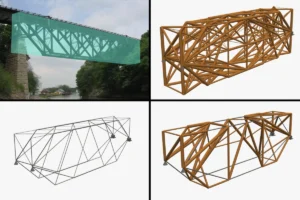
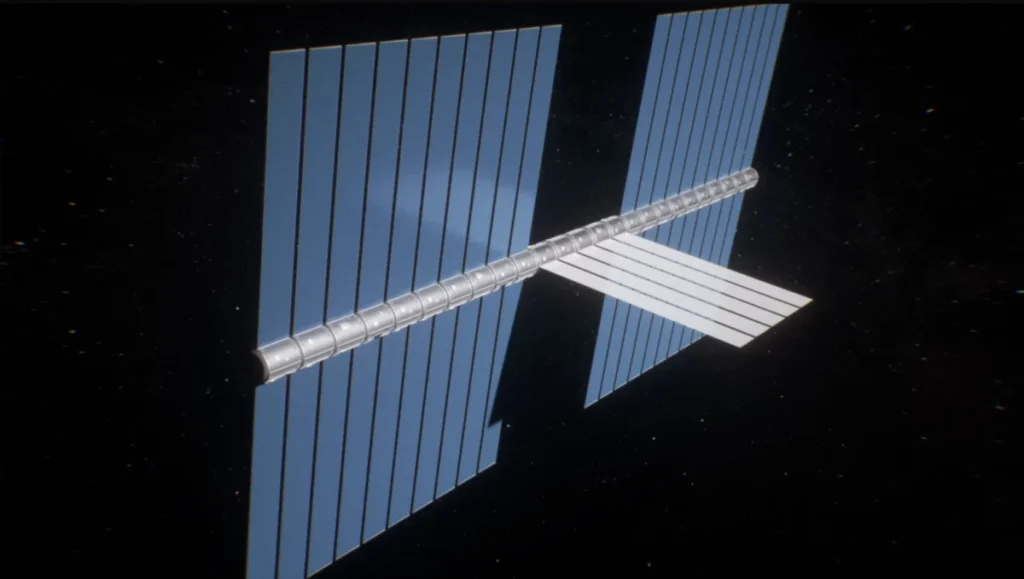
In early July, Orbital Matter launched its Replicator 2 satellite, a pivotal mission designed to test and validate the feasibility of additive manufacturing in the unique environment of space. The spacecraft is equipped with four advanced 3D printers, a testament to the company’s commitment to rigorous testing and redundancy. Two of these printers are tasked with a critical demonstration: the generation of 1-meter-long beams. These beams will serve as structural supports for a small solar array, a crucial first step in proving the capability to construct larger, more complex assemblies. If this initial phase proceeds as anticipated, the Replicator 2 mission will pave the way for printing significantly larger structures, potentially enabling Orbital Matter’s ambitious long-term goal of fabricating beams capable of supporting 100-meter-long, 100-kilowatt solar arrays.
The strategic significance of this technology extends beyond mere structural integrity. Jakub Stojek, CEO and co-founder of Orbital Matter, articulated the company’s vision, identifying any operator requiring substantial structures for housing solar arrays and other components as potential clients. He highlighted orbital data centers as a prime example, with many envisioning the deployment of arrays measuring 100 meters or more in length. Such vast power generation capabilities are essential for the energy-intensive operations of future in-orbit facilities.
Early Successes and Technical Adjustments in Orbit
As of early August, the Replicator 2 mission had already achieved a significant milestone: the successful printing of a rope-like strip of polymer by one of its onboard printers. Robert Ihnatisin, Orbital Matter’s co-founder and chief technology officer, confirmed that the printed material was approximately equivalent to what would be needed to create a 1-centimeter diameter cylinder. This initial test print, though modest in scale, provides invaluable data for refining the printing process.
Engineers are meticulously analyzing this first print to identify any necessary adjustments to the printer settings. Early observations indicated that the printer head had "over-extruded," meaning it dispensed more liquid polymer than optimally required for a precise and robust print. This finding underscores the intricate challenges of maintaining precise control over material deposition in microgravity.
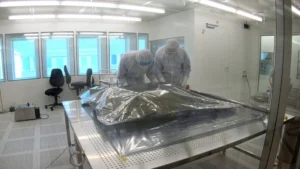
To address these initial findings, Orbital Matter’s engineering team employed a rigorous testing protocol. Before uploading any revised settings to the Replicator 2’s onboard software, the adjustments were thoroughly tested on a "flatsat" model—a terrestrial replica of the satellite’s systems—at the company’s facility in Warsaw. This terrestrial validation ensures that potential issues are identified and resolved on the ground, minimizing risks during subsequent on-orbit operations. Plans were in place to resume on-orbit printing during the week of September 14th, a crucial step in validating the refined parameters.
Ihnatisin elaborated on the necessity of these iterative adjustments, stating, "By taking the printer into microgravity, there were some variables that we had to adjust for, which we expected, and that’s why we have four of them on board." The presence of multiple printers serves not only as a backup but also allows for parallel experimentation and fine-tuning of different aspects of the printing process under orbital conditions.
Expanding Capabilities: From Antennas to Large-Scale Arrays
The Replicator 2 satellite is equipped with two printers specifically dedicated to the fine-tuning of settings for the unique microgravity and vacuum conditions prevalent in space. By the end of September, one of these printers was scheduled to undertake a separate demonstration for a space services company: the generation of a 1-meter-long cylindrical beam designed to extend an antenna. This application highlights the versatility of in-space 3D printing, moving beyond purely structural elements to functional components.
Orbital Matter’s primary demonstration, however, was slated to resume by mid-October. This phase involves the ambitious task of two printers working in unison to generate 1-meter-long beams. The process described is akin to a sophisticated form of additive manufacturing: each printer extrudes liquid polymer resin, which is then hardened by ultraviolet light. This layered deposition creates a lengthening cylindrical form, effectively building the beams from the ground up.
Positioned strategically between these two printing operations are folded solar panels. As the beams extend, these panels are designed to unfold in an accordion-like fashion, ultimately forming a flat, expansive solar array. This integrated approach showcases the potential for creating complete, functional systems directly in orbit.

Rigorous Testing and Future Projections
Following the deployment of the solar array, Orbital Matter’s engineers will conduct comprehensive observational tests. Onboard cameras will meticulously monitor the twin beams, assessing their expansion and contraction as they experience fluctuations in temperature due to direct sunlight and Earth’s shadow. Furthermore, the beams will be evaluated for any signs of degradation or bending caused by prolonged exposure to solar radiation over the satellite’s expected three-year lifespan.
"It’s basically how well the beam holds together," Ihnatisin emphasized, underscoring the critical nature of structural integrity in the harsh space environment. In parallel, engineers will measure the power output of the solar panels over time. These panels, built with readily available off-the-shelf solar cells, will provide data on the performance of the entire integrated system.
Looking ahead, Orbital Matter is already preparing for a follow-up demonstration. This next mission aims to deploy a 1-kilowatt solar array by printing two 3-meter-long beams. The launch for this ambitious undertaking is tentatively targeted before the end of 2027, signaling a phased and progressive approach to scaling up their in-space manufacturing capabilities.
A Paradigm Shift for Space Infrastructure
The success of the Replicator 2 demonstration, if it fulfills its objectives, would mark a significant historical achievement. Advenit Makaya, an advanced manufacturing engineer with the European Space Agency (ESA) based in the Netherlands, noted that this would be the first publicly known instance of a 3D-printed structure generated on orbit outside the controlled environments of a space station or capsule. This distinction is crucial, as it signifies true autonomous manufacturing capability in deep space.
Makaya further posited that the construction of future large-scale space structures will likely necessitate a synergistic combination of 3D-printing and advanced robotic assembly methods. While the "deployable" approach, characterized by structures that unfold origami-style, has been the foundational technology for solar arrays, antennas, and telescopes for decades, Makaya acknowledged its inherent limitations. "Deployables will hit a certain ceiling," he stated. "The limitation you have when you want to make large structures in space is the size of your rocket fairing."
This constraint directly impacts the scale and power output of orbital assets. The ability to manufacture components and assemble structures in situ circumvents the payload volume limitations imposed by launch vehicles.
Addressing Market Demands and the Path Forward
Orbital Matter reports a healthy pipeline of prospective customers, although the company has chosen not to disclose specific names at this juncture. The ability to print beams supporting solar panel structures exceeding 100 kilowatts is of particular interest. However, as Ihnatisin candidly stated, "we need to demonstrate it first."
The company’s proactive approach, including its own satellite launch, is a direct response to market demand for tangible proof of concept. "The blocker has always been: ‘It sounds like a great technology, but we want to see it working first.’ That was the motivation behind doing our own launch," Ihnatisin explained. This self-funded demonstration mission underscores their confidence in their technology and their commitment to de-risking it for potential investors and clients.
The implications of successful in-space 3D printing are far-reaching. It opens up possibilities for constructing larger and more complex orbital platforms, including advanced scientific observatories, communication satellites with unprecedented capabilities, and the foundational infrastructure for future space-based industries like in-orbit servicing and manufacturing. The ability to fabricate parts on demand, rather than relying on pre-manufactured components launched from Earth, could significantly reduce mission costs, lead times, and the environmental impact of space launches.
The technical hurdles of printing in a vacuum, managing thermal expansion and contraction, and ensuring long-term material durability under constant radiation are substantial. However, the Replicator 2 mission represents a bold and crucial step in overcoming these challenges. The data gathered from this mission will be instrumental in refining the technology and paving the way for a future where spacecraft and orbital infrastructure are not merely launched from Earth but are increasingly built in space. The success of Orbital Matter could herald a new era of space exploration and utilization, one where the limitations of terrestrial manufacturing are left behind, and the vastness of space becomes the ultimate construction site.