Oak Ridge National Laboratory (ORNL) researchers, in collaboration with experts from The Ohio State University and Amphenol Corporation, have unveiled a groundbreaking mechanism to manipulate thermal conductivity in solid-state materials, a discovery that fundamentally challenges established paradigms in condensed matter physics. By applying a targeted electric field to specialized ceramic materials, the team successfully demonstrated that heat transport can be directed and enhanced by nearly 300%, a feat previously thought impossible under conventional thermodynamic models. This research, published in the journal PRX Energy, signals a transformative shift in how engineers might design future cooling systems, electronic devices, and energy-harvesting technologies.
For decades, the scientific community has operated under the assumption that heat flow in non-metallic solids is a largely passive process, governed by the inherent structural properties of the material and the random scattering of phonons—the quantized collective vibrations of atoms. While minor adjustments to thermal conductivity have been achieved in the past through chemical doping or mechanical strain, the ability to "tune" heat flow dynamically and significantly using external fields has remained an elusive goal. The findings from the ORNL-led study suggest that the thermal properties of certain ceramics are far more plastic than once believed, offering a new "knob" for the active management of thermal energy.
The Mechanics of Phonon Manipulation
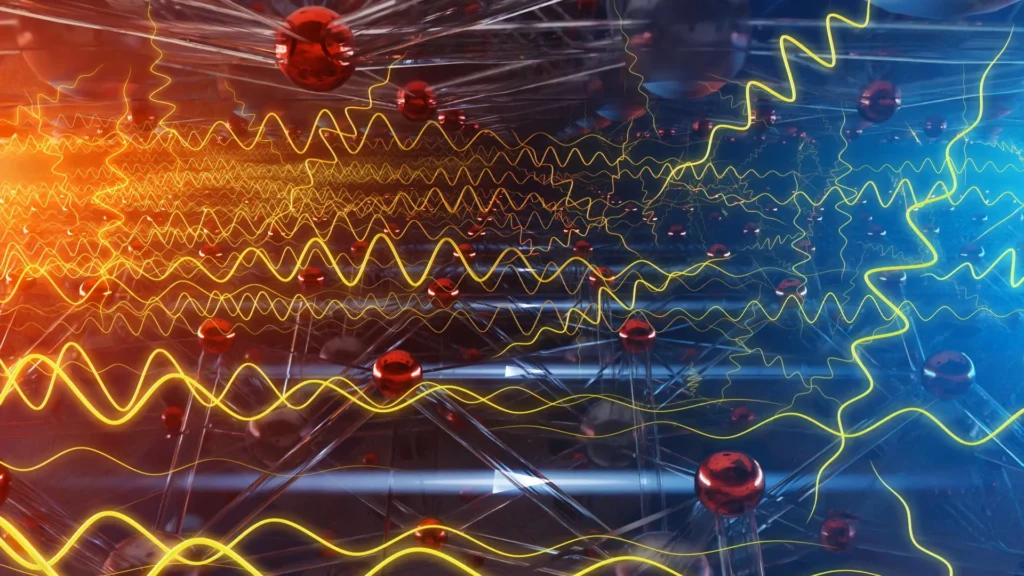
To understand the magnitude of this discovery, one must look at the microscopic behavior of heat. In solids, heat is not a fluid but rather the kinetic energy of vibrating atoms. These vibrations, or phonons, travel through a crystal lattice like sound waves. Under normal conditions, phonons frequently collide with one another, with structural defects, or with grain boundaries in the material. Each collision, known as scattering, disrupts the flow of energy and creates thermal resistance.
The research team focused on a specific class of materials known as relaxor-based ferroelectrics. These ceramics are unique because they contain microscopic regions of aligned electric charges. When the researchers applied an external electric field to these crystals—a process known as "poling"—they observed a radical reorganization of the material’s internal dynamics.
The electric field acted as a stabilizing force, aligning the internal charges and significantly reducing the obstacles that typically cause phonons to scatter. The study revealed that when atoms vibrate in the same direction as the applied electric field (the poling direction), the phonons persist for a much longer duration. This increased "phonon lifetime" allows heat to travel significantly farther before dissipating. The result was a nearly threefold increase in thermal efficiency along the axis of the electric field compared to other directions within the same material.
A Chronology of Discovery and Collaboration
The journey toward this breakthrough began with a theoretical hypothesis regarding the interaction between electric polarization and lattice vibrations. While earlier experiments on bulk ferroelectric materials had yielded modest improvements in thermal conductivity—typically in the range of 5% to 10%—the team suspected that relaxor-based ferroelectrics might harbor a more dramatic response due to their complex, "disordered" internal structures.
The experimental phase involved a multi-institutional effort that bridged the gap between material synthesis, advanced characterization, and theoretical analysis:
- Material Synthesis: Raffi Sahul at Amphenol Corporation undertook the task of growing high-quality relaxor-based ferroelectric crystals. These crystals had to be meticulously prepared to ensure that the subsequent poling process would result in uniform alignment of the internal electric dipoles.
- Thermal Characterization: The late Professor Joseph Heremans of The Ohio State University, a renowned figure in thermal physics, designed the initial thermal conductivity experiments. Under his guidance, doctoral candidate Delaram Rashadfar conducted rigorous measurements to quantify how heat moved through the samples before and after the application of the electric field.
- Neutron Analysis: To confirm the microscopic cause of the observed heat surge, the samples were brought to the Spallation Neutron Source (SNS) at ORNL. Lead researchers Michael Manley and Raphaël Hermann utilized inelastic neutron scattering to "see" the atomic vibrations in real-time.
The data from the SNS was the "smoking gun." It showed that the electric field didn’t just slightly nudge the phonons; it fundamentally altered their lifespan and velocity. The discovery of a 300% enhancement was a moment of profound surprise for the team, as it far exceeded the predictions of existing theoretical frameworks.
The Role of the Spallation Neutron Source
The use of neutrons was critical to the success of the study. Unlike X-rays, which interact primarily with the electron clouds of atoms, neutrons interact with the atomic nuclei. This makes them exceptionally sensitive to the positions and movements of atoms within a crystal lattice.
The techniques employed at the SNS are rooted in the Nobel Prize-winning legacy of Clifford Shull and Bertram Brockhouse, who pioneered neutron diffraction and spectroscopy. By bombarding the ceramic samples with neutrons and measuring the change in the neutrons’ energy and momentum after impact, the ORNL team could reconstruct the "dispersion relations" of the phonons.
"The measurements showed that applying an electric field not only increased the speed of the phonons but also significantly extended how long they survived before scattering," noted Michael Manley. This ability to map the "highway" of heat flow at the atomic level allowed the researchers to correlate the macroscopic increase in thermal conductivity with the microscopic alignment of the material’s ferroelectric domains.
Implications for Industrial and Electronic Applications
The ability to direct heat with such precision has vast implications for the next generation of technology. As electronic components become smaller and more powerful, "thermal throttling"—where a device slows down to prevent overheating—has become a major bottleneck.
Solid-State Cooling
Current cooling technologies often rely on fans, heat sinks, or liquid refrigerants. A material that can "pump" heat away from a sensitive component simply by applying an electric field could lead to silent, solid-state cooling systems with no moving parts. This would be particularly beneficial for high-performance computing, where managing the heat density of microchips is a constant challenge.
Energy Harvesting and Cogeneration
In industrial settings, a massive amount of energy is lost as waste heat. Cogeneration systems seek to capture this heat and convert it back into electricity or use it for secondary processes. By using materials that can efficiently channel heat in a specific direction, engineers can design more effective heat exchangers that minimize energy loss and improve the overall efficiency of power plants and manufacturing facilities.
The Carnot Cycle and Theoretical Efficiency
The research also touches upon the fundamental limits of thermodynamics. The Carnot cycle defines the maximum theoretical efficiency of a heat engine based on the temperature difference between a hot and cold reservoir. By gaining better control over how heat is moved between these reservoirs, scientists can push devices closer to this theoretical limit, maximizing work output while minimizing energy input.
Reactions from the Scientific Community
The results have sparked significant interest among materials scientists and thermal engineers. Puspa Upreti, an ORNL postdoctoral research associate and a key author of the study, emphasized the broader potential of the work. "Being able to control both how fast and in what manner heat flows could lead to devices that manage thermal energy far more efficiently," Upreti stated.
Delaram Rashadfar of Ohio State reflected on the importance of empirical discovery over established theory. Recalling the guidance of Professor Heremans, she noted, "While earlier work led us to expect only a modest effect, observing a threefold difference turned out to be a significant result. Professor Heremans always stressed the importance of trusting the data first and letting the theory follow."
The success of the project also highlights the importance of the Department of Energy’s (DOE) User Facilities. The Spallation Neutron Source provided the high-resolution data necessary to validate the findings, demonstrating how federal investment in large-scale scientific infrastructure enables breakthroughs that private industry or smaller academic labs could not achieve alone.
Future Directions: Scaling and Integration
While the current study utilized specialized ceramics in a laboratory setting, the next phase of research will likely focus on scaling these effects. Researchers are interested in whether similar results can be achieved in thin-film formats, which would be more compatible with modern semiconductor manufacturing.
Furthermore, the team is exploring other "external stimuli"—such as magnetic fields or light—to see if they can produce similar control over phonon dynamics. If the principles discovered in relaxor ferroelectrics can be applied to a wider range of materials, it could usher in an era of "active thermal management," where materials are no longer static components but dynamic systems that respond to their environment to optimize energy use.
The research was supported by the DOE’s Basic Energy Sciences program, which continues to fund investigations into the fundamental properties of matter that underpin the nation’s energy security and technological leadership. As the world moves toward a more electrified and energy-conscious future, the ability to "tame" heat at the atomic level may prove to be one of the most critical tools in the scientific arsenal.