The very fabric of our reality, as described by quantum mechanics, has long stood in stark contrast to our macroscopic experience. In the enigmatic quantum realm, particles famously defy classical intuition, existing in what physicists term a superposition of states. This means a particle can simultaneously occupy multiple possible positions, energy levels, or other configurations, described mathematically by a "wavefunction." This probabilistic description of reality radically diverges from everyday life, where objects are perceived to be in one definite state at a time. The standard interpretation of quantum mechanics bridges this chasm by positing that the act of measurement or observation compels a quantum system’s wavefunction to "collapse" into a single, definite outcome. This phenomenon, known as the measurement problem, has been a source of profound debate and theoretical exploration since the inception of quantum theory.
However, a new investigation, backed by the Foundational Questions Institute (FQxI), has ventured into a more radical theoretical landscape. An international consortium of physicists has explored alternatives to standard quantum mechanics—specifically, a class of theories known as quantum collapse models. Their groundbreaking work suggests that these models could carry surprising implications for the fundamental nature of time itself and, consequently, for the ultimate precision attainable by clocks. Published in Physical Review Research, these findings not only deepen our understanding of reality’s deepest layers but also propose a novel pathway to experimentally test these unconventional theories against the established framework of standard quantum mechanics.
The Genesis of Spontaneous Collapse Theories
The conceptual divergence between quantum theory and classical experience has fueled intense debate for nearly a century. While quantum mechanics has proven astonishingly accurate in predicting the behavior of subatomic particles, its implications for macroscopic reality have always been unsettling. The "measurement problem" asks: what constitutes a measurement, and why does it cause the wavefunction to collapse from a superposition of possibilities into a single actuality?
Beginning in the 1980s, a new breed of theoretical models emerged, offering a potential resolution to this conundrum: spontaneous wavefunction collapse. Unlike the standard interpretation, which requires an external observer or measuring device to trigger collapse, these models propose that collapse occurs intrinsically and spontaneously, even in the absence of observation. This spontaneous process is typically described as a tiny, random perturbation that nudges quantum systems out of superposition and into definite states.
These "quantum collapse models" differ fundamentally from mere interpretations of quantum mechanics. While interpretations primarily offer varying philosophical explanations for what quantum theory means (such as the Many-Worlds Interpretation or Copenhagen Interpretation), they generally yield the same experimental predictions as standard quantum mechanics. Collapse models, conversely, go further: they predict subtle physical effects that, at least in principle, could be measured and thus allow for experimental discrimination from standard quantum mechanics. This makes them fertile ground for empirical investigation, transforming a philosophical debate into a scientific one.
A Deep Dive into the Research and Team
The recent study was spearheaded by Nicola Bortolotti, a PhD student at the Enrico Fermi Museum and Research Centre (CREF) in Rome, Italy. Bortolotti articulated the driving premise of their research: "What we did was to take seriously the idea that collapse models may be linked to gravity. And then we asked a very concrete question: What does this imply for time itself?" This question pushes the boundaries of theoretical physics, bridging quantum phenomena with one of the universe’s most fundamental forces.
The international team comprised distinguished physicists, including Catalina Curceanu, an FQxI member and research director at the Laboratori Nazionali di Frascati of the National Institute for Nuclear Physics (INFN-LNF) in Frascati, Italy; Kristian Piscicchia, associated with both CREF and INFN-LNF; Lajos Diósi, from the Wigner Research Center for Physics and Eötvös Loránd University in Budapest, Hungary; and Simone Manti of INFN-LNF. This collaborative effort brought together diverse expertise in theoretical physics, experimental quantum mechanics, and gravitational physics, crucial for tackling such a multidisciplinary problem.
The researchers meticulously examined two prominent collapse models. One was the widely recognized Diósi-Penrose model, named in part after FQxI member Lajos Diósi and Nobel laureate Sir Roger Penrose. This model has long championed the notion that gravity plays a crucial, perhaps even fundamental, role in forcing quantum systems to transition from superpositions into definite, classical states. The core idea is that the self-gravitational energy of a superposition becomes unstable, leading to its collapse.
The team also investigated a second, influential approach known as Continuous Spontaneous Localization (CSL). CSL models propose a universal, spontaneous localization mechanism that acts continuously on all particles, causing their wavefunctions to collapse over time. A key achievement of this new study was the establishment, for the first time, of a quantitative connection between the CSL model and gravitational fluctuations within spacetime. This breakthrough provides a concrete mechanism by which the CSL model might interface with gravitational phenomena, a crucial step towards a unified understanding.
The Radical Implication: Time’s Intrinsic Uncertainty
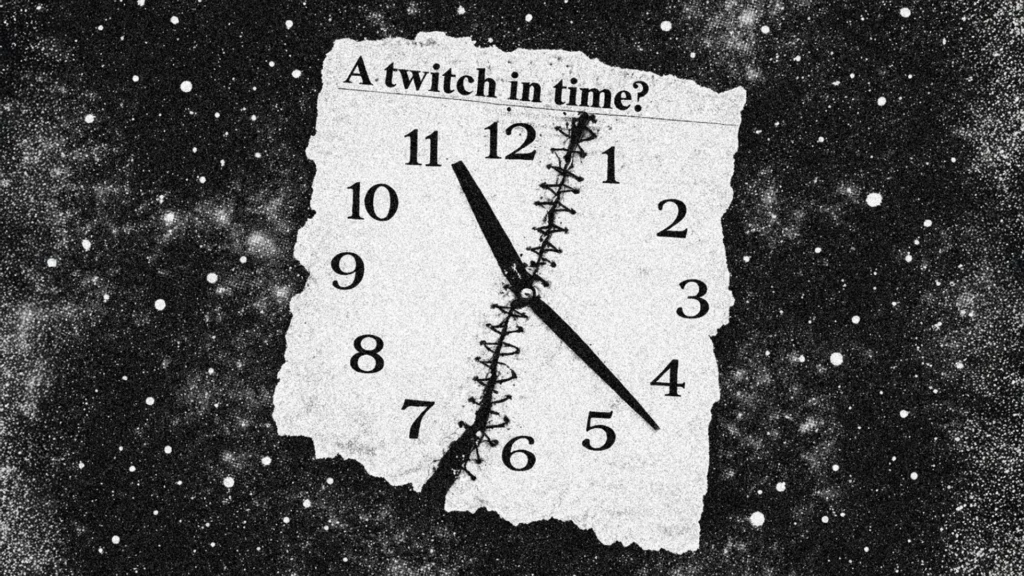
The calculations derived from this research led to a truly striking and profound conclusion: if these quantum collapse models accurately describe reality, then time itself must possess a minuscule, inherent amount of intrinsic uncertainty. This implies that there may be an ultimate, fundamental limit to how precisely time can ever be measured, irrespective of technological advancements.
To put this into perspective, the predicted effect is extraordinarily minute. It does not suggest that our sophisticated timekeeping devices are suddenly unreliable or that everyday time will become perceptibly imprecise. "Once you do the calculation, the answer is clear and surprisingly reassuring," stated Bortolotti. The uncertainty predicted is so infinitesimally small that even the most advanced atomic clocks currently in operation, or those projected for the foreseeable future, would be incapable of detecting it.
Modern atomic clocks are marvels of precision, capable of measuring time with an accuracy that would lose less than one second in billions of years. For instance, state-of-the-art optical atomic clocks, such as those based on strontium or ytterbium atoms, achieve fractional frequency uncertainties on the order of 1 part in 10^18. This level of precision is equivalent to measuring the age of the universe to within a fraction of a second. Against this backdrop, the effect predicted by the collapse models is truly microscopic. "The uncertainty is many orders of magnitude below anything we can currently measure, so it has no practical consequences for everyday timekeeping," affirmed Curceanu. Piscicchia further corroborated this, adding, "Our results explicitly show that modern timekeeping technologies are entirely unaffected." The reassurance for metrology and technological applications is significant; while the theoretical implications are profound, practical timekeeping remains steadfastly reliable.
The Grand Challenge: Reconciling Quantum Mechanics and Gravity
This research touches upon one of the most formidable and enduring unsolved problems in modern physics: the quest to reconcile quantum mechanics with Albert Einstein’s general theory of relativity. Quantum mechanics has achieved unparalleled success in describing the universe at its smallest scales—the behavior of atoms, subatomic particles, and fundamental forces like electromagnetism. General relativity, on the other hand, provides our most accurate description of gravity and the dynamics of space and time on colossal scales, encompassing planets, stars, galaxies, and the cosmos as a whole.
Both theories have been rigorously tested and confirmed by experiments within their respective domains. However, they are fundamentally incompatible at their theoretical foundations, particularly in their treatment of time. In the framework of standard quantum mechanics, time is typically treated as an external, classical parameter—a fixed background against which quantum events unfold. It is not a dynamic entity influenced by the quantum systems being studied. "In standard quantum mechanics, time is treated as an external, classical parameter that is not affected by the quantum system being studied," explains Curceanu.
General relativity, conversely, offers a radically different perspective. It posits that space and time are not separate, static entities but are interwoven into a dynamic, flexible structure called spacetime. This spacetime fabric can bend, warp, and change in response to the presence of mass and energy. Gravity, in this view, is not a force but a manifestation of spacetime curvature. Clocks, therefore, run at different rates depending on their gravitational environment, a phenomenon known as gravitational time dilation, which has been experimentally verified.
This profound mismatch has spurred physicists for decades to seek a deeper, more comprehensive theory that can unify quantum mechanics and gravity—a theory of quantum gravity. Leading candidates include String Theory, which proposes that fundamental particles are tiny vibrating strings, and Loop Quantum Gravity, which attempts to quantize spacetime itself. The new results from the FQxI-supported team suggest that quantum collapse models, by integrating gravity into the collapse mechanism, may contain crucial clues about how quantum physics, gravity, and the very nature of time could ultimately fit together into a unified theoretical framework.
Experimental Avenues and Future Prospects
Beyond the profound theoretical insights, the work offers a tangible benefit: it points towards potential new experimental tests. Because quantum collapse models predict measurable effects that diverge from the predictions of standard quantum mechanics, extremely precise experiments could eventually help determine whether these ideas correspond to a physical reality. While the predicted effects on timekeeping are currently far beyond our detection capabilities, the very existence of testable predictions is significant. It transforms a speculative theoretical concept into a scientific hypothesis that can, in principle, be verified or falsified.
The scientific community generally views such exploratory research as vital, acknowledging that progress in fundamental physics often arises from challenging established paradigms. The ongoing development of even more sensitive quantum sensors and atomic clocks could, in the distant future, push the boundaries of precision to a point where these minute effects might become discernible. This would open an entirely new frontier for experimental quantum gravity research, allowing physicists to probe the interface of quantum mechanics and gravity in a laboratory setting.
Curceanu underscored the critical importance of supporting research into these unconventional, foundational questions about physics. "There are not many foundations in the world which are supporting research on these types of fundamental questions about the universe, space, time, and matter," she noted, highlighting FQxI’s unique role. FQxI, the Foundational Questions Institute, is dedicated to funding research that explores the deepest questions in physics and cosmology, often venturing into areas that are highly speculative but hold the potential for paradigm-shifting discoveries.
The implications of this research extend to our understanding of causality and determinism. If time itself is intrinsically uncertain, it could subtly challenge our classical notions of cause and effect, even if the effect is imperceptible. It suggests that at the most fundamental level, reality might be inherently fuzzier than previously conceived.
In conclusion, the study provides a compelling example of how radical theoretical ideas, when rigorously explored, can yield concrete, testable predictions that push the frontiers of scientific knowledge. While the uncertainty in time predicted by these collapse models remains well beyond current experimental verification, the work provides a crucial conceptual link between quantum mechanics, gravity, and the nature of time. As Curceanu eloquently summarized, "Our work shows that even radical ideas about quantum mechanics can be tested against precise physical measurements, and that, reassuringly, timekeeping remains one of the most stable pillars of modern physics." This research, partially supported through FQxI’s Consciousness in the Physical World program, exemplifies the enduring human quest to understand the universe’s most profound mysteries, one quantum collapse at a time.