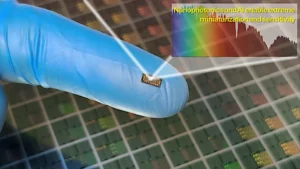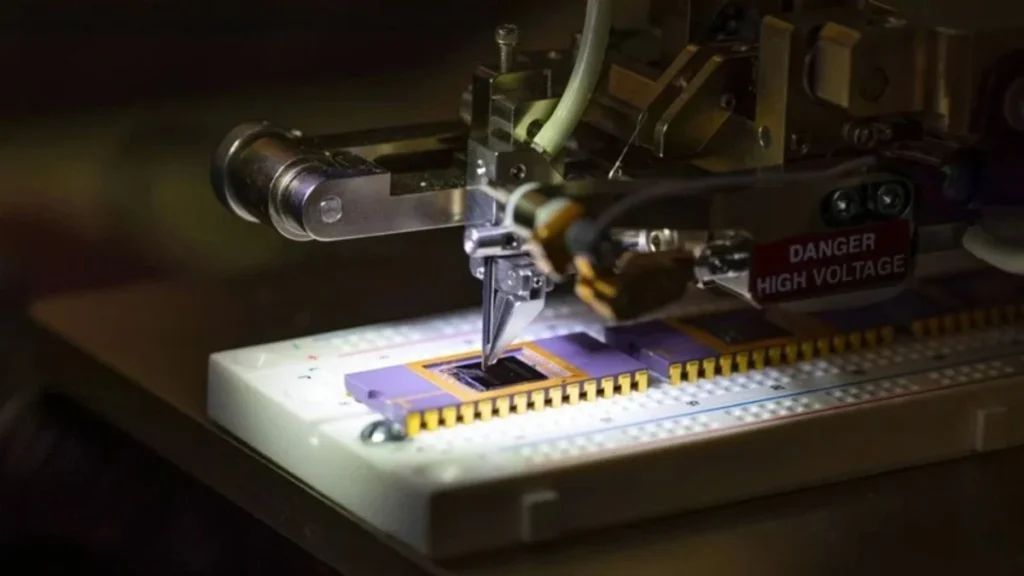
Stepping up efforts to develop battery-free sensors, U.S. researchers have created a graphene-based device that harvests energy from ambient radiation to provide the electricity needed to operate an ultra-low-power temperature sensor, marking a significant stride towards autonomous and sustainable Internet of Things (IoT) technologies. This innovative technology enables the sensor to operate for at least 24 hours, and potentially up to a week, during a power outage, demonstrating a critical enhancement in resilience for monitoring systems. This latest prototype represents the team’s second self-powered sensor, building upon an earlier graphene-based solar-powered sensor. Together, these two devices are integral to a broader initiative aimed at creating autonomous sensors that draw energy from multiple sources in their surroundings, thereby eliminating reliance on conventional batteries and addressing long-standing challenges in sensor deployment and maintenance.
Graphene: A Decade of Innovation Paving the Way for Autonomous Sensors
The foundation of this groundbreaking work lies in graphene, a material that has captivated the scientific community since its isolation in 2004 by Andre Geim and Konstantin Novoselov at the University of Manchester, an achievement recognized with the Nobel Prize in Physics in 2010. Graphene, a single layer of carbon atoms arranged in a two-dimensional hexagonal lattice, possesses extraordinary properties. It is the thinnest material known, yet 200 times stronger than steel by weight. Critically for this application, it boasts exceptional electrical and thermal conductivity, transparency, and flexibility. These remarkable attributes have positioned graphene as a cornerstone material for next-generation electronics, energy storage, and sensing applications.
Dr. Paul Thibado, a physics professor at the University of Arkansas, has been at the forefront of graphene research for nearly a decade. His work has explored various facets of graphene, including its unique atomic vibrations and its potential for energy harvesting. Earlier in his research, Thibado and his team investigated the spontaneous motion of graphene, a phenomenon where the thermal energy of the environment causes graphene atoms to move, suggesting a potential pathway for converting ambient energy into usable electricity. This fundamental understanding laid the groundwork for developing practical energy-harvesting devices. The progression from theoretical insights into graphene’s intrinsic energy dynamics to the creation of a functional solar-powered graphene sensor, and now to an ambient radiation-powered device, illustrates a systematic and ambitious research trajectory aimed at solving the pervasive power challenges in ubiquitous computing.
The Energy Harvesting Mechanism Unveiled: Harnessing Invisible Fields
The core innovation of the new sensor lies in its ability to efficiently harvest energy from ambient electromagnetic radiation, a form of energy that is ubiquitous in modern environments. Unlike solar power, which requires direct light exposure, or kinetic energy harvesting, which depends on motion, ambient radiation harvesting leverages energy fields that are constantly present. Paul Thibado explained that these fields exist throughout contemporary homes and buildings primarily due to electrical wiring and active electronic devices. The 60 Hz alternating current (AC) flowing through power lines, for instance, generates magnetic fields that permeate the surrounding space. While these fields are typically considered wasted energy, the graphene-based sensor has been engineered to capture and convert them.
The sensor employs a specialized graphene inductor, a component designed to interact with and draw energy from these magnetic fields. Inductors, in general, store energy in a magnetic field when current flows through them. In this context, the graphene inductor is exquisitely sensitive to the weak magnetic fluctuations generated by ambient radiation. As the magnetic fields oscillate, they induce a current within the graphene inductor. This induced current, though minuscule, is then directed through a carefully designed circuit. Within this circuit, the alternating current is rectified and converted into direct current (DC) and then stored in ultra-low-leakage capacitors. These capacitors serve as miniature energy reservoirs, accumulating the harvested electricity until a sufficient charge is available to power the ultra-low-power temperature sensor.
A critical aspect of this design is the extremely low power consumption of the sensor, operating in the nanowatt range. To put this into perspective, a typical LED light bulb consumes several watts, while many conventional low-power sensors might consume milliwatts. Operating at nanowatts means the sensor requires an incredibly small amount of energy to function, making it feasible for the slow, continuous energy harvesting process to provide ample power. Thibado further elucidated the operational efficiency: "The inductor adds charge to these capacitors at a slow rate, but it’s faster than the rate the sensor uses up the charges from the capacitors." This crucial balance ensures that the capacitors are replenished more quickly than they are discharged, allowing the sensor to maintain continuous operation. This perpetual charging mechanism is what grants the device its unprecedented operational longevity, even in the event of a power grid interruption. During a blackout, the ambient radiation from unpowered wiring might diminish, but the stored energy in the capacitors can sustain the sensor for at least 24 hours, with potential extensions up to a week depending on specific environmental conditions and the sensor’s operational load.
Addressing IoT’s Power Dilemma: Towards a Sustainable Future
The rapid proliferation of the Internet of Things (IoT) has brought immense promise for smart cities, industrial automation, precision agriculture, and pervasive healthcare. However, it has also unveiled a significant challenge: powering billions, potentially trillions, of interconnected devices. Traditional wireless sensors primarily rely on batteries, which present a multifaceted dilemma. The global IoT sensor market, valued at approximately $27 billion in 2022 and projected to reach over $175 billion by 2032, necessitates an exponentially growing number of sensors. Each of these typically requires a power source, leading to massive consumption of disposable batteries.
This reliance on batteries creates several substantial hurdles:
- Maintenance Costs: In large-scale deployments, such as smart buildings or remote industrial sites, replacing batteries across thousands or millions of sensors becomes an enormous logistical and financial burden. The labor costs associated with routine maintenance can quickly outweigh the initial hardware costs.
- Environmental Impact: Billions of batteries discarded annually contribute to significant electronic waste, posing challenges for landfill management and the leaching of hazardous chemicals into the environment. While recycling efforts exist, they often lag behind consumption rates, and the energy footprint of manufacturing and transporting batteries is considerable.
- Limited Lifespan: Even long-life batteries eventually deplete, necessitating periodic intervention. This limits the true "set it and forget it" aspiration of many IoT applications, particularly in inaccessible or dangerous environments.
- Reliability in Critical Applications: For critical infrastructure monitoring, healthcare devices, or environmental sensors in remote areas, battery failure can lead to data loss or operational interruptions with severe consequences.
The graphene-based battery-free sensor directly confronts these challenges. By eliminating the need for battery replacements, it drastically reduces maintenance costs, labor requirements, and the environmental footprint associated with battery production and disposal. This "set it and forget it" approach, as described by Thibado, is not merely a convenience but a fundamental enabler for new classes of IoT applications where routine human intervention is impractical or impossible.
Reliability and Longevity: A Paradigm Shift for Pervasive Sensing
The extended operational life and resilience against power interruptions offered by this new sensor represent a paradigm shift for pervasive sensing. Current sensors, tethered by their battery life, often require compromises in deployment location or data transmission frequency to conserve power. The ability to operate unattended for years, potentially decades, without external power intervention fundamentally changes this calculus.
Consider applications in environmental monitoring. Sensors deployed in remote forests, oceans, or agricultural fields to track temperature, humidity, or soil conditions often require costly and time-consuming expeditions for battery replacement. A battery-free sensor that continuously harvests energy from its surroundings can provide uninterrupted data streams, enabling more accurate long-term climate modeling, early detection of ecological changes, and optimized resource management without the logistical overhead.
In smart infrastructure, monitoring the structural integrity of bridges, pipelines, or power grids is crucial. Traditional sensors in such deployments face challenges not only from power but also from harsh environmental conditions that can degrade battery performance. A self-sustaining sensor enhances the reliability of critical data collection, allowing for predictive maintenance and averting potential disasters. Furthermore, the capacity to operate during power outages provides an invaluable layer of resilience, ensuring that critical data continues to be collected precisely when it is needed most – during emergencies or system failures. This inherent robustness elevates the sensor from a mere data collector to a dependable sentinel, capable of providing vital information even when conventional systems falter.
Broader Applications and Economic Implications
While the researchers initially demonstrated the technology using a temperature sensor, the potential applications for these self-controlled sensing systems are vast and transformative. The battery-free nature and long operational lifespan unlock opportunities across numerous sectors:
- Logistics and Supply Chain: Monitoring products during shipping, particularly perishable goods or sensitive electronics, requires continuous environmental tracking. Battery-free sensors could be embedded directly into packaging, providing real-time data on temperature, humidity, or shock without the need for periodic recharging or replacement, significantly reducing spoilage and improving quality control.
- Environmental Monitoring: Beyond basic temperature, these sensors could track a multitude of environmental conditions such as soil moisture, atmospheric pressure, air quality, and water levels, facilitating more granular data collection for climate science, precision agriculture, and disaster preparedness.
- Industrial and Asset Management: In factories or large logistics fleets, monitoring machine performance, asset location, or storage conditions becomes more efficient. Sensors could be permanently installed on equipment, providing continuous data for predictive maintenance and operational optimization without downtime for battery servicing.
- Wearable Technology and Healthcare Monitoring: While the current prototype may not be immediately suitable for compact wearables, the underlying principle of ambient energy harvesting could revolutionize personal health monitoring. Imagine devices that continuously track vital signs or activity levels without ever needing to be charged, enhancing patient compliance and data continuity for chronic disease management or fitness tracking.
- Smart Homes and Buildings: Pervasive temperature, light, or occupancy sensors could optimize energy usage, enhance security, and improve comfort without requiring homeowners to ever think about battery changes, making smart home technology truly seamless and maintenance-free.
Economically, the implications are profound. The reduction in maintenance costs translates directly into significant operational savings for businesses and municipalities deploying large-scale sensor networks. For example, a study by ABI Research estimated that battery maintenance costs could account for over 50% of the total cost of ownership for wireless sensors over a 10-year period. Eliminating these costs would free up substantial capital for further innovation or deployment. Moreover, the enhanced reliability and data continuity can lead to improved efficiency, reduced waste, and better decision-making, generating additional economic value. From a sustainability perspective, the drastic reduction in battery waste aligns perfectly with global efforts towards circular economies and responsible resource management, enhancing the environmental profile of the burgeoning IoT ecosystem.
The Multi-Source Future: A Robust IoT Ecosystem
Looking ahead, the research team plans to integrate several graphene-based energy-harvesting technologies into a single, highly resilient sensor unit. Beyond ambient electromagnetic radiation, future devices could draw energy from sunlight, waste heat (thermoelectric effects), sound vibrations (piezoelectric effects), and kinetic motion. This multi-source approach offers a crucial advantage: redundancy. If one energy source becomes unavailable – for example, sunlight during the night or motion in a stationary object – the sensor can seamlessly switch to or combine power from other available sources. This ensures continuous operation and significantly improves dependability, especially during power outages or other interruptions where a single energy source might be compromised.
This vision of a robust, multi-source energy harvesting platform is key to realizing the full potential of the Internet of Things. Such devices would be truly autonomous, self-sustaining, and adaptable to diverse environments. The ability to operate for decades with little or no maintenance would dramatically expand the scope and scale of IoT deployments, enabling long-lasting smart devices that function independently without the critical bottleneck of power management. This distributed intelligence, powered by ambient energy, could unlock unprecedented levels of data collection and automation, transforming industries and improving quality of life across the globe.
Expert Perspectives and Industry Outlook
The scientific community and industry stakeholders are closely watching these developments. Dr. Thibado’s work represents a significant leap. "This is not just an incremental improvement; it’s a foundational shift in how we power our digital world," noted Dr. Elena Petrova, a materials science expert not affiliated with the project. "Graphene’s unique properties are finally being leveraged in ways that can address real-world, large-scale problems like battery waste and IoT device longevity."
An IoT industry analyst, Mr. David Chen, commented on the market implications: "The ‘set it and forget it’ mantra is what enterprises have been dreaming of for industrial IoT and smart infrastructure. The cost savings on maintenance alone could be astronomical, driving faster adoption rates and unlocking value in areas previously deemed too expensive or logistically complex for sensor deployment." Environmental advocates are also likely to laud the potential for significant reductions in hazardous battery waste. Ms. Anya Sharma from the Global Sustainability Initiative stated, "Moving towards battery-free solutions is a critical step in making our technological advancements truly sustainable. This research offers a tangible pathway to drastically cut down on electronic waste and resource depletion associated with disposable batteries."
While the immediate application is temperature sensing, the underlying principles are broadly applicable to various sensor types, from humidity and pressure to chemical and biological detection. This versatility ensures that the technology can evolve to meet a wide array of future demands.
Challenges and the Road Ahead
Despite the immense promise, the path from prototype to widespread commercialization often involves navigating several challenges. Scalability of graphene production remains an area of ongoing research, though significant progress has been made in cost-effective manufacturing methods. Optimizing the efficiency of ambient radiation harvesting in diverse environments, where signal strength can vary, will also be crucial. Furthermore, integrating these energy harvesting modules into existing sensor platforms and ensuring their robustness in harsh industrial or outdoor conditions will require careful engineering and rigorous testing.
Another consideration is the initial cost of deployment. While the long-term operational savings are clear, the upfront cost of advanced graphene-based components might be higher than traditional battery-powered sensors. However, as graphene production scales and manufacturing processes mature, these costs are expected to decrease, making the technology increasingly competitive.
Conclusion: Paving the Way for Autonomous Intelligence
The development of a graphene-based sensor capable of harvesting energy from ambient radiation marks a pivotal moment in the evolution of sensor technology and the Internet of Things. By addressing the fundamental challenge of power, this innovation paves the way for truly autonomous, maintenance-free, and sustainable sensor networks. The vision of devices operating for decades without human intervention, resilient against power outages, and environmentally benign, is no longer a distant dream but a tangible reality emerging from leading research institutions. This breakthrough not only promises to expand the reach and capabilities of the IoT but also sets a new standard for intelligent systems that are seamlessly integrated into our environment, operating with unprecedented independence and efficiency, thereby accelerating the transition towards a smarter, more sustainable, and more connected world.