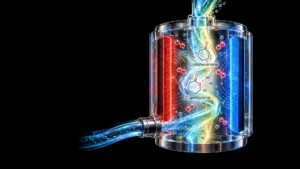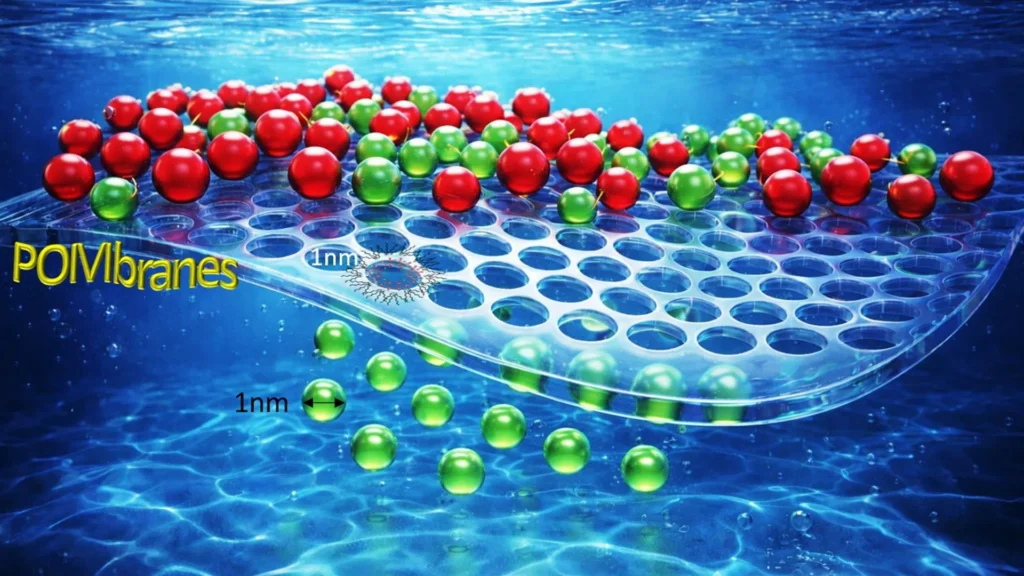
A multi-institutional team of researchers from India and Singapore has announced the development of a groundbreaking filtration membrane that promises to redefine the landscape of industrial separation processes. The collaborative effort, involving the CSIR-Central Salt and Marine Chemicals Research Institute (CSMCRI), the Indian Institute of Technology Gandhinagar (IITGN), Nanyang Technological University (NTU) in Singapore, and the S N Bose National Centre for Basic Sciences, has resulted in the creation of "POMbranes." These crystalline membranes, detailed in a recent study published in the Journal of the American Chemical Society (JACS), feature ultra-precise, one-nanometer pores designed to significantly reduce energy consumption and facilitate large-scale water recycling in heavy industries.
The emergence of this technology comes at a critical juncture for global manufacturing. Currently, industrial separation processes—the tasks required to isolate specific chemicals, purify drugs, or treat textile dyes—are among the most resource-heavy operations in the world. According to industrial data, these processes account for approximately 40% to 50% of the total energy consumed by the global manufacturing sector. By introducing a more efficient filtration method, the research team aims to provide a sustainable alternative to traditional thermal-based separation techniques like distillation and evaporation, which are notorious for their high carbon footprints.
The Science of POMbranes: Engineering at the Atomic Scale
The core innovation of this research lies in the use of polyoxometalate (POM) clusters to create a "molecular sieve." Traditional membrane filters are typically made from polymers—long chains of plastic-like molecules. While functional, these polymer membranes often suffer from inconsistent pore sizes. Over time, under the pressure and chemical stress of industrial use, these pores can stretch, clog, or degrade, leading to a loss in filtration precision.
To overcome these structural weaknesses, the research team looked toward nature for inspiration, specifically biological aquaporins. Aquaporins are specialized proteins found in living cells that regulate the flow of water while blocking other solutes through perfectly sized channels. The researchers replicated this efficiency by using POMs, which are inorganic metal-oxygen clusters.
Dr. Shilpi Kushwaha, a Senior Scientist at CSMCRI, explained that the team engineered these crystalline membranes to contain pores exactly one nanometer wide. For context, a nanometer is approximately 100,000 times smaller than the diameter of a human hair. These pores are not merely holes created during manufacturing but are inherent to the atomic structure of the POM clusters themselves.
Ms. Priyanka Dobariya, a research scholar at CSMCRI and co-first author of the study, described these clusters as "crown-shaped" structures. Because the opening is part of the rigid crystalline lattice of the metal cluster, it remains permanently stable. Unlike plastic filters that can warp, these "perfect holes" do not change shape, ensuring that the filtration remains consistent throughout the membrane’s lifecycle.
Development and Methodology: From Clusters to Large-Scale Sheets
The transition from individual molecular clusters to a functional, large-area membrane required sophisticated chemical engineering. To build a continuous, defect-free layer, the researchers attached flexible chemical chains to the POM clusters. This modification allowed the clusters to behave as "building blocks" that could self-assemble.
When these modified clusters were introduced to the surface of water, they naturally organized themselves into an ultrathin, two-dimensional film. By adjusting the length and composition of the attached chemical chains, the scientists could control the density of the packing. This precision ensured that there were no "leaks" or gaps between the clusters, forcing every molecule to pass through the one-nanometer holes within the clusters themselves.
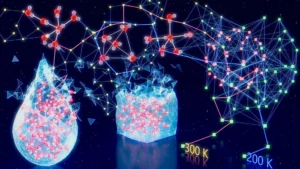
The computational side of the research was spearheaded by the Indian Institute of Technology Gandhinagar. Dr. Raghavan Ranganathan, an Associate Professor in the Department of Materials Engineering, alongside PhD scholar and co-first author Vinay Thakur, utilized advanced molecular-level simulations to map how molecules interact with the membrane. These simulations confirmed that the POMbranes act as a high-tech sieve, providing a clear pathway for water while effectively barring larger molecules.
Performance Metrics and Comparative Advantages
The testing phase of the POMbranes revealed performance statistics that significantly outperform current industry standards. The membranes demonstrated the ability to distinguish between molecules with a mass difference of only 100 to 200 Daltons. This level of selectivity is nearly impossible for conventional polymer membranes, which generally have a much wider distribution of pore sizes.
Dr. Ketan Patel, Principal Scientist at CSMCRI, noted that the POMbranes exhibited nearly ten times better separation performance than existing commercial technologies. Beyond precision, the researchers focused on "industrial readiness." The membranes proved to be:
- Chemically Resilient: They remain stable across a wide range of pH levels, from highly acidic to highly alkaline environments, making them suitable for the harsh chemicals used in pharmaceutical and textile manufacturing.
- Physically Flexible: Despite being crystalline at the molecular level, the overall membrane sheets are flexible and can be manufactured in large formats.
- Scalable: The self-assembly method used to create the films is conducive to mass production, a common hurdle for many nanotechnology breakthroughs.
Strategic Impact on India’s Textile and Pharmaceutical Sectors
The timing of this technological breakthrough is particularly relevant for the Indian economy. India’s textile and apparel industry is a cornerstone of the national GDP, contributing over 2.3% and representing 13% of total industrial production. With the domestic market projected to reach up to $350 billion by 2030, the environmental impact of this growth is a major concern.
Textile dyeing and finishing are among the most water-intensive industrial activities. These processes generate massive volumes of wastewater contaminated with complex dye molecules that are difficult to remove. Currently, many facilities rely on evaporation ponds or energy-intensive treatment plants. POMbranes offer a "circular economy" solution: they can selectively filter out dye molecules, allowing the water to be captured and reused within the same factory. This reduces the demand for freshwater and minimizes the discharge of toxic effluents into local waterways.
Similarly, the pharmaceutical industry stands to benefit from enhanced purification techniques. In drug manufacturing, separating the active pharmaceutical ingredient (API) from solvents and byproducts is a delicate and expensive process. "Highly selective membranes such as these can lower energy use while maintaining the stringent standards required in pharmaceutical production," said Mr. Vinay Thakur. The ability to recover expensive solvents using a low-energy membrane rather than high-heat distillation could result in millions of dollars in operational savings for Indian pharma giants.
Broader Implications for Global Sustainability
The development of POMbranes aligns with global efforts to achieve United Nations Sustainable Development Goals (SDGs), particularly Goal 6 (Clean Water and Sanitation), Goal 9 (Industry, Innovation, and Infrastructure), and Goal 12 (Responsible Consumption and Production).
As global temperatures rise and water scarcity becomes a more pressing threat, the "decarbonization" of industrial separation is no longer an option but a necessity. Traditional separation methods like distillation are responsible for roughly 10% of the world’s total energy use. Transitioning even a fraction of these processes to membrane-based filtration could lead to a massive reduction in global CO2 emissions.
The international collaboration between India and Singapore also highlights the importance of cross-border scientific partnerships in solving global challenges. By combining the synthetic chemistry expertise of CSMCRI with the computational materials science of IITGN and the advanced characterization capabilities of NTU and the S N Bose Centre, the team was able to move from a theoretical concept to a proven material in a relatively short timeframe.
Future Outlook: The Path to Commercialization
While the laboratory results are definitive, the next phase for the POMbrane technology involves pilot-scale testing in real-world industrial environments. The researchers describe the POMbranes as a "versatile platform technology," suggesting that the pore size could potentially be "tuned" for different applications by using different types of POM clusters.
Future iterations of the technology may see these membranes being used in desalination plants, hydrogen production, or even carbon capture systems, where precise molecular separation is the primary technical barrier. For now, the focus remains on the textile and pharmaceutical sectors, where the immediate need for sustainable wastewater management is most acute.
In conclusion, the development of POMbranes represents a significant leap forward in materials science. By mimicking the elegance of biological systems and reinforcing it with the durability of inorganic chemistry, the research team has created a tool that could help the global industry move toward a more efficient, less wasteful future. As these membranes move toward commercial adoption, they may become a standard component in the next generation of "green" factories, proving that the smallest pores can indeed solve some of the world’s largest problems.