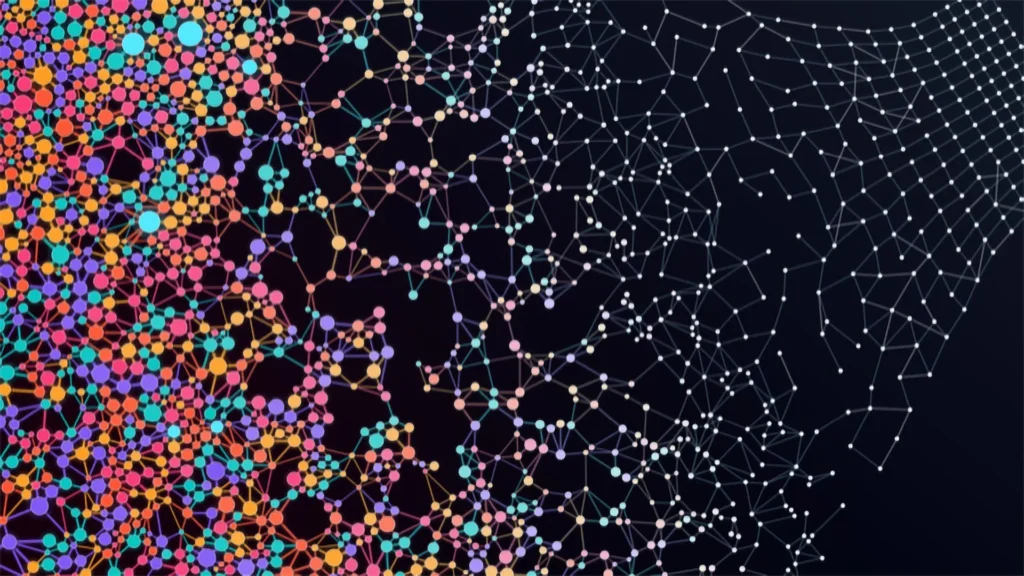
A groundbreaking study led by physicists at Northwestern University is challenging long-held assumptions in network science, revealing that heterogeneity, often perceived as a defect, can actually be a source of remarkable resilience. For decades, the prevailing scientific wisdom suggested that complex networks, from power grids to biological systems, would perform more reliably if their individual components behaved as similarly as possible. This ideal of uniformity, however, rarely mirrors the messy reality of the natural world or even many engineered systems. Power generators exhibit operational differences, neurons vary in their morphology and function, species occupy distinct niches within ecosystems, and even the components of advanced materials are not perfectly identical. The new research, published on September 17 in the esteemed journal Science, posits that these very differences, or "disorder," can be a significant advantage, promoting stability in ways previously overlooked or misunderstood.
The Paradigm Shift: From Uniformity to Heterogeneity
The traditional understanding of complex systems has often leaned heavily on models that prioritize uniformity. Early network theories, particularly in physics and engineering, frequently assumed that nodes (individual components) within a network were identical or operated under highly similar parameters. This simplification allowed for elegant mathematical solutions and provided foundational insights into how networks function, synchronize, and transmit information. For instance, the widely used Kuramoto model, developed in 1975, describes the synchronization of coupled oscillators and typically assumes identical natural frequencies for all oscillators, or at least a narrow distribution around a mean. Such models, while powerful for certain applications, inherently limited the scope of understanding regarding systems where individual differences are not just present but pervasive.
This bias towards homogeneity inadvertently led researchers to overlook a critical aspect of system resilience. If a system’s components are all identical, a disturbance that affects one component in a particular way is likely to affect all others similarly, potentially leading to cascading failures or systemic collapse. The idea that "real systems, however, rarely look that tidy" underscores the growing recognition that this simplified view might be inadequate for designing truly robust technologies or understanding the enduring stability of natural phenomena.
Unveiling the "Disorder-Promoted Stability" Framework
The Northwestern team, spearheaded by Adilson Motter, the Charles E. and Emma H. Morrison Professor of Physics and Astronomy, has developed a sophisticated mathematical framework designed to precisely determine the conditions under which variation, or disorder, enhances network stability. Their findings directly challenge the ingrained notion that uniformity should always be the ultimate design goal. Instead, the research suggests a radical re-evaluation: carefully introducing differences into a system could be a deliberate strategy for engineers seeking to design more resilient power grids, advanced architected materials, and other interconnected technologies. Furthermore, this work offers a compelling explanation for the ubiquitous irregularity observed in natural systems, from the intricate web of neural networks in the brain to the complex dynamics of biological and ecological communities.
The genesis of this broader framework can be traced back to earlier, more specific studies by Motter’s group. A 2020 Nature Physics study, for example, demonstrated that electrical generators could achieve more successful synchronization when they exhibited slight operational differences rather than being perfectly identical. Following this, a 2025 Nature Communications study led by Northwestern postdoctoral researcher Arthur Montanari, a co-first author on the current Science paper, found comparable effects in models simulating flocking behavior and drone swarms. These preceding works provided tantalizing hints that disorder might not be a rare exception to the rule but rather a more widespread phenomenon. The unanswered question was the extent of this effect and the specific types of systems that could benefit.
"Previous studies found a growing number of cases in which disorder (also called heterogeneity, irregularity or asymmetry) across a network’s nodes can actually improve stability and desirable behavior," explained Professor Motter. "We have seen this in important real-world systems, including power grids, metamaterials and brain computation. But we didn’t know how widespread this effect was or which kinds of systems could benefit from it. Our new study answers those questions, explains why these differences can improve stability and even reveals why scientists overlooked this effect for so long."
The mathematical framework developed by Motter, Montanari, and graduate student Pietro Zanin (also a co-first author) moves beyond the simplifications of older models. Many interconnected systems, by their very nature, must possess the capacity to recover from disturbances – be it a sudden gust disrupting a bird flock, an unexpected surge in electricity demand straining a power grid, or an impact deforming a material. Traditionally, scientists have modeled these systems as networks composed of nodes (individual components) linked by connections. In an electrical grid, generators are nodes and transmission lines are links; in an ecological network, species are nodes and their interactions (competition, predation) are links.
The critical distinction in the new framework lies in its ability to account for "richer" node dynamics. Simplified mathematical models, such as the basic Kuramoto model, often represent each node with only a single variable, failing to capture the complex internal behaviors and interactions that characterize real-world components. "Real systems are rarely uniform," Montanari observed. "Birds differ in personalities, neurons vary in shape, and even our social relationships can be asymmetric. These differences might appear random, but they can profoundly affect how the whole system behaves." By incorporating these multifaceted dynamics, the Northwestern team could reveal the stabilizing effect of disorder that simpler models inadvertently filtered out. "Disorder can stabilize networks, but only when the node dynamics are rich enough," Motter clarified. "Simplified models can inadvertently strip away the very stabilizing effect we want to capture."
To facilitate broader understanding and exploration of their findings, the researchers also developed an interactive website. This digital tool allows users to visually explore the framework by adjusting various parameters, observing how network components interact, synchronize, and form organized patterns under different levels of disorder.
Why Variation Matters: Deeper Insights from Northwestern
The research systematically investigated systems both near stable conditions and after small disturbances were introduced. By observing whether these disturbances gradually dissipated (indicating stability) or grew (indicating instability), the team could rigorously compare networks with identical components against those featuring differences. This comparative analysis allowed them to pinpoint the general circumstances under which heterogeneity demonstrably outperforms uniformity.
Their findings revealed two primary mechanisms through which disorder can enhance stability:
- Differences among the nodes themselves: The individual components of the system can possess varying characteristics or operational parameters.
- Differences in the links connecting those nodes: The strength, directionality, or nature of the connections between components can vary.
Crucially, the effect of disorder is not linear and depends significantly on both its location within the network and its magnitude. A moderate level of disorder is often beneficial, leading to increased stability. However, excessive variation can push the system in the opposite direction, eventually leading to instability. This implies an optimal balance, a "sweet spot" of heterogeneity. "If you make the system more homogeneous, you lose stability," Montanari explained. "But if you increase disorder too much, you also lose stability. Our framework can help pinpoint the level of disorder that helps the system achieve optimal stability." This insight is paramount for practical applications, as it moves beyond a simple "more disorder is better" philosophy to a nuanced understanding of controlled, strategic variation.
Randomness as an Advantage: Rethinking Design
One of the most surprising and impactful discoveries from the study is that beneficial differences do not always require intricate, pre-planned design. In many of their models, randomly introduced variation consistently produced greater stability than even the best possible completely uniform configurations. This suggests a profound implication for both natural evolution and engineering: simply allowing for a certain degree of inherent diversity within a system can, in itself, provide a significant advantage in terms of resilience. This finding reduces the complexity of implementation, as engineers might not always need to precisely engineer every single difference but rather allow for a natural spread of parameters.
An important nuance emerged when the variation occurred in the links connecting nodes, rather than within the nodes themselves. In these specific scenarios, even networks with relatively simple node dynamics could gain substantial stability from disorder. This highlights the importance of considering where the heterogeneity is introduced – whether in the components themselves or in their interactions – as different locations of disorder can have distinct impacts on overall system behavior and stability.
Implications for a Resilient Future: Engineering and Beyond
The findings from Northwestern University carry profound implications, offering new lenses through which to understand existing complex systems and providing engineers with innovative strategies for designing future technologies.
Designing Robust Power Grids and Infrastructure
The stability of national power grids is a constant concern, with blackouts having severe economic and social consequences. Traditional approaches often aim for synchronized operation of generators. However, the new research suggests that deliberately allowing for operational differences among generators, or varying the properties of transmission lines, could significantly enhance the grid’s ability to withstand disturbances like sudden demand spikes or equipment failures. This could lead to the design of "smart grids" that are inherently more resilient, potentially reducing the frequency and severity of power outages. Such an approach might involve optimizing the blend of different generator types (e.g., varying capacities, fuel sources, or response times) or dynamically adjusting the impedance of transmission lines.
Revolutionizing Material Science
In the field of material science, architected materials – those engineered with specific micro- or macro-structures to achieve novel properties – are typically built from repeating, nearly identical units. This new research challenges that uniformity. Engineers could potentially create materials with unprecedented or improved behaviors by deliberately varying the shapes, sizes, orientations, or physical properties of these constituent units. Imagine materials that become tougher or more flexible under stress due to inherent structural variations, or metamaterials that exhibit unique optical or acoustic properties by leveraging controlled disorder. To achieve this, researchers would need to treat these materials as mechanical networks, using detailed models that preserve the system’s true dynamics, followed by computational techniques to identify optimal combinations of variation.
Deciphering Nature’s Resilience: Ecosystems and the Brain
The research offers a compelling answer to one of ecology’s longest-standing paradoxes. Since the foundational work of Robert May in the 1970s, mathematical models have often predicted that large, complex ecosystems should be inherently unstable and prone to collapse. Yet, nature abounds with incredibly large, diverse, and persistent ecosystems, from tropical rainforests to coral reefs. "Since the 1970s, mathematical models have predicted that large, complex ecosystems should destabilize and collapse," Montanari elaborated. "Yet very large and highly diverse ecosystems persist in nature. Our findings suggest that variation among mutually beneficial interactions, such as those between pollinators and flowers, could help explain this paradox." This perspective suggests that the sheer diversity of species, their varied interactions (competition, predation, mutualism), and the heterogeneity of their environments are not just incidental features but crucial mechanisms for maintaining long-term ecological stability.
Similarly, the human brain, an incredibly complex network of billions of neurons, exhibits immense functional stability despite its inherent anatomical and physiological heterogeneity. Neurons vary wildly in shape, size, neurotransmitter profiles, and connection strengths. The new framework provides a theoretical basis for understanding how this inherent "disorder" might be critical for the brain’s robust computational capabilities, its ability to learn, adapt, and recover from injury, and its resilience against noise and perturbation.
Beyond the Lab: Broader Impact and Future Directions
The implications extend to other complex systems, from social networks to economic markets, where the interplay of diverse agents and varied interactions often leads to emergent stability or instability. While the current study focuses on physical, engineered, and biological systems, the underlying principles of disorder-promoted stability could offer new avenues for analysis in these broader contexts.
The work of Motter and his team opens up an exciting new frontier in network science. The next challenge, as Motter articulates, is "When disorder enhances stability, the next challenge is figuring out how best to design it." This will involve developing sophisticated computational tools and experimental platforms to systematically explore and optimize beneficial disorder in real-world applications. The shift from seeking uniformity to strategically embracing heterogeneity represents a fundamental change in how scientists and engineers might approach the design and understanding of the most complex systems that shape our world.
The study, titled "Disorder-promoted stability," received vital support from the Army Research Office (grant number W911NF-22-2-0109) and the National Science Foundation (grant number DMS-2308341). Further acknowledgment was given to the stimulating research environment fostered by the NSF-Simons National Institute for Theory and Mathematics in Biology (NSF grant number DMS-2235451 and Simons Foundation grant number MP-TMPS-00005320), highlighting the collaborative and interdisciplinary nature of this transformative research.