Stanford University researchers have achieved a significant scientific milestone, developing a flexible material capable of rapidly altering its surface patterns and colors with features smaller than a human hair. This breakthrough, detailed in a study published in the prestigious journal Nature, marks a substantial advance in the long-standing scientific endeavor to replicate the remarkable camouflage abilities of octopuses and cuttlefish in synthetic materials. The innovation holds profound implications for a diverse range of applications, from advanced camouflage systems for military and robotic use to next-generation flexible displays, nanophotonics, and even bioengineering.
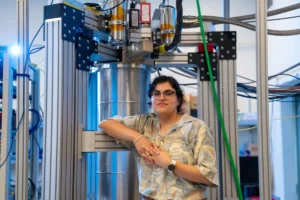
The research team, led by doctoral student Siddharth Doshi and senior authors Professor Nicholas Melosh and Professor Mark Brongersma, drew direct inspiration from cephalopods, marine creatures renowned for their unparalleled ability to seamlessly blend into their surroundings. These animals achieve their dynamic disguise by quickly changing both the color and texture of their skin, a feat that has captivated scientists for decades. "Textures are crucial to the way we experience objects, both in how they look and how they feel," stated Siddharth Doshi, a doctoral student in materials science and engineering at Stanford and the paper’s first author. "These animals can physically change their bodies at close to the micron scale, and now we can dynamically control the topography of a material — and the visual properties linked to it — at this same scale." This unprecedented level of control over material properties at such a minute scale positions the Stanford discovery as a potential paradigm shift in materials science and engineering.
A Novel Mechanism for Dynamic Pattern Generation
The core of this innovation lies in a sophisticated combination of established semiconductor manufacturing techniques and novel polymer science. To create these dynamically shifting textures, the team employed electron-beam lithography, a high-precision technique commonly used to etch patterns onto silicon chips, in conjunction with a specially engineered water-responsive polymer film. The process involves exposing specific regions of the polymer film to a focused beam of electrons. This exposure alters the material’s properties, making the treated regions either more or less absorbent to water. Subsequently, when the material is immersed in water, these differentially exposed regions swell at varying rates and to different extents, giving rise to intricate, three-dimensional patterns that become visible only when the film is wet.
The genesis of this key insight was, as Doshi describes it, serendipitous. In an earlier experimental phase, Doshi was utilizing a scanning electron microscope to examine nanostructures on a polymer film. Rather than discarding these samples after their initial use, he decided to reuse them in subsequent tests. It was during these later experiments that he observed an unexpected phenomenon: the areas of the film that had previously been exposed to the electron beam exhibited distinct behaviors and displayed different colors when re-tested. "We realized that we could use these electron beams to control topography at very fine scales," Doshi recalled, underscoring the accidental yet pivotal nature of the discovery. This accidental observation laid the groundwork for intentionally patterning the polymer at a nanoscale level.
The precision offered by this technique is truly remarkable. The researchers demonstrated its capabilities by creating a miniature, three-dimensional relief map of Yosemite’s iconic El Capitan. When the material is dry, its surface remains perfectly flat and featureless. However, upon the introduction of water, the intricate structure of El Capitan gracefully rises from the film, transforming a two-dimensional surface into a detailed three-dimensional landscape. This ability to switch between a flat state and a complex 3D topography offers a level of dynamic control previously unattainable in soft materials.
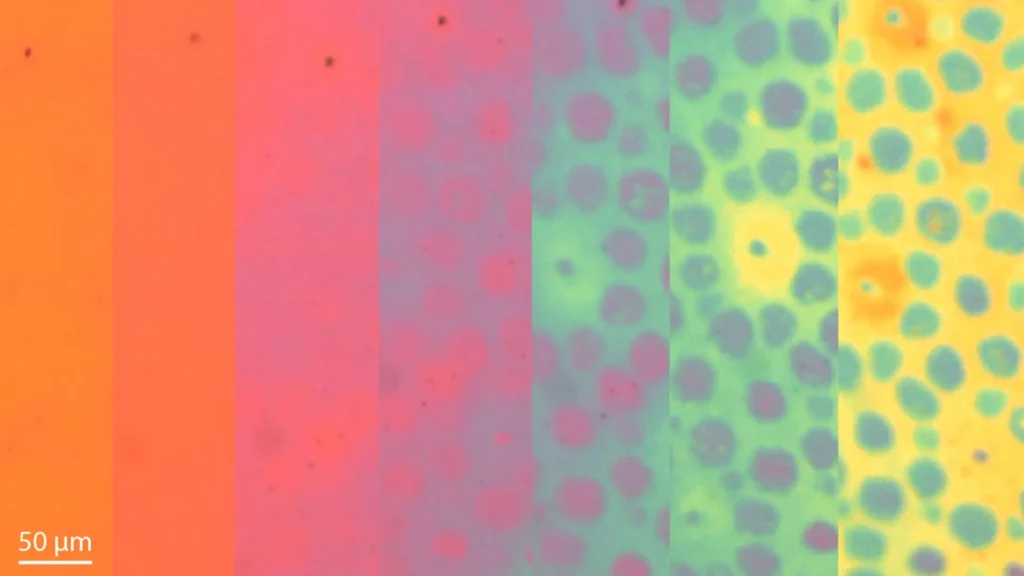
Beyond mere topographical changes, the team also demonstrated control over the material’s optical properties. By meticulously adjusting the degree to which the material swells, the researchers can precisely control how it reflects light. This allows for the dynamic switching between glossy and matte finishes, producing visual effects that surpass the capabilities of current static screens. Crucially, the process is entirely reversible. By introducing an alcohol-like solvent, the water is expelled from the polymer matrix, and the material reverts to its original flat, unpatterned state, ready for another transformation.
The same underlying approach can also generate complex color patterns. The researchers achieved this by sandwiching thin layers of metal on both sides of the polymer film, creating structures known as Fabry-Pérot resonators. These optical resonators are designed to selectively transmit or reflect specific wavelengths of light. As the polymer film expands or contracts due to water absorption or solvent expulsion, the optical path length within these resonators changes, causing the material to display different colors. With a precise balance of water and solvent, a previously plain surface can dynamically transform into a vibrant and intricate array of patterns, showcasing a powerful new method for active color manipulation. "By dynamically controlling the thickness and topography of a polymer film, you can realize a very large variety of beautiful colors and textures," explained Mark Brongersma, a professor of materials science and engineering and a senior author on the paper. "The introduction of soft materials that can expand, contract, and alter their shape opens up an entirely new toolbox in the world of optics to manipulate how things look."
Historical Context and the Quest for Biomimicry
The pursuit of artificial camouflage and dynamically adaptive materials is not new. For decades, scientists and engineers have looked to nature, particularly to cephalopods, for inspiration. Octopuses, cuttlefish, and squid possess specialized skin cells called chromatophores, iridophores, and leucophores, which they can rapidly expand or contract to change their color, pattern, and even texture in milliseconds. This biological marvel allows them to hide from predators, ambush prey, and communicate complex signals.
Previous attempts to replicate this biological functionality in man-made materials have faced significant hurdles. Early efforts often involved incorporating rigid, electrically controlled pixels or microfluidic channels into surfaces. While some success was achieved in changing color, these systems were typically bulky, slow, lacked textural variation, and were often limited to flat surfaces. Materials that could change texture were generally mechanically actuated, leading to slower responses and higher energy consumption. The challenge has always been to create a material that is not only flexible and soft but can also achieve rapid, localized changes in both color and topography at a microscopic scale, mimicking the natural biological process. The Stanford breakthrough addresses these limitations by introducing a soft, swellable material system that can be patterned at the nanoscale, offering a truly dynamic and biomimetic solution. This research builds upon decades of fundamental work in polymer chemistry, microfabrication, and optics, integrating these diverse fields into a coherent and functional system.
Broader Implications and Future Trajectories
The potential applications of this dynamic material extend far beyond mere camouflage, promising transformative impacts across numerous sectors.
-
Advanced Camouflage Systems: The most immediate and intuitive application is in advanced camouflage. When multiple layers of these films are combined, researchers envision the ability to independently adjust both color and texture, allowing the material to seamlessly blend into its surroundings, much like an octopus. While the current prototype requires manual tuning of water and solvent levels to match a background, the team’s ambition is to automate this process. They plan to integrate computer vision and artificial intelligence (AI) systems that can analyze the surrounding environment in real-time and automatically modulate the material’s properties. "We want to be able to control this with neural networks – basically an AI-based system – that could compare the skin and its background, then automatically modulate it to match in real time, without human intervention," Doshi elaborated. Such a system could revolutionize military concealment, making personnel and equipment virtually undetectable, and enable highly adaptive robotics capable of vanishing into diverse operational environments.
-
Wearable Technology and Flexible Displays: The ability to dynamically change color and texture on a flexible substrate opens entirely new possibilities for wearable devices. Imagine smartwatches or clothing that can alter their appearance to match an outfit, display dynamic patterns, or even provide tactile feedback. This could lead to truly personalized and interactive user experiences, far beyond the static displays of today. Flexible e-paper and other display technologies could become more vibrant, responsive, and tactile, integrating seamlessly into our daily lives.
-
Nanophotonics and Optics: The precise control over light reflection and absorption at the nanoscale makes this material a powerful tool in nanophotonics. This field focuses on manipulating light at very small scales for applications in high-speed electronics, secure encryption, and advanced biological sensing. The dynamic nature of the Stanford material could lead to reconfigurable optical components, adaptive lenses, or even new forms of data storage that utilize light in novel ways. For instance, the ability to switch between glossy and matte finishes or generate complex color patterns could lead to adaptive optical filters or modulators that respond to environmental cues.
-
Soft Robotics and Bioengineering: The fine control over surface texture could have significant implications for soft robotics. Small robots could be endowed with the ability to dynamically regulate friction, allowing them to either firmly grip surfaces for climbing or traversal, or to smoothly slide across them. This could enhance their maneuverability and adaptability in complex environments. In bioengineering, the ability to induce subtle changes in material structure at the micron scale could influence how cells behave. This opens doors for creating dynamic cell culture substrates that can guide cell growth and differentiation, smart implants that interact actively with biological tissues, or advanced drug delivery systems. The material’s softness and biocompatibility (given its water-responsive nature) are particularly advantageous here.
-
Artistic and Creative Applications: Recognizing the aesthetic potential of their invention, the research team is already collaborating with artists to explore creative uses for the material. This could lead to interactive art installations, dynamic architectural facades, or innovative forms of fashion that literally come alive with color and texture. "Small changes in the properties of soft materials over micron distances are finally possible, which will open up all sorts of possibilities," Professor Melosh affirmed, expressing optimism about the future.
Challenges and Next Steps
While the Stanford breakthrough represents a monumental step forward, several challenges and avenues for future research remain. Automating the camouflage process through AI integration is a critical next step, moving from manual adjustments to real-time, autonomous adaptation. Researchers will also need to address scalability for potential mass production, exploring efficient manufacturing techniques that can replicate the electron-beam lithography process at an industrial scale. Furthermore, the long-term durability and stability of the polymer film, especially under repeated cycles of swelling and contraction, will need rigorous testing to ensure its viability for practical applications. Understanding the precise chemical and physical changes occurring within the polymer at the molecular level will also be crucial for further optimization and the development of even more advanced functionalities.
A Collaborative Research Effort
This groundbreaking research is a testament to interdisciplinary collaboration. The core team included Siddharth Doshi as the first author, with Professors Nicholas Melosh, Mark Brongersma, and Alberto Salleo as senior authors. Professor Brongersma holds appointments as a professor, by courtesy, of applied physics; a member of Stanford Bio-X, the Wu Tsai Human Performance Alliance, and the Wu Tsai Neurosciences Institute; and an affiliate of the Precourt Institute for Energy. Professor Melosh is also a member of Stanford Bio-X and the Wu Tsai Neurosciences Institute; an affiliate of the Precourt Institute for Energy; and a faculty fellow of Sarafan ChEM-H. Professor Salleo is the Hong She and Vivian W. M. Lim Professor and professor of photon science.
Additional Stanford co-authors who contributed significantly to this research include Associate Professor Polly Fordyce; postdoctoral researchers Nicholas A. Güsken and Gerwin Dijk; Stanford Microfluidics Foundry director Jennifer E. Ortiz-Cárdenas; and graduate students Johan Carlström, Peter Suzuki, and Bohan Li.
The extensive and complex nature of this research was made possible through substantial financial backing from various prestigious organizations. Funding was provided by a Stanford Graduate Fellowship, a Meta PhD Fellowship, the Wu Tsai Human Performance Alliance at Stanford University and the Joe and Clara Tsai Foundation, the German National Academy of Sciences Leopoldina, the Department of Energy, the Air Force Office of Sponsored Research, and the National Science Foundation. This broad base of support underscores the recognized importance and potential impact of this innovative work.
The development of this dynamic, soft material capable of micron-scale topographical and color changes represents a truly interdisciplinary triumph, bridging materials science, optics, engineering, and biomimicry. As research progresses, the ability to control the visual and tactile properties of surfaces in such a sophisticated and responsive manner promises to unlock a new era of adaptive technologies, redefining our interaction with the physical world and blurring the lines between the natural and the engineered.