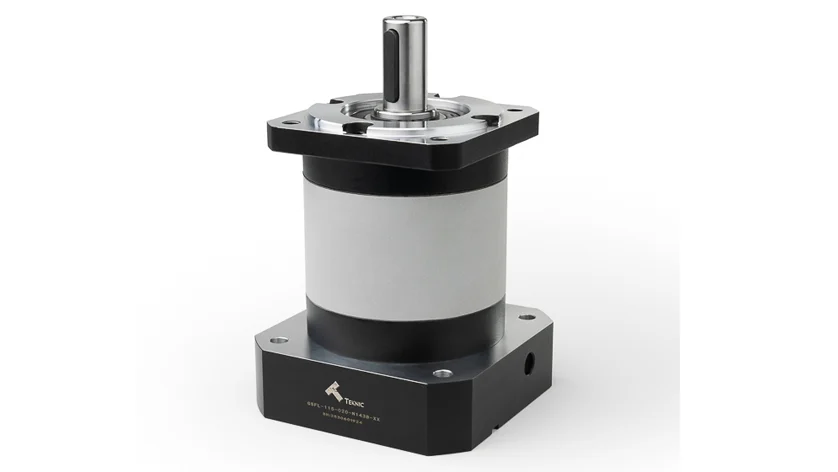
Teknic, a leading innovator in motion control solutions, has announced a significant expansion to its acclaimed precision planetary gearbox line, now encompassing NEMA 56 and 143 input sizes complemented by a robust 115 mm output frame. This strategic addition is poised to enhance the adaptability and performance of industrial automation systems, offering engineers and machine builders a broader spectrum of options for high-precision applications. The newly introduced gearboxes are immediately available in an array of configurations, including multiple frame sizes, diverse gear ratios, various output flanges, and distinct body configurations, specifically engineered to support the rigorous demands of a wide range of motion control tasks. Furthermore, Teknic underscores its commitment to tailored solutions by offering custom configurations, meticulously developed and supported by its dedicated applications engineering team, ensuring optimal integration and performance for unique project requirements.
Addressing Evolving Industry Demands and NEMA Standards
The industrial automation landscape is undergoing rapid transformation, characterized by an escalating demand for higher precision, greater efficiency, and enhanced reliability in motion control systems. Planetary gearboxes are foundational components in this ecosystem, critical for transmitting torque, reducing speed, and providing mechanical advantage in countless applications. Teknic’s expansion, particularly into the NEMA 56 and 143 input sizes, directly addresses these evolving market needs by offering robust and versatile solutions that meet stringent industry standards.
The Crucial Role of Planetary Gearboxes in Modern Automation
Planetary gearboxes, named for their configuration where several "planet" gears revolve around a central "sun" gear, are celebrated for their exceptional torque density, high efficiency, compact design, and low backlash characteristics. These attributes make them indispensable in applications requiring precise motion, such as robotics, CNC machinery, automated guided vehicles (AGVs), packaging equipment, and medical devices. Their ability to deliver high torque in a small footprint, coupled with minimal rotational play (backlash), ensures accuracy and repeatability, which are paramount in modern manufacturing and assembly processes. The choice of a gearbox significantly influences a machine’s overall performance, lifespan, and maintenance requirements. By expanding its offerings, Teknic reinforces its position as a key enabler for advanced industrial automation, providing components that facilitate more agile, precise, and powerful machinery.
Understanding NEMA Standards in Motor Integration
The National Electrical Manufacturers Association (NEMA) standards provide a common framework for motor dimensions, ensuring interchangeability and simplifying the integration process for designers and engineers. NEMA frame sizes, such as 17, 23, 34, 56, and 143, refer to specific physical dimensions and mounting specifications for electric motors. The NEMA 56 and 143 frame sizes, in particular, are typically associated with larger, more powerful motors often found in heavier-duty industrial applications. By offering planetary gearboxes compatible with these larger NEMA input sizes, Teknic directly caters to applications that demand higher power output and robust mechanical coupling. This standardization is vital for streamlining the design process, reducing engineering complexities, and ensuring seamless compatibility between motors and gearboxes from various manufacturers, though Teknic’s solution is optimally designed for integration within its own ecosystem. The inclusion of a 115 mm output frame further indicates the capability of these new gearboxes to handle substantial loads and provide a stable mounting platform for driven components.
Technical Specifications and Unparalleled Versatility
The newly launched planetary gearboxes are engineered for optimal performance and integration. Their availability in multiple frame sizes, gear ratios, output flanges, and body configurations offers an unprecedented level of customization and flexibility. This modular approach allows customers to select the precise gearbox configuration that best matches their application’s specific torque, speed, and dimensional requirements, eliminating the need for costly and time-consuming custom engineering from scratch.

Gear ratios, for instance, are critical in determining the output speed and torque relative to the input motor. A wide range of available ratios enables fine-tuning of machine dynamics, optimizing performance for tasks ranging from high-speed precision movements to high-torque, low-speed operations. Different output flanges provide various mounting interfaces for the driven load, ensuring compatibility with a broad array of mechanical systems and existing machine designs. Similarly, diverse body configurations allow for integration into confined spaces or specific mounting orientations, addressing common challenges in machine design.
Seamless Integration with Teknic’s Motor Ecosystem
A significant advantage of Teknic’s expanded gearbox line is its direct compatibility with a broad spectrum of servo and stepper motors, including Teknic’s own high-performance ClearPath integrated servos and Hudson BLDC servo motors. The gearboxes can be seamlessly paired with NEMA 17, 23, 34, or 56/143 servo or stepper motors. This broad compatibility offers design engineers unparalleled freedom and simplifies the selection process, particularly for those already utilizing or considering Teknic’s motor solutions.
Teknic’s ClearPath integrated servos are renowned for their ease of use, high performance, and built-in drive electronics, simplifying wiring and reducing cabinet space. When paired with the new planetary gearboxes, they form a powerful, compact, and highly efficient motion system. Similarly, the Hudson BLDC servo motors, known for their robustness and dynamic capabilities, gain enhanced torque and control precision when integrated with these new gearboxes. This synergistic relationship between Teknic’s motors and gearboxes provides a fully optimized motion control package, ensuring maximum performance, reliability, and simplified commissioning for customers. The ability to integrate with various NEMA-standard motors, both Teknic’s and third-party options, provides flexibility while promoting Teknic’s own comprehensive solution ecosystem.
Empowering Design and Development Cycles
Recognizing the critical need for comprehensive design resources, Teknic has made an extensive suite of data and tools readily available on its website. This includes detailed 3D models, 2D drawings, comprehensive specifications, transparent pricing information, and critical torque and speed data. Such a wealth of information at engineers’ fingertips significantly accelerates the design and development cycle. Designers can quickly integrate the gearbox models into their CAD systems, perform accurate simulations, and verify fit and function without physical prototyping, thereby reducing design errors, cutting lead times, and ultimately bringing products to market faster. The transparency in pricing also allows for more accurate budgeting and cost-benefit analysis from the initial design phase. This commitment to providing accessible, detailed technical information underscores Teknic’s customer-centric approach and dedication to facilitating efficient engineering workflows.
Strategic Market Positioning and Applications Across Industries
Teknic’s expansion into NEMA 56 and 143 input sizes for its precision planetary gearboxes represents a strategic move to capture a larger share of the high-growth industrial automation market. By offering more robust and versatile gearbox options, Teknic is poised to address a broader range of applications, particularly those requiring higher power and torque transmission. This move strengthens Teknic’s competitive stance against other motion control component manufacturers by offering a more complete and integrated solution portfolio.
Driving Performance in Key Industrial Sectors
The implications of this product expansion are far-reaching across various industrial sectors:
- Robotics: In industrial and collaborative robotics, precision and torque density are paramount. The new gearboxes can power larger robot joints, enabling higher payloads and faster, more accurate movements for tasks like welding, material handling, and assembly.
- CNC Machining: Machine tools demand extreme precision and rigidity. These gearboxes can enhance the performance of axes in CNC milling machines, lathes, and grinding machines, contributing to superior surface finishes and tighter tolerances.
- Packaging Machinery: High-speed packaging lines require reliable, precise, and synchronized motion. The expanded gearbox line offers robust solutions for conveyors, filling machines, and sealing mechanisms, improving throughput and reducing downtime.
- Material Handling: Automated storage and retrieval systems (AS/RS), palletizers, and sorting systems benefit from durable gearboxes that can handle heavy loads and continuous operation, increasing efficiency in logistics and warehousing.
- Medical Devices: In areas like laboratory automation, diagnostic equipment, and patient positioning systems, high precision and quiet operation are critical. Teknic’s precision gearboxes contribute to the reliability and accuracy required in these sensitive applications.
- Semiconductor Manufacturing: The semiconductor industry demands ultra-high precision for wafer handling, inspection, and processing equipment. These gearboxes can provide the exacting motion control necessary for such intricate tasks.
By catering to these diverse and demanding industries, Teknic not only expands its market reach but also provides significant value to its customers through enhanced machine performance, reduced design complexity, faster time-to-market, and improved overall system reliability and cost-efficiency.
Expert Perspectives and Corporate Vision
While no direct quotes from Teknic spokespersons were provided in the initial announcement, industry analysts and observers can infer the strategic intent behind this product expansion. A spokesperson for Teknic, if quoted, would likely emphasize the company’s unwavering commitment to innovation and its responsiveness to customer needs. "This expansion of our precision planetary gearbox line is a direct response to the evolving demands of industrial automation," a Teknic executive might state. "Our customers require more versatile, robust, and precisely engineered solutions to power the next generation of intelligent machines. By introducing NEMA 56 and 143 input sizes with the 115 mm output frame, we are not just expanding our product catalog; we are empowering engineers with the tools they need to achieve higher levels of performance, efficiency, and reliability in their designs. This is a testament to our dedication to providing comprehensive, integrated motion control solutions that simplify design, accelerate deployment, and enhance overall system value, especially when paired with our ClearPath and Hudson motor lines."
Industry analysts are expected to view this expansion as a strategic and well-timed move for Teknic. "The market for precision motion control components, particularly planetary gearboxes, continues to grow robustly, driven by the proliferation of automation and robotics across all industrial sectors," noted a hypothetical analyst from a leading market research firm. "Teknic’s decision to broaden its NEMA compatibility, especially for larger frame sizes, allows them to tap into a wider segment of heavy-duty applications. Their emphasis on customization and seamless integration with their existing motor ecosystem provides a compelling value proposition for OEMs and system integrators looking for reliable, high-performance, and unified solutions."
A Strategic Expansion in Teknic’s Product Roadmap
The introduction of these new gearbox options is not an isolated event but rather a logical progression in Teknic’s continuous product development roadmap. This expansion likely stems from extensive market research, customer feedback, and a deep understanding of emerging trends in industrial automation. Over time, Teknic has systematically built a reputation for delivering high-quality, high-performance motion control components. This latest offering signifies a maturation of their product portfolio, enabling them to offer more complete system solutions. The development cycle for such precision components typically involves rigorous design, prototyping, testing, and validation phases, ensuring that the new gearboxes meet Teknic’s stringent quality standards and performance benchmarks before being released to the market. This disciplined approach underscores the reliability and engineering excellence that customers have come to expect from the brand.
Broader Implications for Industrial Automation and Future Outlook
Teknic’s expanded planetary gearbox line holds significant broader implications for the industrial automation sector. As industries increasingly adopt Industry 4.0 principles, characterized by interconnected systems, real-time data, and autonomous operations, the demand for highly reliable and precise motion control components will only intensify. These new gearboxes, with their enhanced versatility and robust design, directly contribute to building more resilient, efficient, and intelligent manufacturing and operational environments.
The emphasis on seamless integration, particularly with Teknic’s own motor lines, signals a trend towards more holistic, vendor-supplied solutions that reduce integration complexities for end-users. This ‘system approach’ can lead to faster commissioning times, optimized performance, and simplified troubleshooting, thereby reducing the total cost of ownership for automated machinery. Looking ahead, this strategic move positions Teknic to further capitalize on the burgeoning markets for advanced robotics, smart factories, and highly automated production lines. It suggests a future where Teknic continues to innovate, potentially introducing even higher power-density gearboxes, more advanced sensor integration, or further expanding its motor compatibility to address the ever-evolving needs of global industries striving for greater productivity and operational excellence. The continuous pursuit of precision, efficiency, and adaptability in motion control components like these new planetary gearboxes is fundamental to driving the next wave of industrial innovation.