The journey of a 3D printed part from the printer bed to its final application is often punctuated by a critical, yet sometimes overlooked, stage: postprocessing and surface finishing. These crucial steps are indispensable for transforming raw, layer-marked components into functional, aesthetically pleasing, and application-ready products. The inherent nature of additive manufacturing (AM) processes, while offering unparalleled design freedom, frequently leaves behind surface imperfections such as visible layer lines, residual powder, support material remnants, and internal roughness. Addressing these challenges necessitates a diverse and evolving array of postprocessing techniques, each tailored to specific materials, geometries, and end-use requirements.
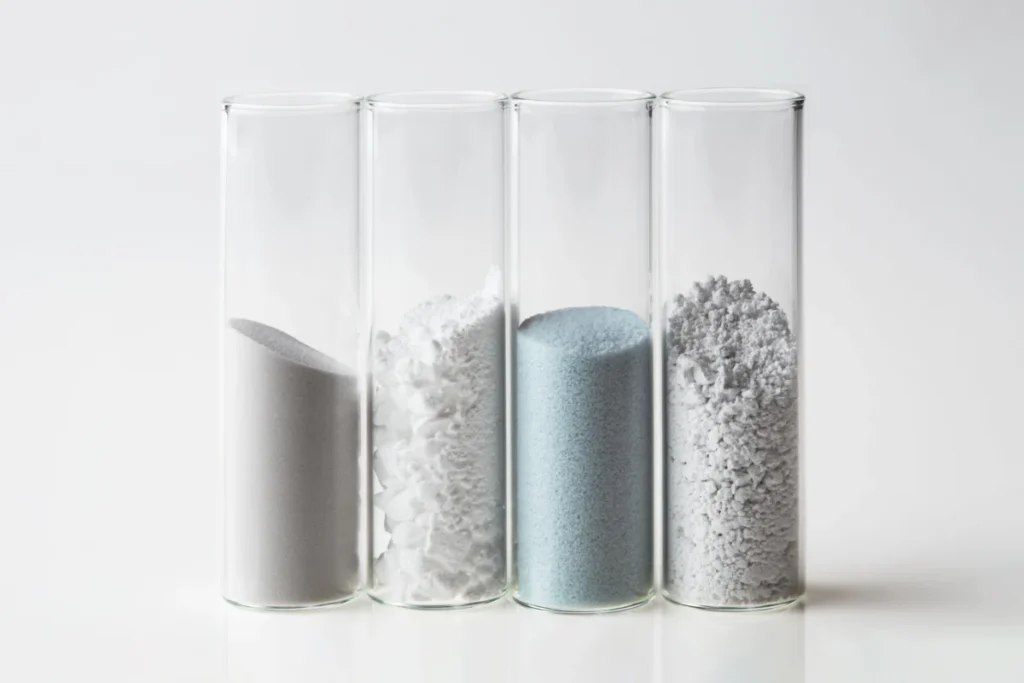
A prime example of innovation in this domain comes from materials manufacturer Himed, which has developed a sophisticated hydroxyapatite (HA) surface finishing process specifically for 3D printed medical implants. Hydroxyapatite, a mineral naturally found in bone and teeth, is widely recognized for its biocompatibility and is commonly employed as a coating to promote osseointegration in medical implants. Himed’s pioneering approach leverages HA not just as a biocompatible coating, but also as an abrasive medium for surface preparation. This dual functionality addresses a significant hurdle in the AM of medical devices: achieving both a smooth, defect-free surface and enhancing the implant’s ability to integrate with living bone tissue. The development signifies a move towards integrated postprocessing solutions that simultaneously improve surface quality and functional performance, particularly critical for implants destined for orthopedic and dental applications.

The need for advanced surface finishing in AM is underscored by the sheer variety of materials and printing technologies employed. From intricate metal lattice structures for aerospace components to complex polymer geometries for consumer goods, each application presents unique postprocessing demands. The absence of a singular, universal "additive manufacturing surface finishing" process means that manufacturers must meticulously select the most appropriate sequence of techniques. This selection is driven by a complex interplay of factors including the base material (e.g., titanium alloys, stainless steel, polymers, ceramics), the part’s geometric complexity (especially internal features like channels and cavities), the desired surface roughness (Ra values), and the ultimate performance criteria of the final product. For instance, a medical implant might require a near-perfectly smooth, biocompatible surface, while a functional prototype for a fluid dynamics study might prioritize the removal of internal roughness to ensure accurate flow characteristics.
As the AM industry matures, so too does the sophistication and availability of postprocessing technologies. The following details nine of the most prevalent and innovative techniques currently employed to refine 3D printed parts.
1. Media Blasting (Bead, Sand, or Soda)
Media blasting stands as a foundational postprocessing step for a vast majority of metal and polymer AM parts. This technique utilizes pressurized media – ranging from glass beads and sand to gentler soda or specialized abrasives like hydroxyapatite – to effectively strip away loose powder, remove minor surface defects, and impart a uniform matte finish. Its appeal lies in its speed and cost-effectiveness, making it an ideal initial step for many production workflows.

Himed’s application of hydroxyapatite (HA) in media blasting is particularly noteworthy. Beyond its abrasive properties, HA’s inherent biocompatibility makes it an excellent choice for medical applications. By using HA as the blasting medium, manufacturers can simultaneously deburr and clean the part while also preparing its surface for subsequent biocompatible coatings or enhancing its natural osseointegration potential. Scanning Electron Microscope (SEM) images often showcase the dramatic transformation achieved through HA blasting, illustrating the removal of undesirable molten beads and the creation of a uniform, textured topography conducive to biological integration. This dual-action approach significantly streamlines the manufacturing process for implants, reducing the number of separate postprocessing steps and associated costs. The effectiveness of this method is evident in its ability to prepare complex internal geometries, such as lattice structures, for their intended biomedical roles.
2. Abrasive Flow Machining (AFM)
Abrasive Flow Machining (AFM) offers a sophisticated solution for smoothing intricate internal passages and complex geometries that are often challenging to reach with other methods. In AFM, a viscous, abrasive-laden putty is forcefully pumped back and forth through the part’s internal channels under significant pressure. This continuous, controlled flow of abrasive media effectively deburrs, polishes, and radiuses internal features. AFM is a preferred method for finishing components like fuel nozzles, manifolds, and hydraulic blocks, where internal surface finish directly impacts fluid dynamics, efficiency, and component lifespan. The ability to precisely control the media’s aggressiveness and flow duration allows for tailored surface finishing to meet exacting specifications.
3. Tumbling and Vibratory Finishing
Tumbling and vibratory finishing are well-established mass finishing techniques that have been adapted for AM components. These processes involve placing parts in a barrel or bowl along with abrasive media and a finishing compound, then agitating the mixture for extended periods, often hours or even days. The constant motion causes the media to rub against the parts, thereby deburring, smoothing, and breaking sharp edges. This method is particularly effective for batch processing small to medium-sized parts and for achieving a consistent finish across multiple components simultaneously.

Manufacturers like Mass Finishing Inc. (MFI) are advancing this technology with solutions such as centrifugal barrel tumbling. This technique operates on a principle akin to a "Ferris wheel," where barrels containing the parts, media, and compounds are rotated. The high rotational speeds generate significant centrifugal force, accelerating the finishing process compared to traditional vibratory methods. MFI’s HZ-6 centrifugal barrel tumbler, for instance, offers a compact design with a six-liter capacity, enabling rapid, high-polished finishes on additive components. The ability to load multiple chambers allows for increased throughput, making it an efficient option for industries requiring high volumes of finished AM parts. The accelerated action means that delicate internal features can be refined without excessive material removal or distortion, a critical consideration for complex AM designs.
4. Manual Grinding, Sanding, and Polishing
Despite the advent of automated and advanced technologies, manual grinding, sanding, and polishing remain indispensable in many AM workflows, especially for larger structural parts, prototypes, and the meticulous removal of support witness marks. These hands-on processes allow for precise attention to detail, enabling operators to address specific surface imperfections with a high degree of control. However, they are often the most labor-intensive and therefore the most significant cost drivers in low-volume metal AM production. The skill and experience of the technician are paramount in achieving the desired finish without compromising the part’s integrity or dimensional accuracy. For critical applications requiring an exceptional surface finish, skilled manual polishing can often achieve results that are difficult to replicate with automated methods alone.
5. Chemical and Electrochemical Polishing
Chemical and electrochemical polishing offer advanced methods for achieving exceptionally smooth surfaces, particularly on internal features and complex geometries. These processes involve submerging parts in specialized chemical solutions that selectively dissolve microscopic peaks on the surface, while the valleys remain relatively intact, resulting in a smoother finish. Electrochemical polishing additionally uses an electrical current to enhance the dissolution process.

These methods are particularly advantageous for AM parts with intricate internal structures, such as lattice structures, conformal cooling channels used in mold making, and complex medical implants. The ability to treat internal surfaces without mechanical intervention is a significant benefit. Holdson, a prominent provider of electrochemical solutions, has introduced Electroform, an acid-free electrochemical polishing system. This innovation addresses environmental and safety concerns by eliminating hazardous chemicals, offering a more sustainable and repeatable approach to achieving high-quality finishes across a diverse range of AM materials. The development of such eco-friendly solutions is becoming increasingly important as the AM industry prioritizes sustainability alongside performance.
6. Laser Polishing
Laser polishing represents a sophisticated, non-contact method for surface finishing. In this technique, a defocused laser beam is used to remelt a very thin layer of the part’s surface. Surface tension then acts to smooth out any microscopic irregularities or asperities. The primary advantages of laser polishing are the absence of consumables, the elimination of media that could become lodged in internal features, and a high degree of control over the process. This makes it an attractive option for small, high-value parts, particularly in sectors like dentistry and aerospace, where precision and surface integrity are paramount. While the initial investment in laser polishing equipment can be significant, its efficiency and the quality of the finish it can achieve make it a compelling technology for specialized applications.
7. CNC Machining
For applications demanding extremely tight tolerances, critical mating surfaces, bearing journals, and sealing faces, CNC machining remains a cornerstone of postprocessing. While additive manufacturing excels at creating complex geometries, achieving the micron-level precision required for some functional components often necessitates subtractive processes. The integration of AM with CNC machining is becoming increasingly prevalent, leading to the development of hybrid manufacturing machines that combine additive deposition (such as Directed Energy Deposition or Laser Powder Bed Fusion) with subtractive milling capabilities in a single setup.

Addman Advanced Manufacturing Solutions exemplifies this trend by integrating its metal AM operations with precision CNC machining. Compact metal parts are initially additively manufactured using Laser Powder Bed Fusion (LPBF), and then subjected to a range of in-house CNC machining options for final surface finishing and dimensional accuracy. This hybrid approach leverages the strengths of both manufacturing paradigms, enabling the production of highly complex parts with superior surface finish and tight tolerances, thereby expanding the application scope of AM in critical industries.
8. Vapor Smoothing
Vapor smoothing is a technique that offers an efficient way to improve the surface finish of many 3D printed parts, particularly those made from polymers. In this process, printed parts are placed within an airtight vessel and exposed to a solvent vapor. The vapor gently interacts with the surface of the part, causing the outermost layer to melt and flow, effectively smoothing out layer lines and other surface imperfections. Automated systems are increasingly being adopted for vapor smoothing due to their consistency and safety, although the process can also be performed manually within sealed containers. This method is particularly effective for parts with complex geometries and internal features, as the vapor can reach areas inaccessible to mechanical polishing. The resulting surface is often significantly smoother, with improved aesthetic appeal and reduced friction.
9. Coatings and Plating
Coatings and plating represent a final layer of postprocessing that can significantly enhance the functionality and appearance of AM parts. After mechanical surface preparation, various coatings can be applied to address specific needs. Anodizing, Physical Vapor Deposition (PVD), electroless nickel, and powder coating are among the common techniques. These coatings can serve multiple purposes: masking minor surface defects, improving wear and corrosion resistance, enhancing electrical conductivity, or providing a uniform and aesthetically pleasing cosmetic appearance.

A notable advancement in this area is the UV powder coating process developed through a collaboration between Streamline 3D and Keyland Polymer. This innovative process utilizes UV-curable powder coatings formulated to melt and flow at a lower temperature, around 220°F. Following this initial stage, the coating is immediately cured by UV light, minimizing the heat exposure to the part. The entire process, taking approximately eight minutes, results in vibrant, consistent colors with a low scrap rate and high scalability. This is particularly beneficial for heat-sensitive AM materials and for applications requiring rapid, high-volume color customization. The ability to achieve such durable and visually appealing finishes quickly and efficiently opens up new possibilities for AM parts in consumer goods, automotive interiors, and other visually demanding sectors.
The continuous evolution of these postprocessing and surface finishing techniques is fundamental to unlocking the full potential of additive manufacturing. As AM technologies become more widespread and sophisticated, the demand for efficient, cost-effective, and high-performance postprocessing solutions will only intensify. Industry leaders are actively investing in research and development to refine existing methods and pioneer new approaches, ensuring that 3D printed parts can meet and exceed the rigorous demands of diverse applications, from life-saving medical implants to high-performance aerospace components. The synergy between additive manufacturing and advanced postprocessing is a critical enabler for the continued growth and integration of AM into mainstream manufacturing.