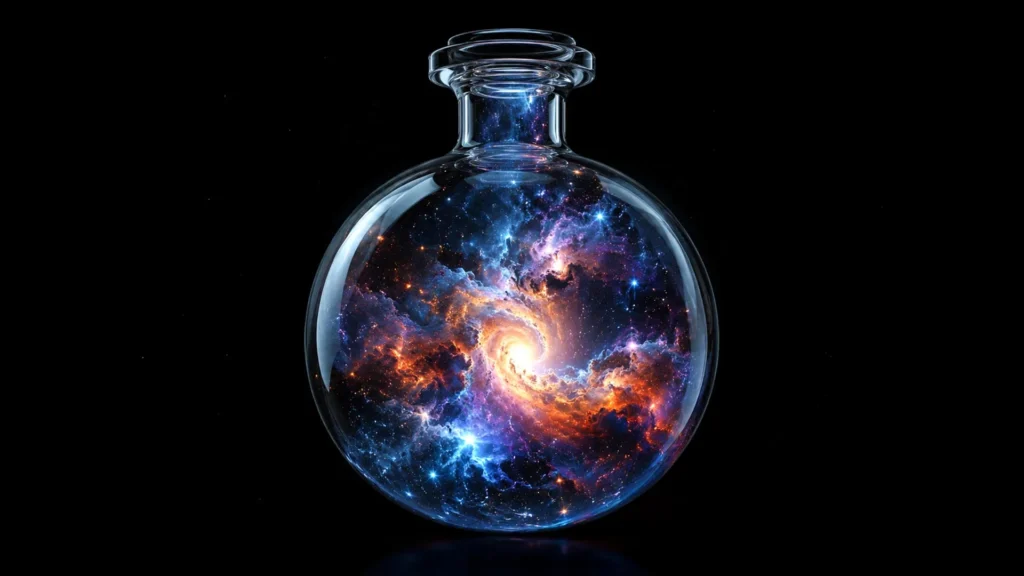
In a breakthrough that bridges the gap between laboratory physics and the far reaches of the interstellar medium, a doctoral researcher at the University of Sydney has successfully synthesized cosmic dust from scratch, effectively recreating the conditions of the early universe within a glass bottle. Linda Losurdo, a PhD candidate specializing in materials and plasma physics within the School of Physics, has developed a method to simulate the high-energy environments found near aging stars and supernova remnants. Her work provides a new window into the chemical evolution that occurred billions of years before the formation of Earth, offering compelling evidence for how the fundamental ingredients of life may have been forged in the vacuum of space.
By combining common gases such as nitrogen, carbon dioxide, and acetylene and subjecting them to extreme electrical stress, Losurdo was able to generate carbon-rich dust particles that are chemically and structurally identical to the material found in interstellar space, comets, and meteorites. This achievement, recently published in The Astrophysical Journal of the American Astronomical Society, represents a significant leap forward in the field of astrochemistry. It allows scientists to "reverse engineer" the history of the cosmos without having to wait for rare celestial samples to fall to Earth.
Simulating the Stellar Forge: The Methodology
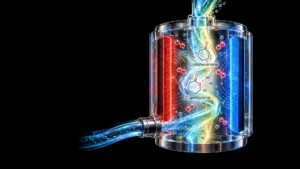
The experiment was conducted under the supervision of Professor David McKenzie, a prominent figure in plasma physics. To replicate the near-vacuum conditions of deep space, the research team utilized a sophisticated vacuum pump system to evacuate air from specialized glass tubes. Once the tubes reached a state of near-emptiness, they were backfilled with a precise mixture of nitrogen, carbon dioxide, and acetylene—gases that are prevalent in the atmospheres of carbon-rich stars and the clouds of gas known as nebulae.
The core of the experiment involved the application of a massive electrical potential, reaching approximately 10,000 volts. This intense energy input transformed the gas mixture into a "glow discharge" plasma. In this state, the gas molecules are stripped of electrons and subjected to constant bombardment by ions. This high-energy environment mirrors the conditions in the outer envelopes of giant, dying stars, where the "puffs" of plasma ejected into space undergo rapid chemical transformations.
For approximately one hour, the electrical discharge forced the original, simple molecules to break apart. In the chaotic environment of the plasma, the resulting atomic fragments recombined into significantly more complex chemical structures. Over the course of the experiment, these new materials coalesced into solid particles, eventually settling onto silicon chips placed inside the tubes. The result was a thin coating of "cosmic dust," which in some instances appeared as sparkling, microscopic fragments reminiscent of the material found in the hearts of meteorites.
The Significance of CHON Molecules
The dust produced in the University of Sydney laboratory is particularly noteworthy because of its chemical composition. The particles are rich in what scientists call CHON molecules—complex combinations of carbon, hydrogen, oxygen, and nitrogen. These four elements are the primary building blocks of all known life, forming the basis of proteins, DNA, and metabolic processes.
The presence of these molecules in laboratory-grown dust suggests that the "seeds" of life do not necessarily require a planetary environment to form. Instead, the specific chemical pathways identified by Losurdo indicate that these organic structures can be synthesized in the harsh, high-radiation environments surrounding stars.
"We no longer have to wait for an asteroid or comet to come to Earth to understand their histories," Losurdo explained. "You can build analogue environments in the laboratory and reverse engineer their structure using their infrared fingerprints. This can give us huge insight into how ‘carbonaceous cosmic dust’ can form in the plasma puffed out by giant, old stars or in cosmic nurseries where stars are being born."
A Timeline of Cosmic Delivery
The research contributes to a long-standing debate in the scientific community regarding the origins of Earth’s biosphere. While some theories suggest that life’s building blocks formed in the "primordial soup" of early Earth’s oceans, another prominent theory—known as panspermia or cosmic delivery—posits that these materials arrived from space.
The timeline of Earth’s early history supports the latter possibility. From approximately 4.56 billion to 3.5 billion years ago, during a period known as the Late Heavy Bombardment, the young Earth was relentlessly struck by meteorites, micrometeorites, and interplanetary dust particles. These objects are known to carry vast quantities of organic material. Losurdo’s research helps clarify the "pre-history" of this material, tracing its formation back to the stellar environments that existed even before our solar system took shape.
By demonstrating that CHON-rich dust forms readily in plasma environments, the study suggests that the universe is naturally predisposed to creating organic complexity. When these dust particles were eventually trapped in the ice of comets or the rock of asteroids, they were preserved for eons until they were delivered to the surface of a young, hospitable Earth.
Building a Library of Infrared Fingerprints
One of the most practical applications of this research is the creation of a comprehensive database of "infrared fingerprints." In astronomy, researchers cannot physically touch the distant clouds of dust they observe through telescopes. Instead, they rely on spectroscopy—the study of how light interacts with matter.
Different chemical bonds vibrate at specific frequencies, emitting or absorbing light in unique patterns within the infrared spectrum. These patterns act as molecular signatures. By creating various types of cosmic dust in the laboratory under controlled conditions, Losurdo and Professor McKenzie are building a library that astronomers can use to identify the materials they see in deep space.
If an astronomer observes a specific infrared signal in a star-forming region, they can now compare it to the University of Sydney’s database. A match would not only identify the chemical makeup of that distant dust but also provide clues about the temperature, pressure, and radiation levels of the environment where it formed.
Professor McKenzie noted the importance of this comparative approach. "By making cosmic dust in the lab, we can explore the intensity of ion impacts and temperatures involved when dust forms in space. That’s important if you want to understand the environments inside cosmic dust clouds, where life-relevant chemistry is thought to be happening. This also helps us interpret what a meteorite or asteroid fragment has been through over its lifetime."
Academic Recognition and Institutional Support
The impact of this research has already been recognized by the international scientific community. Late last year, Linda Losurdo received the award for best presentation at the Annual Meeting of the Meteoritical Society, a prestigious gathering of experts in the study of extraterrestrial materials. The award highlights the novelty of using plasma physics to solve problems that have traditionally been the domain of geology and astronomy.
The study was supported by several key institutions, reflecting the interdisciplinary nature of the work. Funding was provided by the Australian Research Council (ARC), and the researchers utilized the University of Sydney node of Microscopy Australia to analyze the microscopic structure of the synthesized dust. The authors have reported no competing interests, emphasizing the purely scientific motivations of the project.
Broader Implications for the Search for Life
The ability to recreate cosmic dust in a bottle has profound implications for our understanding of the universe’s habitability. If the building blocks of life are a standard byproduct of stellar evolution, then the chemical precursors for life are likely distributed throughout every galaxy in the universe.
This research aligns with ongoing data collection from the James Webb Space Telescope (JWST), which is currently providing unprecedented views of "cosmic nurseries" and the dusty disks around young stars. By providing a laboratory-based reference point, Losurdo’s work enhances the ability of NASA and other space agencies to interpret the complex organic signals being detected in distant solar systems.
Furthermore, the study sheds light on the resilience of organic matter. The fact that these molecules can survive the 10,000-volt environment of a laboratory plasma suggests they are robust enough to endure the journey through interstellar space. This durability is a prerequisite for any material that might eventually contribute to the emergence of life on a distant planet.
As science continues to probe the mystery of how inanimate matter became living organisms, the work being done in Sydney provides a crucial link. It suggests that the story of life does not begin on Earth, but rather in the energetic "bottles" of the cosmos—the plasma-filled environments around the stars themselves. By mastering the art of making cosmic dust on Earth, researchers are finally learning how to read the ancient record written in the stars.