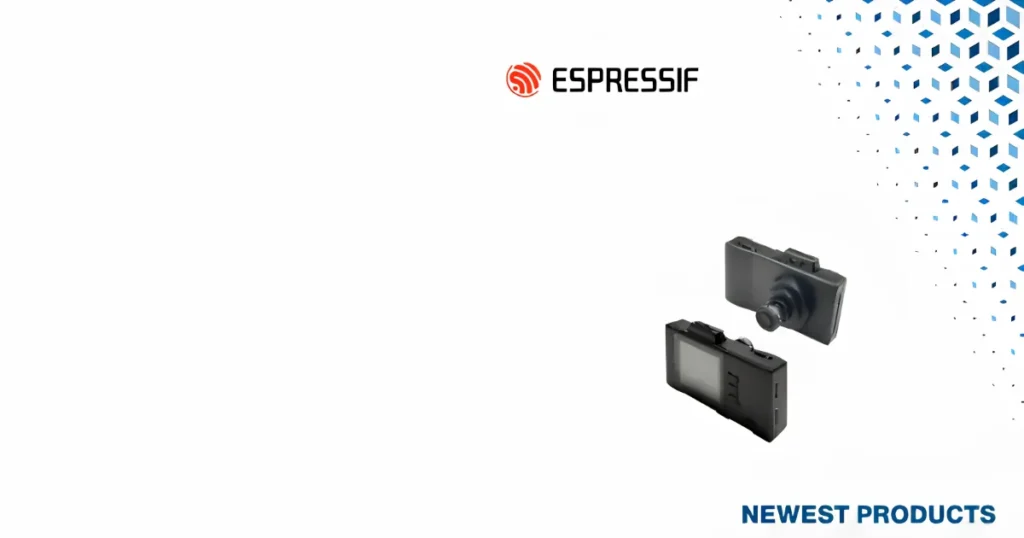
Mouser Electronics, a leading global authorized distributor of semiconductors and electronic components, has announced immediate availability and shipping of the new Espressif Systems ESP32-P4X-EYE vision development kit. This compact and feature-rich platform is meticulously engineered with a primary focus on camera-centric applications, poised to accelerate innovation across critical domains such such as artificial intelligence (AI), edge computing, human-machine interface (HMI), and the burgeoning Internet of Things (IoT) ecosystem. The kit consolidates essential functionalities for modern embedded vision systems into a streamlined, mini digital camera-style form factor, offering developers an unprecedented level of integration and ease of use.
The ESP32-P4X-EYE vision development kit represents a significant stride in addressing the growing demand for sophisticated, yet accessible, edge AI solutions. Its design philosophy centers on combining robust image capture, efficient local processing, intuitive display capabilities, and seamless wireless connectivity. This holistic integration within a single, portable device positions it as an ideal tool for a diverse array of target applications. These include, but are not limited to, advanced smart surveillance cameras capable of intelligent event detection, vision model deployment for real-time object recognition and anomaly detection, environmental monitoring systems requiring visual data input, and a new generation of highly connected camera systems for both industrial and consumer sectors. The compact nature of the device also makes it highly suitable for rapid prototyping and field deployment in scenarios where space and power efficiency are paramount.
RISC-V Processing for Advanced Edge Vision
At the core of the ESP32-P4X-EYE vision development kit lies the powerful Espressif ESP32-P4 microcontroller. This sophisticated system-on-chip (SoC) is distinguished by its dual-core 400 MHz RISC-V processor, a testament to the increasing adoption and maturity of the open-source instruction set architecture in high-performance embedded applications. The inclusion of a RISC-V core offers several advantages, including flexibility, power efficiency, and a rapidly expanding ecosystem, making it an attractive choice for demanding edge processing tasks. The ESP32-P4 is further bolstered by support for up to 32 MB of PSRAM, providing ample memory for complex AI models, high-resolution image buffering, and intricate application logic—a crucial factor for real-time vision processing where data throughput can be substantial.
Beyond its formidable processing capabilities, the ESP32-P4 features a comprehensive set of interfaces vital for vision applications. It supports USB 2.0, facilitating high-speed data transfer and peripheral connectivity, alongside MIPI-CSI (Camera Serial Interface) and MIPI-DSI (Display Serial Interface). These MIPI interfaces are industry standards for connecting cameras and displays, ensuring high bandwidth and low latency data transmission, which is critical for real-time video streaming and display. Furthermore, the inclusion of an integrated H.264 encoder is a pivotal feature. H.264 is a widely adopted video compression standard that enables efficient encoding of video streams, significantly reducing bandwidth requirements for transmission and storage while maintaining high visual quality. This capability provides developers with the essential processing and connectivity infrastructure needed to develop and deploy a wide range of real-time image and video applications, from live streaming surveillance to sophisticated vision-based analytics.
Mouser Electronics emphasizes that the kit’s design is specifically tailored to foster innovation in AI, edge computing, and HMI development. By providing robust hardware capable of locally collecting and processing both image and audio data, the ESP32-P4X-EYE empowers developers to create intelligent devices that can make decisions at the source, reducing reliance on cloud infrastructure, minimizing latency, and enhancing data privacy. This local processing paradigm is central to the philosophy of edge computing, where computational power is brought closer to the data source, transforming raw data into actionable insights instantaneously.
Integrated Camera, Display, and Audio for Comprehensive HMI
The Espressif Systems ESP32-P4X-EYE vision development kit excels in its integrated peripheral set, designed to offer a complete out-of-the-box experience for vision and HMI applications. Central to its vision capabilities is an onboard camera, seamlessly integrated into the compact enclosure. This immediate availability of image capture hardware eliminates the initial hurdle for developers who might otherwise spend valuable time sourcing and integrating separate camera modules. Complementing the camera is a rear 1.54-inch SPI LCD display, providing an immediate visual feedback mechanism for developers. This display can be used to show captured images, video feeds, user interfaces, or diagnostic information, making it invaluable for debugging and user interaction in HMI applications.
Audio capabilities are also thoughtfully included, with an integrated digital microphone enabling the capture of sound alongside visual data. This dual modality is increasingly important for applications requiring a richer understanding of their environment, such as smart home devices responding to voice commands or surveillance systems detecting unusual audio patterns. To facilitate user interaction and control, the kit incorporates a rotary encoder and a push-switch, offering tactile input methods that are essential for many HMI designs, allowing for menu navigation, setting adjustments, or triggering specific functions without external components.
Furthermore, a MicroSD card interface is integrated for local storage, providing developers with a convenient and scalable method to capture and store image and audio data directly on the device. This local storage capability is critical for applications that require offline data logging, temporary buffering of video streams, or the storage of machine learning models and configuration files. The strategic integration of these diverse functions—camera, display, audio, user input, and local storage—onto a single development platform significantly simplifies the prototyping process. Developers are no longer required to assemble individual camera, display, and control components separately, which traditionally consumes considerable time and effort. This streamlined approach accelerates the development cycle, allowing engineers to focus more on application logic and less on hardware integration complexities. The camera-style enclosure further enhances this advantage, offering a compact and aesthetically pleasing platform that is immediately ready for evaluating potential vision applications, mirroring the form factor of many end-user products.
ESP32-C6 Adds Versatile Wireless Connectivity
Recognizing the indispensable role of connectivity in modern IoT and edge computing solutions, the ESP32-P4X-EYE vision development kit ingeniously integrates Espressif’s ESP32-C6-MINI-1 module. This module brings a robust suite of wireless communication capabilities to the platform, ensuring that vision-enabled devices can seamlessly interact with networks and other smart devices. The ESP32-C6-MINI-1 supports Wi-Fi, providing high-speed internet connectivity for cloud integration, data offloading, and remote access. Crucially, it also includes support for IEEE 802.15.4, enabling short-range, low-power mesh networking protocols such as Thread and Zigbee, which are foundational for many smart home and industrial automation ecosystems. Complementing these, Bluetooth LE (Low Energy) connectivity is also integrated, facilitating direct communication with smartphones, wearables, and a wide array of peripheral devices for configuration, data transfer, and control.
The ESP32-C6-MINI-1 module features an integrated PCB antenna, simplifying hardware design and reducing the need for external antenna components, thereby contributing to the kit’s compact footprint. For advanced developers or specific application requirements, peripherals can also be connected to the ESP32-P4X-EYE using jumper wires, offering flexibility for expansion and customization. The synergistic combination of advanced vision processing capabilities from the ESP32-P4 and the comprehensive wireless connectivity provided by the ESP32-C6-MINI-1 module makes the kit exceptionally well-suited for developing connected applications across an extensive range of sectors. These include sophisticated smart home systems that incorporate visual presence detection or facial recognition, industrial automation solutions leveraging machine vision for quality control and process monitoring, healthcare devices for remote patient monitoring or assistive technologies, and innovative consumer electronics that blend visual interaction with seamless connectivity. This dual-chip architecture, with one dedicated to high-performance vision processing and the other to robust wireless communication, exemplifies Espressif’s approach to delivering optimized, application-specific solutions.
The Rise of Edge AI and the Context of Espressif’s Innovation
The launch of the ESP32-P4X-EYE vision development kit comes at a pivotal moment in the evolution of embedded systems and artificial intelligence. The paradigm of edge computing, where data processing occurs close to the source of data generation rather than in centralized cloud servers, is gaining unprecedented traction. This shift is driven by several factors: the need for real-time decision-making, concerns over data privacy and security, limitations in network bandwidth, and the desire to reduce latency for mission-critical applications. AI at the edge, specifically, involves deploying machine learning models directly onto devices, enabling them to interpret sensor data, recognize patterns, and act autonomously without constant cloud interaction.
Espressif Systems has been a significant player in the IoT landscape for years, primarily known for its highly popular ESP8266 and ESP32 series of Wi-Fi and Bluetooth-enabled microcontrollers. These chips democratized connectivity for countless hobbyists and professional developers, fostering a vast ecosystem of IoT devices. The introduction of the ESP32-P4, with its focus on high-performance processing and RISC-V architecture, signifies Espressif’s strategic expansion into more demanding embedded AI and vision applications. This evolution reflects a natural progression, as increasingly sophisticated IoT devices require not just connectivity but also the intelligence to process complex sensory data, particularly visual information.

The global market for edge AI hardware is projected to grow substantially, with various reports indicating a compound annual growth rate (CAGR) exceeding 20% in the coming years, reaching tens of billions of dollars. This growth is fueled by demand from sectors like smart cities, industrial IoT, automotive, and consumer electronics, all of which increasingly rely on embedded vision for tasks ranging from predictive maintenance to autonomous navigation. However, developing for edge AI presents unique challenges, including power constraints, memory limitations, the complexity of deploying and optimizing AI models on resource-constrained hardware, and the integration of diverse peripherals. The ESP32-P4X-EYE directly addresses many of these challenges by offering a highly integrated, optimized, and developer-friendly platform.
Strategic Collaboration: Mouser and Espressif
Mouser Electronics’ role in distributing the ESP32-P4X-EYE kit is crucial for its market penetration and accessibility to a global developer base. As a global authorized distributor, Mouser provides engineers and purchasers with the latest products, cutting-edge technologies, and extensive technical resources. This partnership ensures that Espressif’s innovative vision development kit can reach a wide audience, from individual hobbyists and academic researchers to large-scale industrial developers and product manufacturers.
"Mouser Electronics is committed to empowering innovation by providing access to the most advanced and relevant technologies," stated a hypothetical spokesperson for Mouser. "The Espressif Systems ESP32-P4X-EYE vision development kit is a prime example of a product that aligns perfectly with the burgeoning demands of edge AI and IoT. Its integrated capabilities and RISC-V processing power make it an invaluable tool for developers looking to create the next generation of intelligent, connected vision systems. We are proud to deepen our long-standing partnership with Espressif Systems and bring this exciting new platform to our customers worldwide."
Espressif Systems, for its part, benefits from Mouser’s extensive distribution network, efficient logistics, and comprehensive customer support. "We are thrilled to offer developers a powerful yet accessible platform for advanced vision applications with the ESP32-P4X-EYE kit," commented a hypothetical representative from Espressif Systems. "Leveraging our new ESP32-P4 and the versatile ESP32-C6, this kit embodies our commitment to pushing the boundaries of what’s possible at the edge. Our collaboration with Mouser Electronics ensures that this innovative solution is readily available to the global engineering community, fostering creativity and accelerating time-to-market for a myriad of intelligent products."
This collaboration underscores a broader trend in the electronics industry where specialized component manufacturers partner with global distributors to effectively reach diverse market segments and accelerate technology adoption. Mouser’s ability to provide detailed product information, technical documentation, and rapid fulfillment services is instrumental in supporting developers through their entire product lifecycle, from initial prototyping to mass production.
Market Implications and Developer Empowerment
The introduction of the ESP32-P4X-EYE vision development kit carries significant implications for the embedded systems market and the broader landscape of AI and IoT. Firstly, it contributes to the democratization of advanced vision AI. By offering a comprehensive, integrated, and relatively affordable platform, Espressif and Mouser are lowering the barrier to entry for developers who might otherwise be daunted by the complexity and cost of assembling discrete components for vision processing. This accessibility can foster innovation from a wider pool of talent, potentially leading to novel applications and solutions that address niche challenges.
Secondly, the kit is poised to significantly reduce the time-to-market for new products. The pre-integrated camera, display, audio, and connectivity modules, combined with the powerful ESP32-P4 processor, mean developers can bypass lengthy hardware integration and debugging phases. They can immediately begin focusing on software development, AI model deployment, and application logic, thereby accelerating the journey from concept to prototype and ultimately to commercial product. This speed is crucial in fast-paced industries where rapid iteration and deployment are key competitive advantages.
Thirdly, the embrace of the RISC-V architecture in a prominent vision processing chip like the ESP32-P4 further solidifies RISC-V’s position as a viable and powerful alternative to proprietary architectures. Its open-source nature promotes collaboration and innovation within the semiconductor design community, offering long-term benefits in terms of flexibility, customizability, and security. As more companies adopt RISC-V for high-performance applications, the ecosystem of tools, libraries, and expertise will continue to grow, benefiting all developers.
The kit’s versatility also means it can impact multiple vertical markets simultaneously. In smart homes, it could power advanced pet monitoring systems, intelligent doorbells with local facial recognition, or environmental sensors with visual anomaly detection. In industrial settings, it could be used for predictive maintenance by monitoring machinery for visual cues of wear, ensuring worker safety through presence detection, or automating quality control processes on assembly lines. In healthcare, applications could include remote patient monitoring with visual cues, assistive technologies for the visually impaired, or smart exercise equipment with form analysis.
The Future Landscape of Connected Vision
The Espressif Systems ESP32-P4X-EYE vision development kit represents more than just a new product; it is a clear indicator of the direction in which embedded systems and AI are heading. The future of IoT is increasingly visual and intelligent, with devices needing to not only connect but also perceive, understand, and react to their surroundings with minimal human intervention. As computational power becomes more compact and efficient, and AI algorithms become more refined, the line between simple connected devices and truly intelligent edge nodes will continue to blur.
This kit empowers developers to be at the forefront of this transformation, enabling them to create sophisticated, autonomous vision systems that can operate efficiently, securely, and intelligently at the very edge of the network. The combination of high-performance RISC-V processing, comprehensive peripheral integration, and robust wireless connectivity positions the ESP32-P4X-EYE as a foundational tool for innovating across a spectrum of applications that demand real-time visual intelligence. Its availability through Mouser Electronics ensures that this powerful platform is within reach for engineers globally, ready to shape the next wave of smart, connected, and visually aware devices.
The Espressif Systems ESP32-P4X-EYE vision development kit is available now for purchase and immediate shipment from Mouser Electronics, marking a significant milestone in making advanced edge AI and vision capabilities accessible to the global developer community.