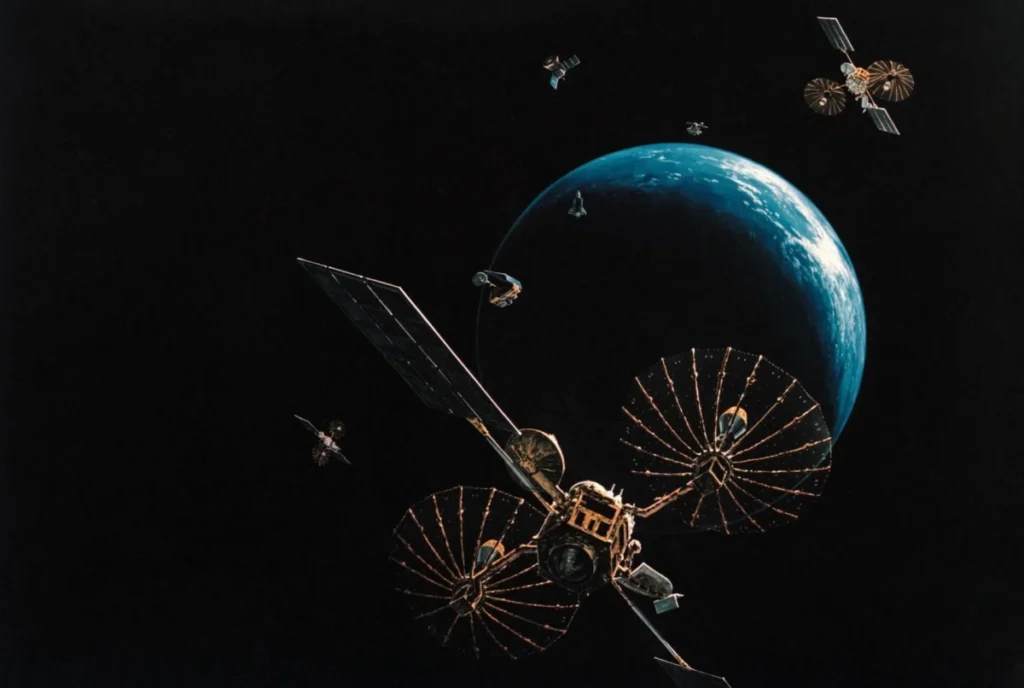
California-based Viasat, a global communications company, is on the cusp of a significant technological advancement with the impending launch of its Maxwell satellite. This mission is designed to serve as a crucial demonstration of how commercial spacecraft can effectively assume the vital communication relay duties currently performed by NASA’s aging Tracking and Data Relay Satellite (TDRS) network. The successful deployment and operation of Maxwell could signal a paradigm shift in how space missions maintain contact with Earth, promising enhanced reliability and continuous connectivity for a new generation of spacecraft.
The Maxwell Mission: A Leap Forward in Low-Earth Orbit Communication
The Maxwell satellite, a product of a strategic partnership between Viasat and Rocket Lab, is slated for its orbital debut aboard an upcoming SpaceX Bandwagon-5 launch from Florida. Skylar Cox, Chief Technology Officer of Viasat Space & Mission Systems, revealed details of the imminent launch during a recent Payload Space webinar. While SpaceX has yet to officially announce a specific launch date, the integration of the Maxwell satellite onto the launch vehicle is complete, signifying that the mission is in its final stages of preparation. Cox expressed the team’s dedication, noting, "We’ve been preparing for this for a long time. We’re in the last stretch here, so the team’s exhausted. But the vehicle is fully integrated on the launch vehicle, and we’re just kind of waiting now to turn it on and get it going."
This pioneering demonstration is a cornerstone of NASA’s ongoing Communications Service Project (CSP). The CSP initiative is a forward-thinking program aimed at gradually phasing out the reliance on the TDRS network, a system that has been instrumental in space communication since its inception in 1983. NASA’s strategic decision to cease the integration of new missions with the TDRS network in late 2024 underscores the urgency of developing and adopting next-generation communication solutions. While existing users, including the International Space Station, the Hubble Space Telescope, and a multitude of Earth and universe-observing missions, will continue to depend on TDRS until the mid-2030s, the agency is actively paving the way for a more robust and modern communication infrastructure.
Addressing the Limitations of Legacy Systems
A persistent challenge with the current TDRS system, as highlighted by Cox, has been the occurrence of regular, albeit brief, communication dropouts. These interruptions are an inherent consequence of the operational model, where spacecraft antennas must transition between different satellites within the TDRS constellation to maintain contact. The primary objective of NASA’s CSP is to overcome these limitations by demonstrating the feasibility of continuous, uninterrupted relay communications within low-Earth orbit. The Maxwell mission is specifically designed to showcase this capability, moving away from the current "rigid, constrained windows of communication opportunities" towards an "always-on, persistent communication" model.
NASA’s Commercial Collaboration Strategy: A Broader Vision
Viasat’s involvement in the CSP is supported by a significant award from NASA. In 2022, the company received $53.3 million as part of a broader initiative by the agency to foster collaboration with the commercial sector. This single award was one of several made under the CSP that year, with NASA allocating a total of $278.5 million to various commercial partners. Other prominent entities with CSP contracts include Amazon’s Kuiper, SES Satellite, SpaceX, and Telesat, all of whom are contributing to the development of future space communication networks.
This strategic pivot towards commercial partnerships is not limited to Earth orbit. Greg Heckler, Deputy Program Manager of Capability Development for NASA’s Space Communications and Navigation (SCaN) Program, elaborated on this approach during the same webinar. He revealed that NASA is applying a similar strategy to establish communication networks around the Moon and, eventually, Mars. The agency’s aim is to leverage the expertise and infrastructure of commercial providers rather than solely relying on its own ownership and operation of these critical networks. This vision extends to the ambitious goal of establishing a unified "Solar System Internet" in the future, a testament to NASA’s long-term commitment to expanding human presence and scientific exploration across the cosmos.
Heckler acknowledged the invaluable service provided by the TDRS network, stating, "TDRS was a workhorse for the agency for decades, but we made a decision in the agency several years ago to not build anymore, and so we needed to maintain what we call Earth relay capability for our science and human exploration missions." This decision underscores the proactive approach NASA is taking to ensure the continued success of its missions by investing in and collaborating on the development of advanced communication technologies.
Diverse Approaches to a Unified Goal
The CSP is fostering a diverse range of innovative solutions from its commercial partners. SpaceX, for instance, secured an award of $69.95 million to integrate its existing Starlink constellation and extensive ground infrastructure with spacecraft via optical links. This groundbreaking approach involves connecting spacecraft directly to the Starlink network, bypassing traditional relay satellites for certain communication needs. As a tangible demonstration of this capability, NASA is equipping the Orion spacecraft, destined for the upcoming Artemis III mission, with two SpaceX Starlink mini laser terminals. This will allow for the real-time transmission of imagery from the lunar surface back to Earth, showcasing the potential of this novel communication method.
The Significance of Maxwell: A Glimpse into the Future of Space Connectivity
The Maxwell satellite represents more than just a technological demonstration; it embodies a fundamental shift in how humanity communicates with its ventures into space. By proving the viability of commercial entities providing continuous, low-latency data relay services, Viasat and Rocket Lab are paving the way for a more accessible, reliable, and efficient space communication ecosystem. This could have profound implications for a wide array of space activities, from scientific research and Earth observation to commercial satellite operations and future human spaceflight endeavors.
The transition from the TDRS network to a more distributed, commercially operated system is a complex undertaking, but one that promises significant benefits. The ability to maintain constant communication with spacecraft will enhance mission safety, improve data throughput, and potentially reduce the costs associated with space communications. For scientific missions, this could mean the ability to receive larger volumes of data in near real-time, accelerating the pace of discovery. For human exploration, it offers the promise of more seamless and reliable communication channels, crucial for the well-being and success of astronauts.
Looking Ahead: A Connected Solar System
The success of the Maxwell mission and other CSP initiatives will be a critical step towards realizing NASA’s ambitious vision of a "Solar System Internet." This interconnected network of communication relays, extending from Earth orbit to the Moon, Mars, and beyond, will be essential for sustained human presence and exploration throughout our solar system. The partnerships forged through programs like CSP are instrumental in building the foundational technologies and operational frameworks that will enable this future. As Viasat’s Maxwell satellite prepares for its ascent, it carries with it the hopes and aspirations of a space exploration community eager for a more connected and capable future among the stars. The journey of Maxwell is not just a launch; it’s a harbinger of a new era in space communications, one defined by innovation, collaboration, and persistent connection.