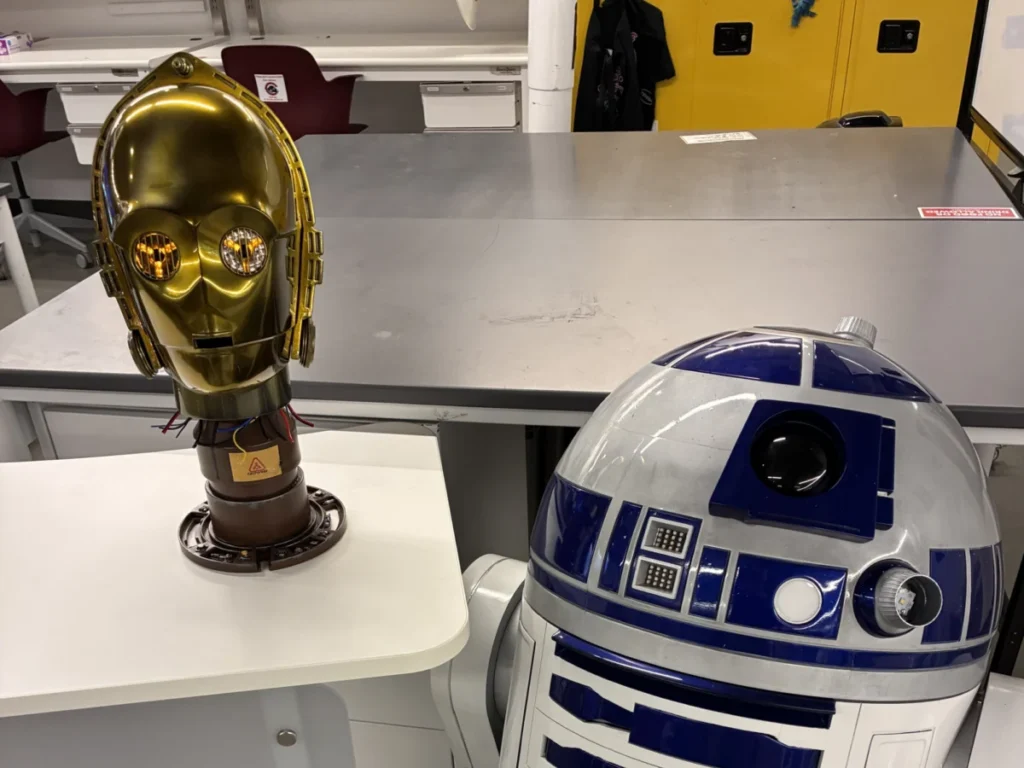
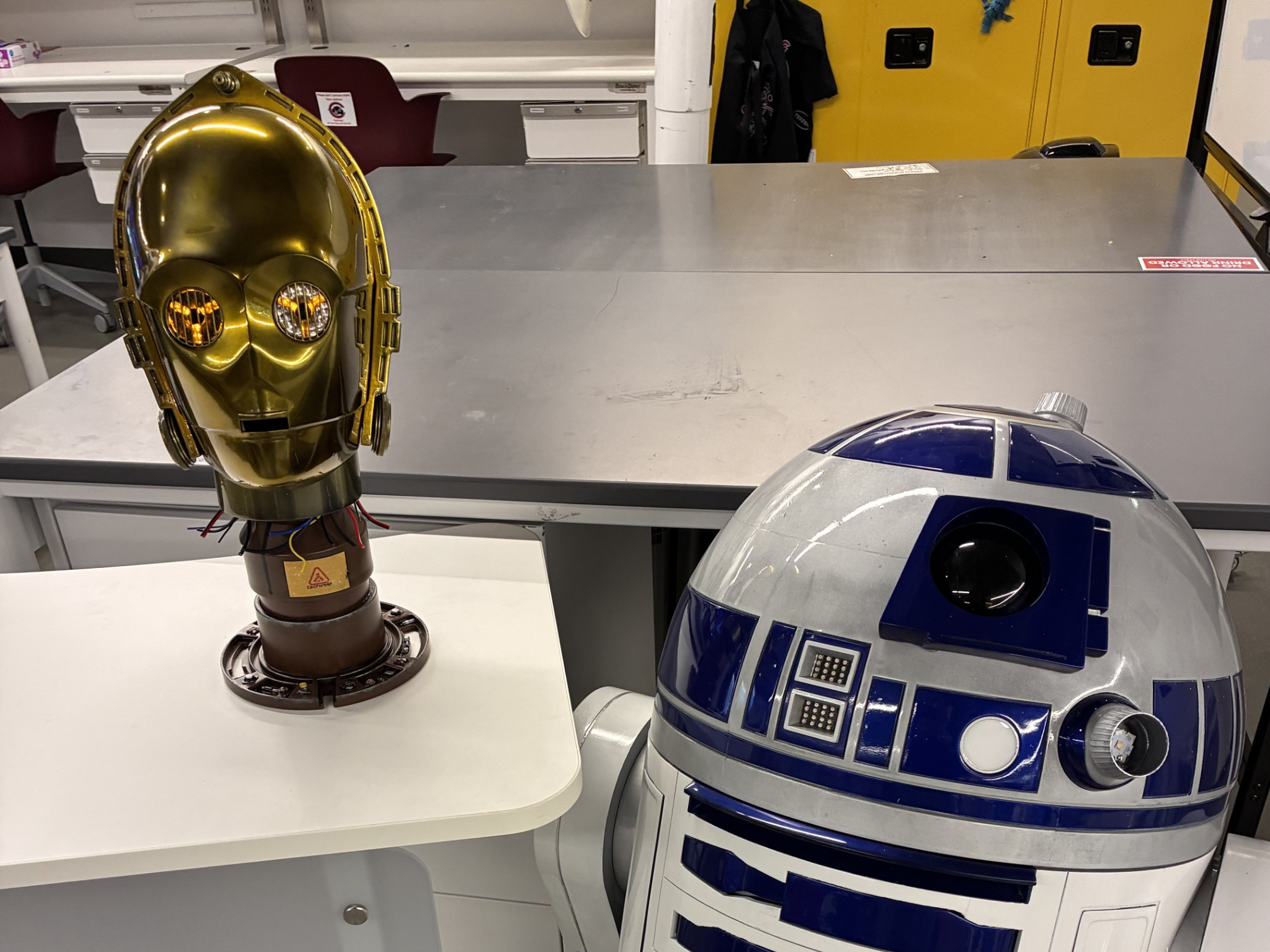
In an era where artificial intelligence chatbots are increasingly ubiquitous, distinguishing one conversational system from another often requires a significant leap in innovation and execution. Sam Potozkin, a student at Chapman University, has achieved precisely this with his remarkable "Threepio" project, an intricately crafted, embodied AI system designed to replicate the iconic Star Wars protocol droid, C-3PO. This ambitious endeavor transcends the typical digital chatbot experience, embedding a sophisticated AI stack within a meticulously 3D-printed, physical form to explore the profound dynamics of human-AI interaction.
Potozkin’s Threepio is far more than a mere novelty; it represents a tangible manifestation of theoretical concepts in AI and communication, aiming to bridge the gap between fictional character and real-world, interactive technology. Inspired directly by the original 1977 film that introduced the perpetually anxious, yet endlessly resourceful, golden droid, Potozkin embarked on a mission to faithfully reproduce the experience of engaging with such an advanced protocol droid. The project’s scope extended beyond just functional AI, encompassing detailed physical fabrication, nuanced audio engineering, and a robust local processing architecture.
The Genesis of Threepio: A Fusion of Fandom and Academia
The inspiration for the Threepio project is deeply rooted in popular culture, specifically the enduring legacy of the Star Wars saga. C-3PO, with his distinctive personality, vast linguistic capabilities (reportedly over six million forms of communication), and often-comical interactions with organic beings, has long been a benchmark for how sentient artificial intelligences might appear and behave. For Potozkin, this cinematic archetype provided a compelling framework to investigate a fundamental question: why do people react differently to modern, often disembodied, AI systems compared to a familiar, almost 50-year-old fictional android?
This query forms the academic cornerstone of the Threepio project. Potozkin authored a comprehensive paper, "Threepio: Embodied AI for Human-AI Interaction Research," outlining his hypothesis and methodology. He posits that the physical embodiment, coupled with a recognizable personality, significantly alters human perception and engagement with AI. The project, therefore, serves as a practical experiment to test these theories, moving conversational AI from the abstract realm of screens and digital interfaces into a tangible, interactive presence. This approach aligns with growing research in Human-Robot Interaction (HRI) and Human-Computer Interaction (HCI), which increasingly emphasizes the importance of physical form, non-verbal cues, and perceived personality in fostering more natural and effective interactions between humans and artificial entities.
Engineering the Golden Protocol Droid: A Technical Marvel
The realization of Threepio involved a multi-faceted engineering challenge, blending advanced manufacturing techniques with cutting-edge AI and audio technologies.
-
Physical Fabrication and Aesthetics: The droid’s iconic golden casing was brought to life through extensive 3D printing. Potozkin invested considerable effort into achieving a smooth, professional finish, meticulously sanding away layer lines and addressing common 3D printing imperfections like "orange peel" texture. The addition of intricate "greeblies" – small, decorative details – to the display stand further enhanced the illusion of a functional, complex piece of advanced machinery, mirroring the aesthetic philosophy of the original Star Wars props. This attention to detail underscores the project’s commitment to creating an immersive and believable experience. The process itself was not without its difficulties, including a memorable incident where the droid’s head was dropped, requiring diligent repair and recalibration—a testament to the hands-on nature of the build.
-
Local AI Processing on Raspberry Pi 5: A crucial differentiator for Potozkin’s Threepio is its ability to run the entire AI chat stack locally on a Raspberry Pi 5. In an era dominated by cloud-based AI solutions, local processing offers distinct advantages in terms of privacy, responsiveness, and independence from internet connectivity. The Raspberry Pi 5, with its significantly enhanced processing power compared to previous iterations, provides a robust platform capable of handling the computational demands of a conversational AI model. This choice highlights a trend towards "edge AI," where processing occurs closer to the data source, enabling faster decision-making and reducing latency. For an embodied system like Threepio, immediate responses are paramount to maintaining the illusion of intelligent conversation.
-
Immersive Audio Design: To further enhance the authenticity of the C-3PO experience, Potozkin deviated from conventional speaker setups. Instead, he employed an "exciter" – a device that transforms surfaces into sound-producing diaphragms – to make the droid’s voice emanate from its entire head. This innovative audio solution creates a more diffused and organic sound, mirroring how a voice might realistically project from a hollow, metallic head, rather than a single, discernible speaker. Extensive time was dedicated to refining these audio effects, ensuring that the sound quality, timbre, and delivery perfectly captured C-3PO’s distinctive vocal patterns and personality. This granular attention to sound design is critical for believability, as auditory cues play a significant role in how humans perceive and interact with intelligent systems.
The Academic Underpinning: Embodiment and Communication Theory
Potozkin’s project is not merely an impressive piece of engineering; it is a serious academic endeavor. His paper delves into the theoretical underpinnings of why physical embodiment is crucial for certain types of human-AI interaction. He articulates:
"This project explores the translation of a fictional character into a real-world, embodied AI system. Developing this system required translating and combining abstract concepts from both AI and communication theory into a functional, working architecture."
This statement highlights the interdisciplinary nature of the project, drawing insights from both computer science and the social sciences. Communication theory, for instance, provides frameworks for understanding how humans interpret verbal and non-verbal cues, how trust is built, and how personality is perceived. When an AI system possesses a physical form, it gains access to a whole new lexicon of communication, including spatial presence, gaze, and even implied gestures, even if subtle.
Potozkin further emphasizes:
"The goal of the project was to explore what happens when conversational AI moves off the screen and into a physical, interactive system. Rather than treating AI as something purely digital, this build focuses on embodiment, giving the system a presence, voice, and personality that can be experienced in the real world."

This perspective is central to the growing field of embodied AI, which posits that intelligence is not solely a product of abstract computation but is deeply intertwined with physical interaction with the environment. An embodied AI can learn through direct experience, manipulate objects, and interpret the physical world in ways that purely digital systems cannot. For conversational AI, embodiment can foster a sense of connection, familiarity, and even empathy that is difficult to achieve with a text-based interface or a disembodied voice. The perceived "personality" of C-3PO, meticulously programmed and refined by Potozkin, becomes far more impactful when delivered by a physical presence.
The Broader Landscape of AI, Robotics, and the Maker Movement
Potozkin’s Threepio project emerges against a backdrop of rapid advancements in artificial intelligence and a thriving global maker movement.
-
Evolution of Conversational AI: The AI landscape has evolved dramatically from early rule-based chatbots to the sophisticated large language models (LLMs) that power many modern conversational agents. While these LLMs are powerful, their interactions often remain confined to digital screens. Projects like Threepio represent a significant step towards integrating these advanced AI capabilities into physical forms, moving beyond text-to-speech to true embodied interaction. The global AI market, valued at hundreds of billions of dollars, continues to expand, with significant investments in natural language processing and robotics, underscoring the relevance of such research.
-
The Rise of Embodied AI: Research into embodied AI is gaining momentum across academic and industrial sectors. Companies are exploring applications ranging from companion robots for the elderly to advanced industrial automation and educational tools. The psychological impact of interacting with a physical robot versus a digital assistant is a key area of study. Embodied AI has the potential to make technology more approachable, intuitive, and even emotionally resonant, particularly in fields requiring social interaction or physical assistance. Threepio offers a compelling case study in how cultural familiarity can accelerate the acceptance and engagement with embodied AI.
-
The Maker Movement and Open Source: The project is also a testament to the power of the open-source hardware and software movement. Potozkin has made his designs and code available on GitHub, inviting others to customize and extend his work. This collaborative spirit is a hallmark of the maker community, where enthusiasts and professionals share knowledge and tools to push the boundaries of what’s possible. The ability for others to build upon this foundation—perhaps even adding C-3PO’s other 5,999,999 languages—underscores the democratizing effect of open-source technology. This aligns with a broader trend of decentralized innovation, empowering individuals to create complex technological solutions with accessible tools and shared expertise.
-
Star Wars Droids as Cultural Touchstones: Star Wars droids have long held a special place in the hearts of fans and innovators alike. From the resourceful R2-D2 to the verbose C-3PO, these characters have inspired generations of robotics enthusiasts. The global community of "droidsmiths" dedicated to building functional replicas of Star Wars droids is a testament to their enduring appeal. Experienced R2-D2 builders often advise beginners to start with the dome, a challenging but rewarding component, illustrating the depth of dedication within this community. Potozkin’s Threepio stands as an impressive addition to this legacy, demonstrating that even a single head can embody a complex character and serve as a platform for cutting-edge research.
Challenges and Triumphs in Development

The journey to create Threepio was fraught with challenges, as is typical for ambitious maker projects. Potozkin recounted numerous hurdles, from learning the intricacies of soldering electronic components to meticulously honing the audio effects and dealing with the inevitable imperfections of 3D printing. The anecdote of the dropped head serves as a reminder of the hands-on, often iterative, nature of such an undertaking. Each obstacle overcome, however, contributed to a deeper understanding of the project’s various facets, from material science to software optimization. The successful completion of Threepio is a testament to Potozkin’s perseverance, technical skill, and unwavering commitment to his vision.
Implications for Human-AI Interaction and Future Robotics
The Threepio project offers significant insights into the future of human-AI interaction. By giving AI a familiar, physical form and a distinct personality, Potozkin has demonstrated a pathway to making artificial intelligence more approachable and less abstract.
-
Bridging the Uncanny Valley: The "uncanny valley" phenomenon, where human replicas that are almost, but not quite, lifelike elicit feelings of revulsion, is a major challenge in robotics. By leveraging a well-known, non-humanoid character like C-3PO, Potozkin navigates this challenge by relying on established familiarity and affection. This approach suggests that designing embodied AI with distinct, even stylized, personalities might be more effective in fostering positive human interaction than striving for perfect human mimicry.
-
Educational Impact: Projects like Threepio serve as powerful educational tools, inspiring students and enthusiasts to delve into robotics, AI, and electronics. The combination of popular culture appeal with rigorous technical and academic work makes it an engaging model for STEM education.
-
Potential Applications: Beyond fandom, the principles demonstrated by Threepio could have broader applications. Imagine personalized educational companions, engaging museum exhibits, or even specialized customer service bots that leverage embodiment and personality to create more effective and pleasant interactions. In fields like elder care, a familiar, conversational robotic companion could provide comfort and assistance in a more natural way.
-
Ethical Considerations: As AI becomes more embodied and personable, new ethical considerations emerge. The potential for emotional attachment to robots, the implications for privacy with locally processed AI, and the responsibility of creators to prevent misuse of persuasive embodied systems are all areas that require careful thought and ongoing discussion. Potozkin’s project, by explicitly exploring human-AI relations, inadvertently contributes to this crucial dialogue.
In conclusion, Sam Potozkin’s Threepio project is a remarkable achievement that transcends the boundaries of traditional AI development. By meticulously crafting an embodied AI system inspired by a beloved fictional character, he has not only created an impressive piece of engineering but also contributed valuable insights to the academic discourse on human-AI interaction. The project stands as a testament to the power of interdisciplinary thinking, the ingenuity of the maker community, and the enduring human fascination with intelligent machines. As AI continues to evolve, the lessons learned from Threepio — the importance of presence, personality, and physical form — will undoubtedly guide the development of future generations of interactive, intelligent systems.