When the iconic Empire State Building was erected in the early 1930s, its 102 stories ascended into the New York City skyline, piece by meticulously placed piece. For four decades, it stood as an unparalleled testament to human engineering, holding the title of the world’s tallest building. Decades later, on the uptown campus of Columbia University, a different kind of construction is underway. Oleg Gang, a professor of chemical engineering and applied physics at Columbia Engineering, leads a laboratory that is not assembling steel and concrete, but rather creating microscopic marvels from self-arranging nanoscopic building blocks. These are not architectural landmarks in the traditional sense, but rather incredibly intricate devices, forming what Gang describes as a "nanoscale version of the Empire State Building."
The ambition of Gang’s research lies in the ability to construct complex, three-dimensional nanoscale organizations using self-assembled components. This groundbreaking methodology, detailed in two significant scientific publications, promises to revolutionize the creation of materials with applications spanning an impressive array of fields, from advanced optics and computing to catalysis and biomolecular engineering.
A Paradigm Shift in Nanoscale Fabrication
Traditional methods for fabricating micro- and nano-scale electronic components often rely on "top-down" strategies. Techniques like photolithography, which employs light and intricate stencils to etch circuits, are effective for two-dimensional designs. However, these methods encounter significant limitations when attempting to build complex three-dimensional structures. Similarly, additive manufacturing, commonly known as 3D printing, while adept at creating larger objects, has not yet reached the resolution required for nanoscale feature fabrication. Both approaches are inherently serial, meaning each component is manufactured individually, a process that becomes exceedingly time-consuming and inefficient for constructing three-dimensional objects at the molecular level.
Professor Gang’s approach, inspired by the elegance and efficiency of biological systems, embraces a "bottom-up" strategy. His lab utilizes self-assembly processes, meticulously guided by DNA, to construct these novel 3D materials and devices. This method offers a fundamentally different pathway to creating functional nanostructures, one that is both more efficient and potentially more versatile.
The Power of DNA: A Universal Building Block
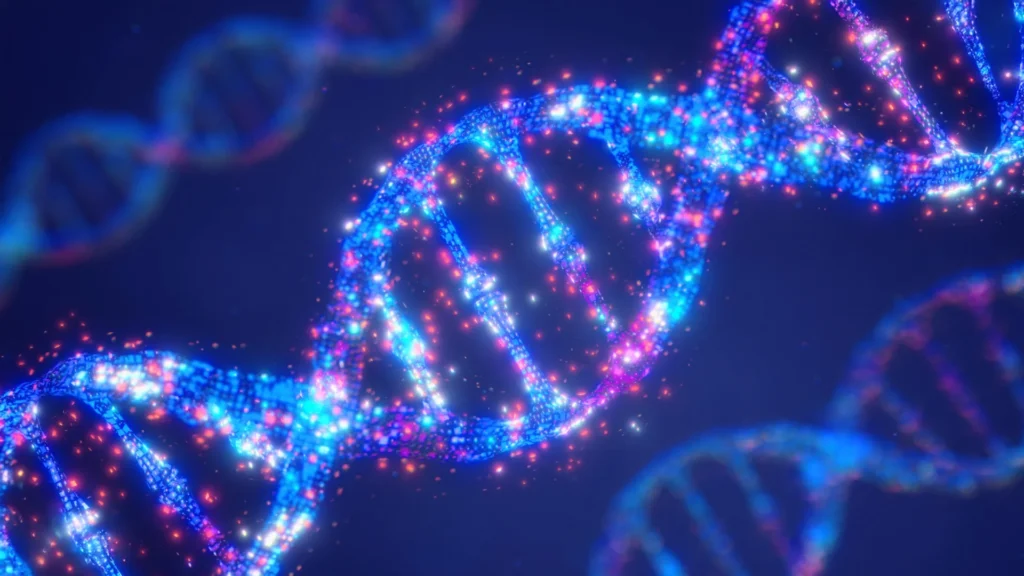
At the heart of this revolutionary fabrication technique lies deoxyribonucleic acid (DNA), the fundamental molecule of heredity. DNA’s predictable folding behavior, governed by the specific pairing of its four nucleic acid bases (adenine with thymine, and guanine with cytosine), provides a robust and programmable framework for nanoscale construction. While the folding of a single DNA molecule is well-understood, the challenge arises when envisioning the creation of complex structures composed of millions, or even billions, of individual components. This is where Gang and his team’s innovative design algorithm and inverse structural design strategy come into play.
From Concept to Creation: The Inverse Design Approach
Instead of starting with the final desired structure and trying to assemble individual pieces, Gang’s inverse design strategy begins with the intended function and architecture of the nanoscale device. The team then works backward, dissecting this complex blueprint into smaller, manageable components. These components are designed with specific structural, binding, and functional attributes, enabling them to link together precisely as intended.
The fundamental building block in this system is a DNA strand engineered to fold into a stable, eight-sided octahedral shape, which Gang refers to as a "voxel." These voxels are equipped with precisely positioned connectors at each corner, allowing them to link with other voxels through DNA base pairing. By encoding specific sequences into these DNA strands, researchers can direct the assembly of numerous voxels into particular, repetitive three-dimensional motifs, akin to how individual jigsaw puzzle pieces come together to form a larger image. These motifs, in turn, are assembled in a massively parallel fashion to create the final, hierarchically organized structure.
The MOSES Algorithm: Democratizing Nanoscale Design
A critical breakthrough in this research is the development of an algorithm dubbed "Mapping Of Structurally Encoded aSsembly," or MOSES. This algorithm acts as a sophisticated nanoscale computer-aided design (CAD) tool. It enables researchers to specify a desired three-dimensional lattice structure, and MOSES will then determine the exact DNA voxel sequences required to achieve that specific, arbitrarily defined hierarchical arrangement. This computational tool significantly simplifies the design process, making it more accessible to a wider range of scientists and engineers.
The efficiency of this design process is further enhanced by minimizing the number of unique DNA voxels needed for a given structure. As Jason Kahn, the first author on the Nature Materials paper and a staff scientist at Brookhaven National Laboratory (BNL), explains, "You can think of it like compressing a file. We want to minimize the amount of information for the DNA self-assembly to be most efficient." This optimization is crucial for scalability and cost-effectiveness in nanomanufacturing.
Diverse Applications Take Shape
The versatility of this DNA-based self-assembly platform is underscored by the diverse range of applications demonstrated by Gang’s team. In their research, they have fabricated several distinct nanoscale structures, each tailored for specific functionalities:
- Crystal-like Structures: The team has created materials with ordered arrangements of one-dimensional strings and two-dimensional layers, mimicking the crystalline structures found in many advanced materials.
- Solar Panel Mimics: A structure designed to emulate the light-absorbing properties of materials commonly found in solar panels has been successfully assembled. This opens avenues for developing more efficient photovoltaic devices at the nanoscale.
- Helical Crystals: Another novel crystal structure exhibiting a helical swirl has been fabricated, which could have applications in fields requiring specific optical or magnetic properties.
- Light-Manipulating Structures: For Professor Nanfang Yu at Columbia Engineering, the team engineered a structure specifically designed to reflect light in particular ways. This work is a crucial step towards the long-term goal of creating optical computers, which would process information using light instead of electricity.
- 3D Light Sensors: In a prior collaboration with researchers at the University of Minnesota, Gang’s lab delivered a prototype of 3D light sensors integrated onto microchips. These sensors were constructed by growing DNA scaffolds on a chip and subsequently coating them with light-sensitive materials. This demonstrated the practical application of their technology in creating functional devices for microelectronics.
A "One-Pot" Synthesis for Novel Materials
A significant advantage of this self-assembly approach is its simplicity and environmental friendliness. The fabrication process largely occurs within simple water wells in Gang’s laboratory. This "one-pot" synthesis is a stark contrast to the complex, multi-step processes often required in conventional microfabrication. The parallel nature of self-assembly, where numerous components come together simultaneously, leads to substantial time and cost savings compared to serial manufacturing methods. Furthermore, the primary solvent used is water, making the process inherently more sustainable.
Imbuing Nanostructures with Functionality
Once the DNA scaffold is assembled, the true power of the platform is realized by incorporating various "nano-cargo" within the DNA voxels. This cargo can be any type of nanomaterial – be it inorganic nanoparticles, quantum dots, or even biomolecules – designed to impart specific properties to the final structure. For instance, the incorporation of gold nanoparticles has been shown to confer unique optical characteristics, as seen in the light-reflecting structures developed for Professor Yu.
From Organic Scaffolds to Robust Inorganic Forms
In a further refinement of their process, the team has also developed a method to "mineralize" the assembled DNA structures. After the DNA scaffold has served its purpose in directing the assembly of the desired nanostructure, it can be coated with silica. Subsequent exposure to heat decomposes the DNA, effectively transforming the organic scaffolding into a highly robust inorganic form. This process enhances the stability and durability of the nanodevices, making them suitable for a wider range of demanding applications.
A Glimpse into the Future: Mimicking the Brain
Professor Gang’s vision extends far beyond the current applications. He continues to collaborate with colleagues like Sanat Kumar, a professor of chemical engineering at Columbia, and Nanfang Yu, to uncover fundamental design principles that will enable the engineering of even more complex structures. A particularly ambitious long-term goal is the creation of a three-dimensional circuit designed to mimic the intricate connectivity and processing capabilities of the human brain.
"We are well on our way to establishing a bottom-up 3D nanomanufacturing platform," Professor Gang stated. "We see this as a ‘next-generation 3D printing’ at the nanoscale, but now the power of DNA-based self-assembly allows us to establish massively parallel fabrication."
The implications of this research are profound. By leveraging the programmability of DNA and the efficiency of self-assembly, Gang’s lab is not just creating novel materials; they are laying the groundwork for a paradigm shift in how we design and manufacture at the nanoscale. This technology has the potential to accelerate innovation across numerous scientific and technological frontiers, paving the way for smaller, more efficient, and more sophisticated devices that could reshape industries and advance our understanding of the world around us. The meticulous assembly of nanoscopic building blocks, guided by the universal language of DNA, represents a new era of precision engineering, with structures that rise, piece by self-assembling piece, to meet the challenges of the future.