The world of additive manufacturing (AM) has been buzzing with activity this past weekend, showcasing a diverse range of advancements from educational initiatives to significant business developments and cutting-edge artistic applications. America Makes championed National Manufacturing Day with engaging 3D printing drone experiences for students, while industry leaders like VulcanForms, Velo3D, and DEEP Manufacturing announced strategic appointments and operational expansions. The weekend also saw the commercial launch of innovative hybrid manufacturing technology by XYZO and an advanced additive build intelligence solution by Instruct3D, culminating in a striking display of 3D printed ceramic art integrated into an electrical substation.
America Makes Ignites Future Engineers with 3D Printed Drones
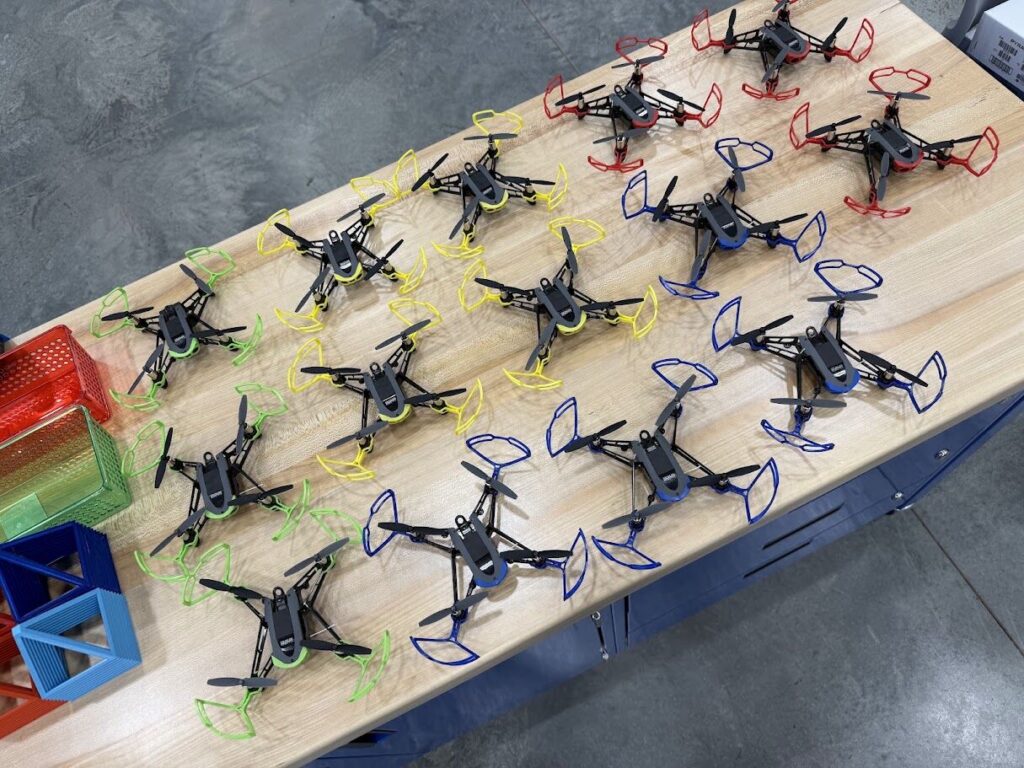
In celebration of National Manufacturing Day, America Makes, the National Center for Advanced Manufacturing, orchestrated a series of immersive "3D Printing for Drones" workshops across five states: Alabama, California, Ohio, Pennsylvania, and Texas. This initiative, a direct extension of the successful summer camp program hosted at the Missouri University of Science and Technology, aims to introduce high school students to the dynamic synergy between drone technology, 3D printing, and practical engineering challenges.
The half-day "Design + Build + Fly" modules provided students with hands-on experience in crucial areas such as build-sprint activities, safety protocols, design thinking methodologies, rapid prototyping, and fundamental drone flight instruction. Participants were challenged to think critically as additive manufacturing engineers, meticulously considering factors like component weight, battery efficiency, and overall manufacturability to optimize drone performance. The overarching objective is to equip these young learners with foundational technical skills and foster a lasting interest in the burgeoning field of 3D printing, thereby strengthening the future manufacturing workforce, a core tenet of America Makes’ mission.

Dr. Ed Herderick, Education and Workforce Development Director at America Makes, emphasized the significance of such programs: "Manufacturing Day provides an important opportunity to introduce the next generation to the technologies, skills, and career opportunities shaping the future of American manufacturing. This programming brings together state-of-the-art 3D printing with drone competition in an exciting, kinetic way that engages learners and will keep growing momentum in the advanced manufacturing industry."
The comprehensive "3D Printing for Drones" curriculum is available free of charge. Interested educators and institutions can access it by navigating to the specified online portal and requesting an access code from America Makes via the "Get Started" button within the Community Engagement Tools section. This educational resource underscores the organization’s commitment to democratizing access to advanced manufacturing knowledge and skills.
VulcanForms Bolsters Commercial Leadership to Accelerate Growth
VulcanForms, a pioneering digital manufacturing company headquartered in Massachusetts and an alumnus of MIT, has announced a significant appointment aimed at driving its next phase of expansion. Jeff Hemenway has been named Chief Revenue Officer, effective immediately. With over 35 years of executive leadership and commercial expertise spanning industries crucial to VulcanForms’ market focus—including aerospace, defense, consumer goods, medical, and industrial sectors—Hemenway is poised to accelerate the company’s growth trajectory.
Previously, Hemenway served as Vice President of Sales at Hadrian, an advanced manufacturing firm, where he played a pivotal role in scaling its commercial operations and forging strategic partnerships. His tenure at Stratasys as Senior Vice President of Global Industry Sales also involved developing impactful customer programs and expanding partnerships across diverse business segments. As VulcanForms continues to enhance its production capacity and scale its digital-first manufacturing platform, Hemenway will spearhead the company’s commercial strategy and revenue generation initiatives.
"What attracted me to VulcanForms is the opportunity to transform the path from optimized design through scaled production," Hemenway stated. "By integrating advanced design and engineering with automated manufacturing technology and scaled production, VulcanForms will help customers optimize part performance, accelerate industrialization, ensure quality, and reduce supply chain risk. I’m excited to build the strategic partnerships that bring these capabilities to our customers’ most important programs and create meaningful, long-term value for both our customers and VulcanForms." This strategic hire signals VulcanForms’ ambition to solidify its position as a leader in industrially scalable metal additive manufacturing.
Velo3D Strengthens Technology and Operations for Production Scale-Up
Metal additive manufacturing leader Velo3D is reinforcing its executive team with key appointments in technology and operations to support its expanding production capabilities. Vic Fryzel has joined as Executive Vice President, Technology, and Robert Purnell has been appointed Senior Director, Operations. Their combined expertise in manufacturing execution systems and platform performance is expected to bolster Velo3D’s technological and operational leadership, particularly in enhancing production at the company’s Livermore Production Campus, Forge 1, and its Rapid Production Solutions offering.
Fryzel brings over two decades of experience in building and scaling complex hardware and software systems at tech giants like Google and Meta. His recent two-year stint in the additive industry at Carbon, where he held leadership roles in software and engineering, provides him with deep insights into the sector. At Velo3D, Fryzel will oversee the company’s technology roadmap, encompassing data management, artificial intelligence, materials science, hardware development, software engineering, automation, and process engineering.
Purnell, a U.S. Marine Corps veteran, possesses a proven track record in scaling manufacturing operations across the aerospace and semiconductor industries. His previous leadership roles at FormFactor, Boeing, and SpaceX’s Starlink program have equipped him with extensive operational expertise. Purnell will lead the teams and operating systems at Forge 1, focusing on ensuring safety, quality, and delivery performance.

Velo3D CEO Arun Jeldi highlighted the strategic importance of these additions: "Expanding capacity is only part of our strategy. We also need the technology and operating discipline to turn that capacity into dependable customer delivery. Vic is focused on platform reliability, repeatability, and production economics, while Robert is focused on manufacturing readiness, quality, and execution. Together, they connect our technology with how we manufacture and deliver for customers." These appointments are crucial for Velo3D as it navigates the increasing demand for its advanced metal AM solutions.
DEEP Manufacturing Marks 18 Months of Growth Amid Reindustrialization Trends
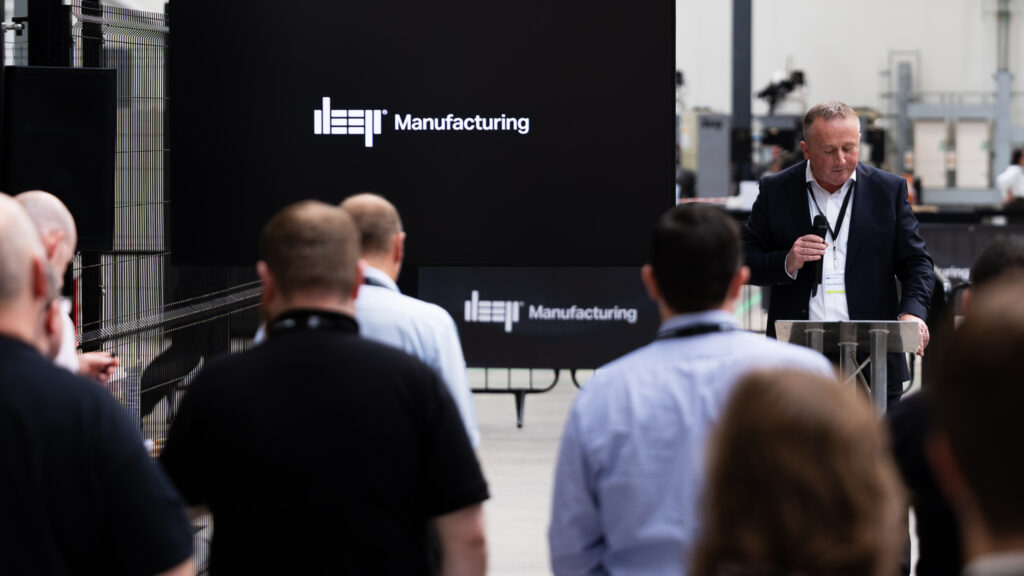
DEEP Manufacturing, a specialist in wire arc additive manufacturing (WAAM), is celebrating its 18-month milestone with significant operational expansion and market validation. The company has grown from a single facility to operating two sites in Bristol and Houston, enabling 24/7 certified production capabilities on both sides of the Atlantic. DEEP Manufacturing holds the distinction of being the first and only DNV-approved WAAM provider for pressure vessels for human occupancy (PVHOs). This accreditation allows the company to deliver large-scale metal AM components, such as cylinders, hemispheres, and propeller blades, from initial print to a certified, service-ready part, all within a single site.
The Bristol facility is equipped with DEEP Manufacturing’s advanced Rollerbot 2.0, CNC machining capabilities, and additional WAAM robots, facilitating this end-to-end production process. Furthermore, the company has broadened its material portfolio to include carbon steel, various grades of stainless steel (ER316LSi, UNS S32750 duplex and super duplex), nickel aluminum bronze (ER CuNiAl), copper alloy (ERCuNi30), and aluminum (ER2319/2219). A key differentiator for DEEP Manufacturing, setting it apart from traditional casting and forging methods, is its in-house capability to qualify and certify large-format metal AM components, a service not commonly offered by competitors in this space.
Peter Richards, CEO at DEEP Manufacturing, commented on the market’s evolution: "We’re not seeing a spike in demand for large-format additive manufacturing. We’re seeing the market arrive at where we always believed it was heading. The question was never whether this shift was coming, it was who would be ready to meet it. Eighteen months ago, this was a single site and an idea. Today it’s a facility that can take a component from design to raw print to a certified part ready to ship. That’s not just growth for us – it tells you how quickly this market has moved, and we’ve built to meet it. The next stage of growth is more systems, more sites, and pushing WAAM further into industrialization, without ever compromising on the certification our customers depend on." This expansion aligns with a broader trend of reindustrialization and the growing adoption of advanced manufacturing techniques for critical applications.
XYXO Unveils Automated Hybrid Manufacturing Platform for Polymer Parts
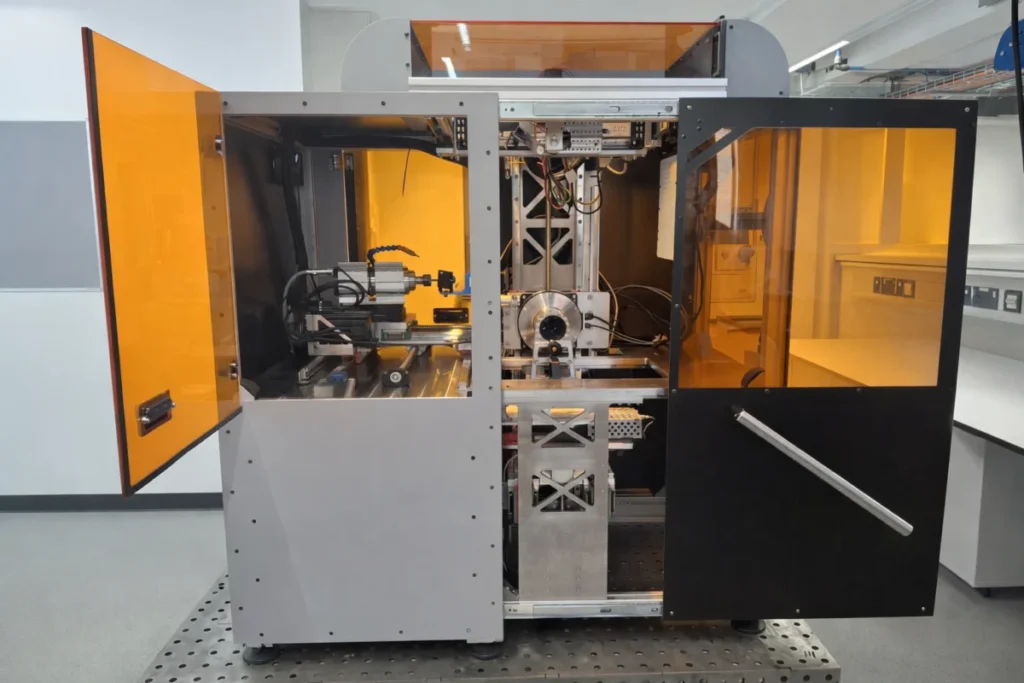
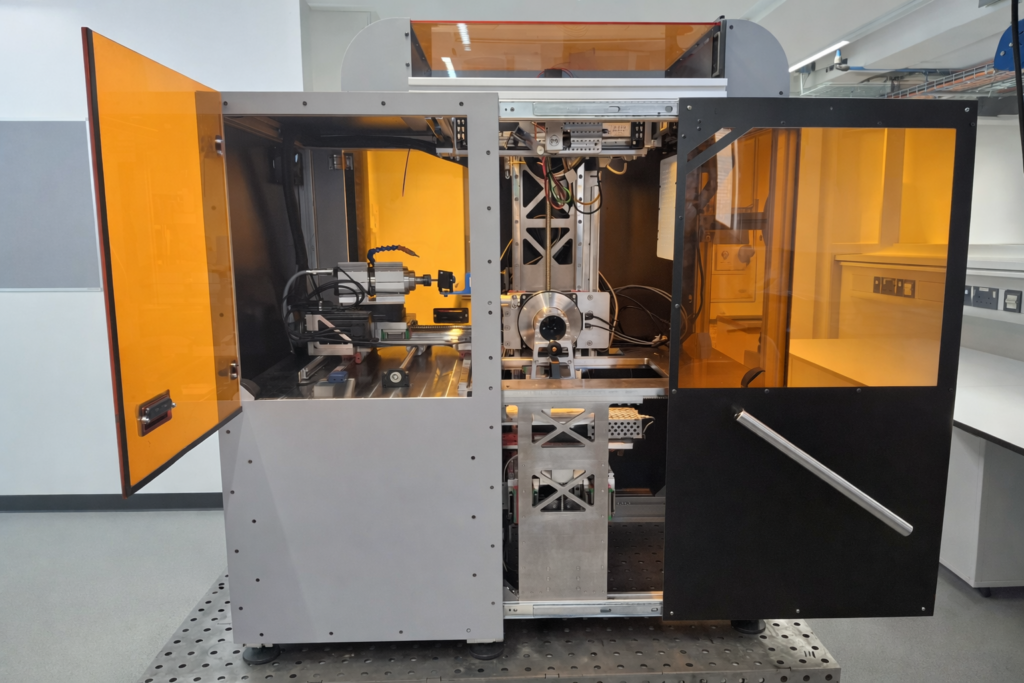
UK-based XYXO has launched its innovative automated hybrid manufacturing technology platform, specifically designed for polymer parts. This commercial platform diverges from traditional additive manufacturing approaches by integrating AM processes with precision machining, finishing, inspection, and sophisticated process control within a single, connected workflow. Rather than relying solely on AM, XYXO’s technology leverages it as a core component of a comprehensive production system.
The modular platform is capable of integrating various additive processes, including Digital Light Processing (DLP), Fused Deposition Modeling (FDM), pellet extrusion, and drop-on-demand deposition. It also seamlessly incorporates subtractive processes such as CNC micro-milling, alongside cleaning, curing, and other post-processing methods. Designed for commercial applications where manufacturers require the flexibility of digital production but cannot justify the investment in traditional tooling, XYXO’s platform addresses a significant limitation of AM: the often-complex post-processing steps required to achieve a finished component. The system aims to streamline the journey from digital design to a completed part through a tightly controlled workflow, minimizing manual intervention at each manufacturing stage.
Kegan McColgan-Bannon, CEO at XYXO, articulated the company’s vision: "For years, the AM sector has concentrated enormous effort on improving the printing process itself. But manufacturers do not ultimately need printed parts, they need finished parts that are accurate, repeatable, and economically viable to produce. XYZO grew from asking what happens if we stop treating additive as an isolated process and instead build the production system around it. The result is much closer to an automated production line driven by additive manufacturing than it is to another 3D printer." This approach signifies a shift towards treating AM as an integral part of a larger manufacturing ecosystem, rather than a standalone solution.
Instruct3D Launches Additive Build Intelligence to Enhance Metal AM Predictability
Another UK company, Instruct3D, has announced the commercial launch of its Additive Build Intelligence solution, specifically tailored for high-value metal additive manufacturing applications. Building on over two decades of AM research from the University of Sheffield, this solution aims to instill greater confidence in manufacturers by combining physics-based optimization with comprehensive data intelligence and affordable sensor hardware.
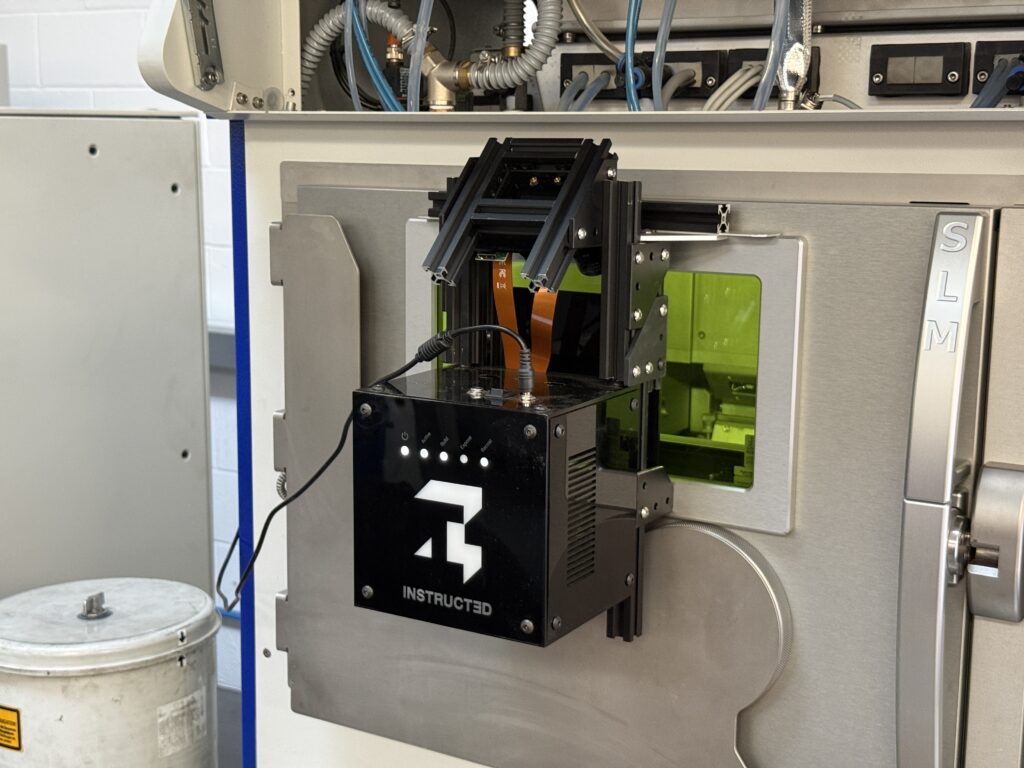
Presented at the ICAM 2026 conference, Instruct3D’s Additive Build Intelligence utilizes camera-based data acquisition through its VertX hardware. However, co-founder Rob Snell clarified, "Cameras are part of the system, but they are not the story." Instruct3D positions itself beyond a simple in-situ monitoring company. The VertX hardware captures critical process data, which is then processed by the AdditiveOS software platform to generate actionable build intelligence. This intelligence enables metal AM users to proactively identify potential build issues, gain a deeper understanding of the printing process, generate evidence for build verification, and ultimately improve the success rate of future builds. The solution moves beyond mere process monitoring towards enabling predictable production, aiming for first-time right, every time. Instruct3D has focused on commercial deployment from the outset, ensuring practical installation pathways, a scalable hardware-enabled software model, and cost-effective sensor integration.
Ben Thomas, Co-Founder of Instruct3D, stated, "Metal AM does not need more disconnected data. It needs intelligence that helps manufacturers make better decisions before, during, and after the build. Additive Build Intelligence is about giving teams the confidence to build high-value parts more predictably, reduce trial-and-error, and move faster from development into production. Our ambition is simple, to unlock for the first time the true potential of metal AM by making every build more predictable, more provable, and more valuable." This solution addresses a critical need for reliability and predictability in the production of complex metal AM parts.
3D Printed Ceramic Art Enhances Electrical Substation Aesthetics
In a remarkable fusion of industrial necessity and artistic expression, a new switchstation in Beverwijk, the Netherlands, now features "Powerwall," a striking 40-square-meter art installation composed of 322 unique, 3D printed ceramic tiles. Integrated into the brick facade of the facility operated by energy infrastructure provider TenneT, Powerwall was designed by Powerhouse Company and realized by Studio RAP. The artwork draws inspiration from invisible electromagnetic fields, transforming a functional piece of energy infrastructure into a captivating visual experience.
As urban areas increasingly accommodate electrical substations and transformer stations, the Powerwall project demonstrates a forward-thinking approach to integrating essential infrastructure with its surrounding architectural context. The switchstation itself comprises a taller brick volume housing the primary electrical installation and a lower metal volume for secondary functions. Brick piers provide depth to the main facade, and sculptural metal lamellas visually connect the two distinct volumes.
Studio RAP employed computational design to create the intricate tile forms, with each individual tile being robotically clay 3D printed in their Rotterdam workshop. This advanced printing technique allowed for precise variation in the depth, form, and texture of each tile. Following printing and firing, the tiles were finished with a translucent turquoise glaze, which accentuates the 3D surface by settling into the grooves of the relief. When sunlight interacts with the facade, the ceramic surface’s appearance dynamically shifts, creating an ever-changing visual spectacle. This project highlights the growing potential of 3D printing to contribute to both the functionality and aesthetic appeal of public and industrial spaces.