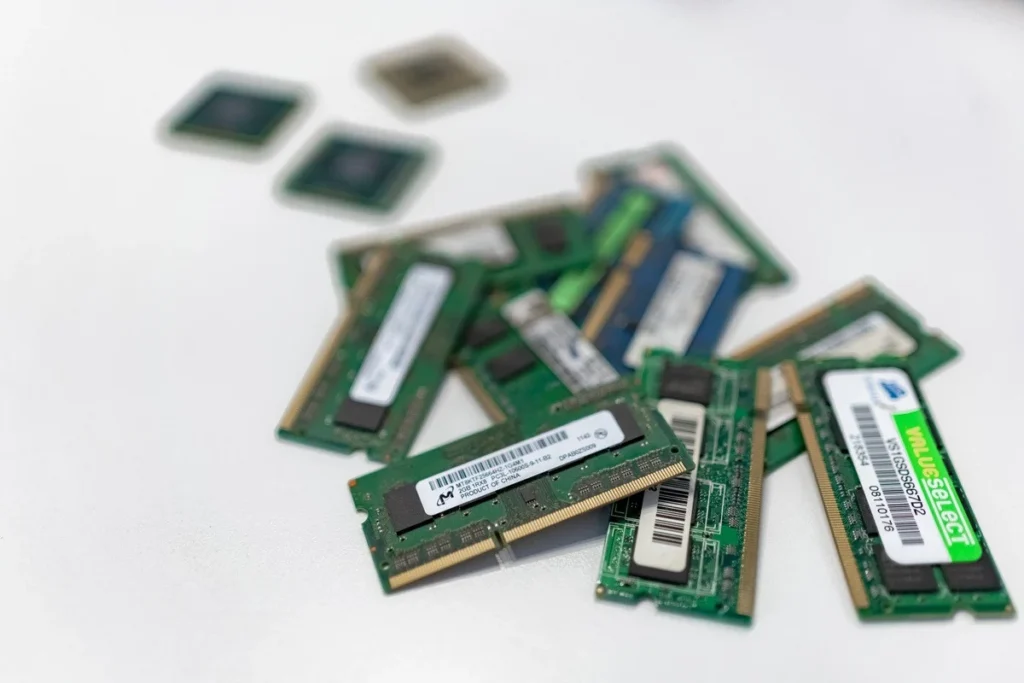
As the global technology sector grapples with an acute and multifaceted memory crisis, driven by surging demand from artificial intelligence and ongoing supply chain complexities, China’s CXMT (ChangXin Memory Technologies) has announced a pivotal breakthrough in its DRAM manufacturing capabilities. The company’s recent declaration of commencing mass production using its fifth-generation DRAM process, which purportedly doubles memory density compared to its predecessor, marks a significant stride for China’s domestic semiconductor industry and poses intriguing questions about the future landscape of commercial memory solutions.
The Technological Leap: CXMT’s Fifth-Generation Process
The core of CXMT’s recent announcement revolves around its successful implementation of a fifth-generation DRAM manufacturing process. This advanced methodology is claimed to deliver approximately twice the memory density of CXMT’s previous generation, a critical metric in semiconductor fabrication. Higher memory density translates directly to the ability to pack more storage capacity into a smaller silicon footprint, potentially improving manufacturing economics by yielding more memory bits from each wafer, assuming high production yields can be maintained at scale.
Central to this technological advancement is CXMT’s strategic adoption of a high-k dielectric metal-gate (HKMG) process, tailored specifically for DRAM manufacturing. The HKMG technology itself is not entirely new; it has been a cornerstone in advanced logic semiconductor manufacturing for over a decade, notably pioneered by Intel in its 45nm node to combat gate leakage current and enhance transistor performance. Its integration into DRAM production is a more recent trend, with established memory giants like Samsung also employing variations of HKMG in their cutting-edge DRAM nodes to improve capacitance and reduce power consumption in ever-shrinking transistor structures. CXMT’s successful adaptation and mass production using HKMG therefore signify a narrowing of the technological gap between Chinese manufacturers and their international counterparts, demonstrating a sophisticated understanding and application of advanced materials and process engineering.
To validate its new process, CXMT has showcased two 24GB LPDDR5X memory products. These high-capacity, low-power double data rate synchronous dynamic random-access memory (LPDDR5X) modules are primarily aimed at high-end consumer electronics, including smartphones, tablets, and portable computing devices. The choice of LPDDR5X is particularly strategic and indicative of CXMT’s evolving capabilities. LPDDR5X operates at significantly higher bandwidths and lower power consumption compared to standard commodity DRAM, making it essential for devices where performance and energy efficiency are paramount. Its successful mass production demonstrates CXMT’s ability to compete in a more demanding and higher-value segment of the memory market, moving beyond basic DRAM modules.
While the doubling of memory density is a commendable engineering achievement, its immediate impact on overall production volume and cost-effectiveness hinges on several critical manufacturing variables. Actual output will depend heavily on factors such as the final die size, the wafer yield (the percentage of functional chips from a wafer), overall manufacturing throughput, and the reliability of the new process when scaled to large volumes. The true test for CXMT will be its capacity to deliver these advanced products economically and in the vast quantities required by the global market. Should CXMT overcome these hurdles, the timing of this breakthrough could prove exceptionally opportune.
The Global Memory Crisis and China’s Strategic Imperative
The backdrop against which CXMT’s announcement resonates is a global memory market under immense pressure. The insatiable demand for high-performance memory, particularly High Bandwidth Memory (HBM) and specialized DRAM for AI accelerators, has created a significant strain on the industry. Major memory manufacturers—Samsung, SK Hynix, and Micron—have been channeling substantial investment into these high-value, high-margin products to cater to the burgeoning AI infrastructure. This strategic pivot, while lucrative, has inadvertently created potential supply gaps and price volatility in the market for more conventional, albeit still essential, DRAM products used in a vast array of mainstream electronics.
The "memory crisis" is not solely a recent phenomenon tied to AI. The semiconductor memory market has historically been cyclical, characterized by periods of oversupply leading to price crashes, followed by undersupply and soaring prices. Allegations of anti-competitive practices, including price fixing and market manipulation by dominant players, have also surfaced over the years, leading to legal challenges and regulatory scrutiny. Regardless of the outcomes of such cases, the fundamental engineering challenge persists: the global economy demands enormous quantities of affordable and reliable DRAM for an ever-expanding ecosystem of devices.
For China, this situation presents a golden opportunity. The nation has long harbored ambitions of achieving self-sufficiency in critical semiconductor technologies, a strategic imperative underscored by its "Made in China 2025" initiative. This drive for technological independence has gained renewed urgency in recent years amid escalating geopolitical tensions and increasingly stringent export controls imposed by Western nations, particularly the United States, targeting China’s access to advanced chip manufacturing equipment and intellectual property. Companies like Huawei, for example, have faced severe restrictions on their ability to source advanced semiconductors, highlighting China’s vulnerability in the global supply chain.
CXMT, along with Yangtze Memory Technologies Corp (YMTC) in NAND flash memory, represents the vanguard of China’s indigenous memory industry. Founded in 2016 with significant government backing and investment, CXMT has systematically worked to develop its DRAM capabilities, often navigating a complex landscape of intellectual property rights and technological barriers. Its previous generations of DRAM, while not always at the absolute cutting edge, have steadily improved, demonstrating a commitment to long-term R&D and manufacturing excellence.

China’s Path to Market Dominance: The Mainstream Advantage
When established memory giants increasingly focus their R&D and capital expenditure on the highest-margin, cutting-edge products for AI and data centers, a strategic void can emerge in other crucial segments of the market. Mainstream electronics—including personal computers, laptops, smartphones, industrial control systems, automotive electronics, and a myriad of embedded systems—still require immense volumes of memory. However, these applications do not always necessitate the absolute fastest or most advanced memory technology available.
For instance, a standard industrial computer processing sensor data or a mid-range laptop running productivity software does not require the astronomical bandwidth of HBM designed for an AI supercomputer. Instead, for these applications, factors such as cost-effectiveness, consistent availability, reasonable power consumption, and sufficient performance are often far more critical than bleeding-edge speed. This creates an ideal market segment for manufacturers capable of producing mature, increasingly capable DRAM at a massive scale.
This is precisely where companies like CXMT are strategically positioning themselves to become indispensable. Even if Chinese memory manufacturers do not immediately surpass the technological prowess or market share of Samsung, SK Hynix, or Micron at the absolute cutting edge, they do not necessarily need to in order to profoundly impact the market. If CXMT can reliably supply LPDDR5X and other mainstream DRAM products at competitive prices and in sufficient quantities, original equipment manufacturers (OEMs) globally will have a compelling economic and supply chain diversification reason to integrate their components.
China’s colossal domestic electronics industry provides companies like CXMT with an immediate and expansive customer base. Chinese manufacturers of smartphones (e.g., Xiaomi, OPPO, Vivo), computers (e.g., Lenovo), automotive systems, and embedded devices can increasingly turn to locally manufactured components. This internal demand acts as a powerful catalyst, enabling domestic semiconductor companies to ramp up production, refine their manufacturing processes, and further invest in technological improvements, creating a virtuous cycle of growth and innovation.
Once a component establishes a track record of reliability, availability, and competitive pricing within millions of domestically produced devices, its pathway to international adoption becomes considerably smoother. When Chinese memory products are proven within established supply chains, and where trade regulations permit, there is little to prevent manufacturers in other regions from considering these components. Integrating a component into established supply chains is a complex and capital-intensive process involving rigorous qualification, product redesigns, inventory management by distributors, and the forging of long-term supplier relationships. Therefore, merely becoming a part of these intricate global supply chains represents a significant and sticky advantage, far beyond just competitive pricing.
Challenges, Geopolitics, and the Road Ahead
Despite this significant breakthrough, CXMT and the broader Chinese memory industry still face substantial challenges. Samsung, SK Hynix, and Micron boast decades of accumulated manufacturing experience, colossal production capacities, and leading positions across numerous advanced memory technologies. The R&D investment required to stay at the cutting edge is staggering, and the talent pool for such specialized engineering remains highly competitive. Furthermore, the geopolitical environment continues to pose risks, with potential for further export controls or restrictions that could impact CXMT’s access to critical tools, materials, or intellectual property.
Industry analysts, while acknowledging CXMT’s progress, often temper enthusiasm with a realistic assessment of the time and resources required to truly challenge the incumbents. "CXMT’s advancement in density and process technology is undeniable," states one leading semiconductor analyst, "but the journey from a technical breakthrough to consistent, high-volume, cost-effective mass production that can genuinely compete on a global scale is arduous. Yield rates, quality control, and the ability to innovate at the pace of the market leaders will be crucial."
However, CXMT does not need to overtake the established leaders overnight for the industry dynamics to shift significantly. If established manufacturers continue to heavily concentrate their resources on the high-margin AI memory market, while Chinese manufacturers like CXMT steadily improve their capabilities to supply the vast and persistent demand for mainstream electronics, then China could progressively capture an increasingly important share of the global commercial memory market.
The implications of such a shift are profound. For Chinese electronics manufacturers, it promises a more resilient and independent supply chain, potentially insulating them from geopolitical pressures and global supply fluctuations. For the global market, it could introduce more diversified sourcing options, potentially leading to increased competition and more stable pricing for mainstream DRAM products. This could alleviate some of the pressures currently experienced by manufacturers outside the AI sector.
If CXMT’s latest fifth-generation process can indeed combine significantly higher memory density with competitive yields and attractive pricing, the next decade could witness a recalibration of power within the memory manufacturing sector. China, propelled by companies like CXMT, could solidify a far stronger and more influential position than it has ever occupied before, not just as a consumer of semiconductors, but as a formidable and increasingly indispensable producer of essential memory solutions for the global economy. This evolution underscores a broader narrative of technological autonomy and strategic rebalancing in the global semiconductor landscape.