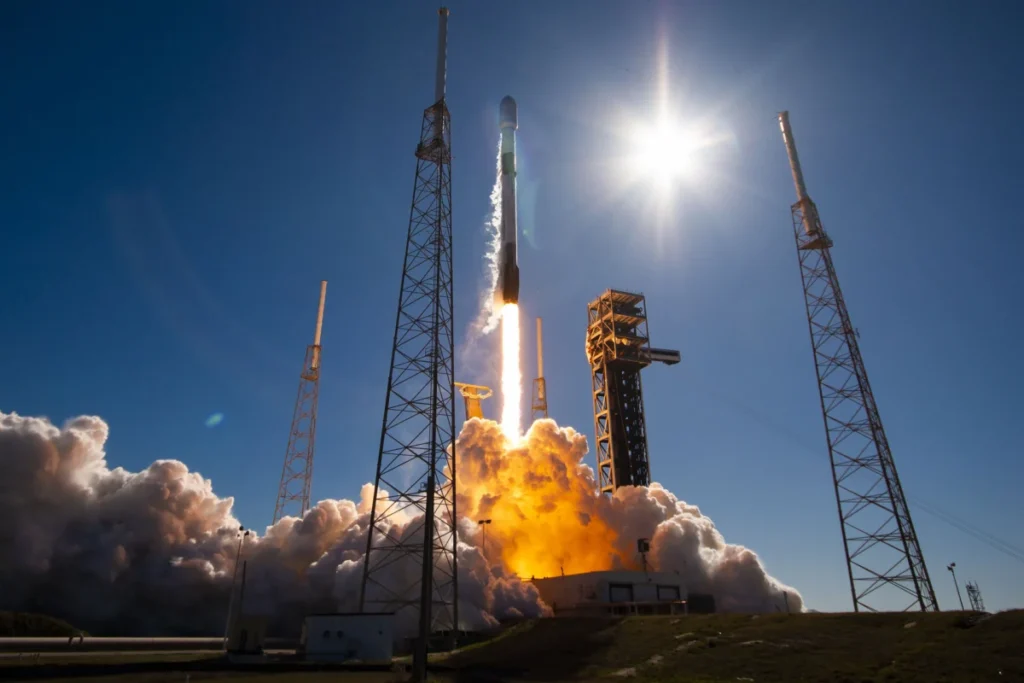
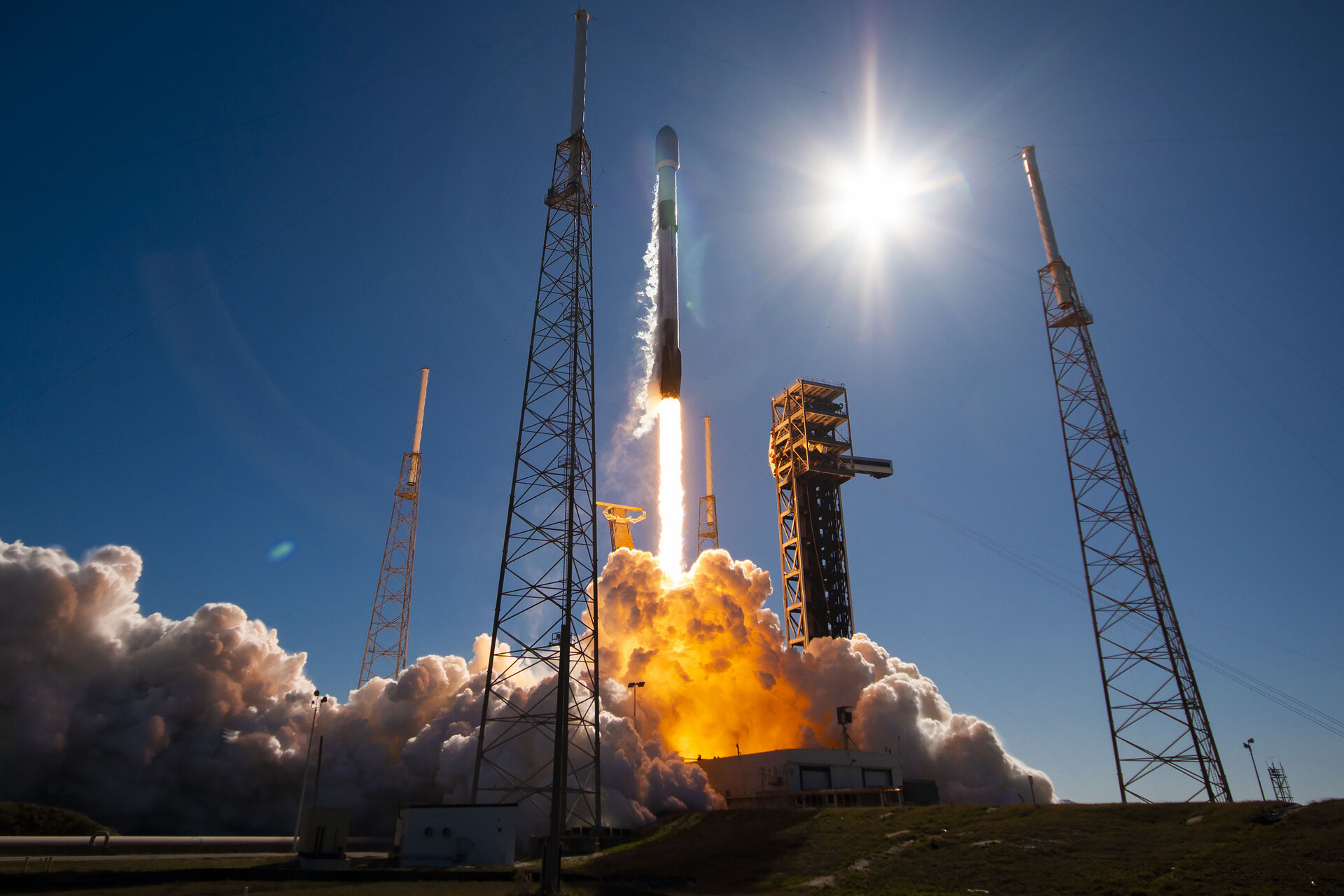
The European Space Agency (ESA) has successfully launched its latest technology demonstration CubeSat, GOMX-5, as part of its General Support Technology Programme (GSTP). The small satellite, developed in collaboration with Danish company GOMSpace, embarked on its journey into orbit yesterday evening, October 1, 2026, aboard SpaceX’s Falcon 9 Transporter-18 mission. This launch marks a significant step for ESA in its commitment to fostering innovation in space technology, particularly in areas crucial for the long-term sustainability of space activities and enhanced Earth observation capabilities.
A Mission Focused on Safety and Sustainability
GOMX-5 is an In-Orbit Demonstration (IOD) mission with a primary objective: to showcase and validate several cutting-edge technologies in the demanding environment of space. As the orbital landscape becomes increasingly congested, the imperative to mitigate the risks associated with space debris and potential collisions has never been greater. In alignment with ESA’s new space debris mitigation policy, a core focus of the GOMX-5 mission is the rapid commissioning of its novel propulsion system. The aim is to achieve full operational capability within 48 hours of launch, enabling the satellite to perform collision avoidance maneuvers should they become necessary.
This ambitious timeline for propulsion system activation is facilitated by a largely automated platform commissioning procedure developed by GOMSpace engineers. This innovative approach is designed to significantly reduce the time elapsed between the satellite’s deployment from its launch vehicle and the full functionality of its critical subsystems. The mission’s operations team is keenly awaiting confirmation of the successful execution of this automated process and the overall health of the spacecraft. This confirmation is essential before they can proceed with final checks and prepare to activate the electrical propulsion system on board GOMX-5 for potential use.
David Palma, the ESA Technical Officer overseeing the mission, emphasized the critical nature of this initial phase. "The operations team will have a challenging Launch and Early Operations phase, checking that these early automated operations worked successfully and that the platform is commissioned as quickly as possible. This requires a lot of focus and preparation," Palma stated. He further elaborated on the broader goals of the mission, noting, "Then over the coming weeks we’ll learn how these new technologies, such as the new antennas, radios and on-board computers, are performing and hopefully in a few months we can conclude the technology demonstration mission with success."
Pioneering Technologies for a Safer and More Connected Orbit
GOMX-5 is not just about propulsion; it is a comprehensive platform for testing a suite of advanced technologies, many of which are making their debut in space. Beyond the crucial collision avoidance capabilities, the mission will demonstrate a tracking solar panel, a technology already proven on ESA’s Hera mission’s Juventas CubeSat. This type of solar panel is designed to optimize power generation by precisely orienting itself towards the sun, even in complex orbital configurations.
A second key payload is a sophisticated maritime awareness system. Monitoring activities at sea is vital for maritime security, especially in remote areas where traditional tracking systems may not provide adequate coverage. GOMX-5 will serve as a reference for a new generation of maritime domain awareness payloads. This system utilizes multiple antennas and radios capable of covering a broad spectrum of frequencies, promising enhanced capabilities for tracking vessels and understanding maritime traffic patterns. This technology has the potential to significantly improve search and rescue operations, combat illegal fishing, and bolster general maritime surveillance efforts.
A Collaborative Approach to Space Technology Development
The GOMX-5 mission is a prime example of ESA’s strategy to foster partnerships with European industry to accelerate the development and validation of innovative space technologies. The GSTP programme, under which GOMX-5 was developed, plays a pivotal role in de-risking the adoption of new technologies by demonstrating their readiness for space applications. Element 3 of the GSTP, focused on "Fly," specifically supports the in-orbit validation of technology items.
GOMX-5 is the latest in a successful lineage of technology demonstration CubeSats developed in collaboration with GOMSpace under the GSTP framework. Previous missions, such as GOMX-4B and GOMX-3, have paved the way for GOMX-5. Notably, GOMX-3 was ESA’s very first technology CubeSat to fly, marking an early foray into the burgeoning field of miniaturized space technology. The continued success of this partnership underscores the effectiveness of the CubeSat platform for rapid technology prototyping and in-orbit testing.
Once the demonstration of these new technologies and payloads on GOMX-5 is successfully completed, the ESA GSTP activity will be concluded. Following this, the operational responsibility for the satellite will be fully transitioned to GOMSpace for the remainder of its mission lifespan. This handover ensures that the technologies continue to be utilized and their performance monitored even after the initial ESA-funded demonstration phase.
The Launch and Its Context
The Transporter-18 mission, carrying GOMX-5, was a dedicated small satellite rideshare mission. This type of mission allows multiple small payloads to hitch a ride on a single launch vehicle, significantly reducing the cost of access to space for smaller missions. GOMX-5 shared its journey with 129 other payloads, including a diverse array of other CubeSats. The launch window for the mission opened at 20:17 CEST on October 1, 2026, with the Falcon 9 rocket lifting off shortly thereafter from its launch site.
The success of this launch is a testament to the growing capabilities of the small satellite sector and the innovative launch solutions offered by companies like SpaceX. The Transporter missions, in particular, have democratized access to space for a wider range of entities, from academic institutions and research organizations to commercial companies and government agencies.
Broader Implications and Future Prospects
The successful deployment and commissioning of GOMX-5’s propulsion system within its critical 48-hour window will be a significant achievement. It will not only validate the automated commissioning process but also demonstrate a crucial capability for future ESA missions and potentially for commercial satellite operators adhering to debris mitigation guidelines. The ability to perform timely collision avoidance maneuvers is paramount to ensuring the long-term usability of Earth’s orbits. With an estimated over 30,000 trackable pieces of space debris in orbit, and countless smaller, untrackable fragments, the risk of catastrophic collisions is a growing concern. A proven, rapidly deployable propulsion system for collision avoidance on small satellites could become a standard feature, enhancing overall space situational awareness and safety.
The maritime awareness payload on GOMX-5 also holds significant promise. In an era of increasing global trade and interconnectedness, precise and comprehensive maritime monitoring is essential for economic security, environmental protection, and international cooperation. The technologies demonstrated on GOMX-5 could lead to more affordable and effective maritime surveillance systems, benefiting coast guards, environmental agencies, and international maritime organizations. The ability to monitor vast ocean expanses with enhanced precision, even in challenging weather conditions or remote locations, is a valuable asset.
The ongoing success of the GOMX series of CubeSats under ESA’s GSTP programme highlights the agency’s commitment to nurturing a vibrant European space ecosystem. By partnering with industry and focusing on high-impact technology demonstrations, ESA is not only advancing its own space capabilities but also fostering economic growth and technological leadership within its member states. The lessons learned and technologies proven on missions like GOMX-5 will undoubtedly contribute to the development of more advanced, sustainable, and capable space systems for years to come. The coming months will be crucial for evaluating the performance of GOMX-5’s innovative payloads, with the hope that this technology demonstration mission will indeed conclude with a resounding success.