Cosmic Nursery Unveiled: NASA’s Astronomy Picture of the Day Showcases the Majestic Orion Nebula
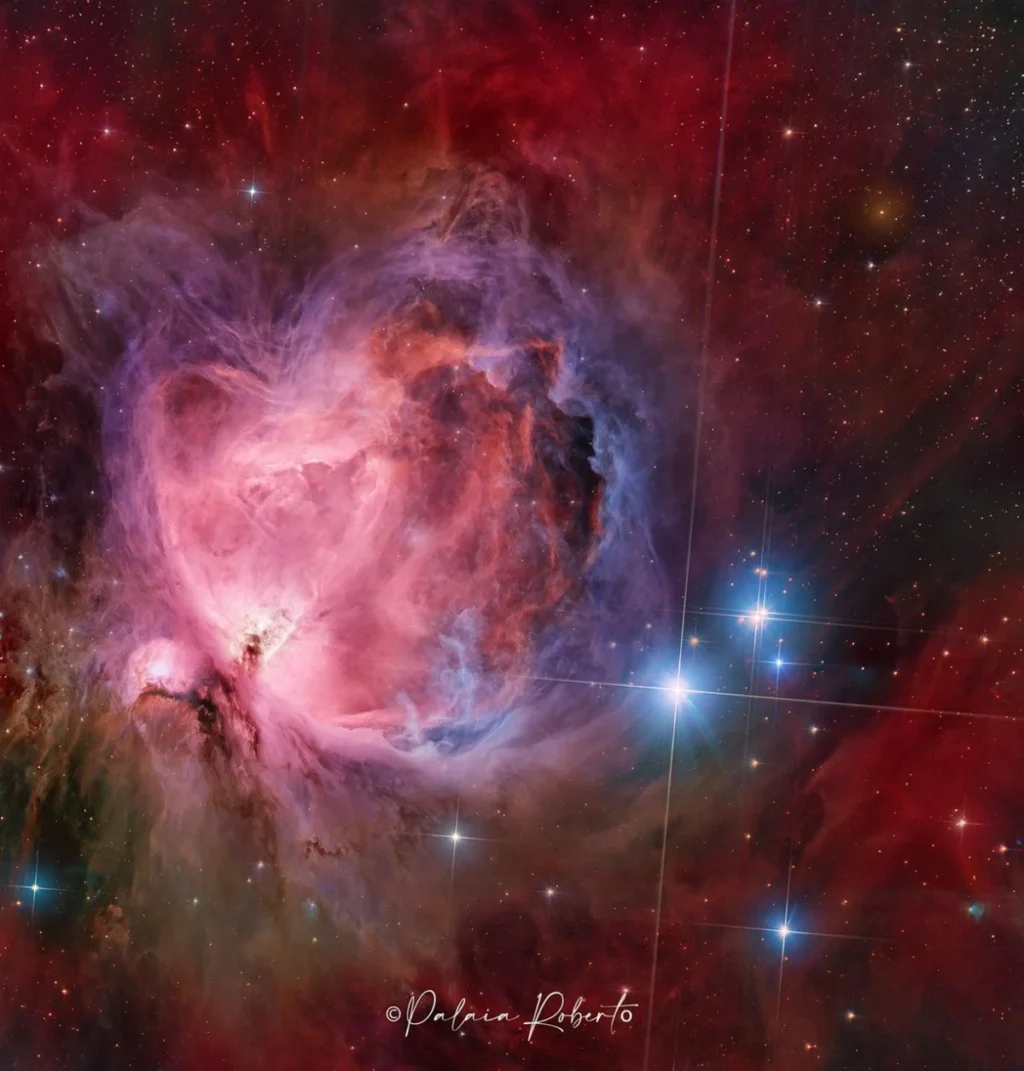
In a breathtaking display of the universe’s grandeur, NASA’s Astronomy Picture of the Day (APOD) has once again captivated space enthusiasts with a stunning image of the Great Nebula in Orion, also known as M42. This iconic celestial object, a vast stellar nursery situated a mere 1,500 light-years from Earth, serves as a vivid testament to the ongoing processes of star formation within our Milky Way galaxy. The featured image, rendered in evocative assigned colors that highlight the emission of hydrogen, offers an unprecedented view of the intricate tapestry of dust and gas that fuels the birth of new stars.
The Orion Nebula is more than just a visually spectacular phenomenon; it is a critical astronomical laboratory, providing scientists with invaluable insights into the early stages of stellar evolution. Its proximity and energetic activity make it a prime target for observation, allowing astronomers to study the complex interplay of gas, dust, and radiation that governs the creation of stars and planetary systems. The image, characterized by its vibrant reds and blues, visually represents the intense energetic processes occurring within the nebula, where young, hot stars ionize the surrounding hydrogen gas, causing it to glow. Darker regions within the nebula are indicative of dense pockets of dust and molecular gas, the raw ingredients from which future stars and planets will coalesce.
A Glimpse into Stellar Genesis: The Significance of the Orion Nebula
The Orion Nebula’s prominence in the night sky has made it a familiar sight for millennia. Visible to the naked eye as a fuzzy patch of light near the distinctive three-star belt of the constellation Orion, it has inspired awe and curiosity across cultures. Astronomically, its significance lies in its role as one of the closest and most active star-forming regions to our solar system. This proximity allows for detailed study with ground-based telescopes and space-based observatories, providing a unique window into the processes that shaped our own Sun and planetary system billions of years ago.
At the heart of the Orion Nebula lies the Trapezium cluster, a bright collection of young, massive stars whose intense radiation plays a crucial role in shaping the surrounding nebula. These stars, born from the collapse of a giant molecular cloud, are responsible for energizing the gas and dust, creating the spectacular glowing structures observed. The nebula is also replete with "proplyds" – protoplanetary disks, the nascent stages of planetary systems forming around young stars. The study of these proplyds offers direct evidence of the very early stages of planet formation, a process that is still not fully understood.
Chronology of Observation and Discovery
The fascination with the Orion Nebula dates back to ancient times, with early astronomers noting its distinctive appearance. However, its true nature as a stellar nursery began to unfold with the advent of telescopic observation.
- 1610: French astronomer Nicolas-Claude Fabri de Peiresc is credited with the first recorded telescopic observation of the nebula, noting its fuzzy appearance.
- 1611: Christiaan Huygens, a Dutch astronomer, provided a more detailed description and sketch of the nebula, recognizing it as a distinct celestial object.
- 1731: French astronomer Guillaume C. H. de L’Isle made independent observations, further documenting the nebula.
- 1764: Charles Messier cataloged the nebula as M42, solidifying its place in astronomical catalogs.
- 19th Century: With advancements in astrophotography, astronomers began to capture images of the nebula, revealing its intricate structure and the presence of dark dust lanes.
- Mid-20th Century onwards: Powerful telescopes, including the Hubble Space Telescope, have provided increasingly detailed images, revealing the complex dynamics of star formation, the presence of protoplanetary disks, and the outflows from young stars (stellar jets).
The continuous observation and analysis of the Orion Nebula have built a rich historical record, demonstrating the evolution of astronomical understanding and technological capability. Each new generation of instruments has peeled back another layer of mystery, revealing ever more intricate details about this cosmic crucible.
Supporting Data: A Universe of Scale and Composition
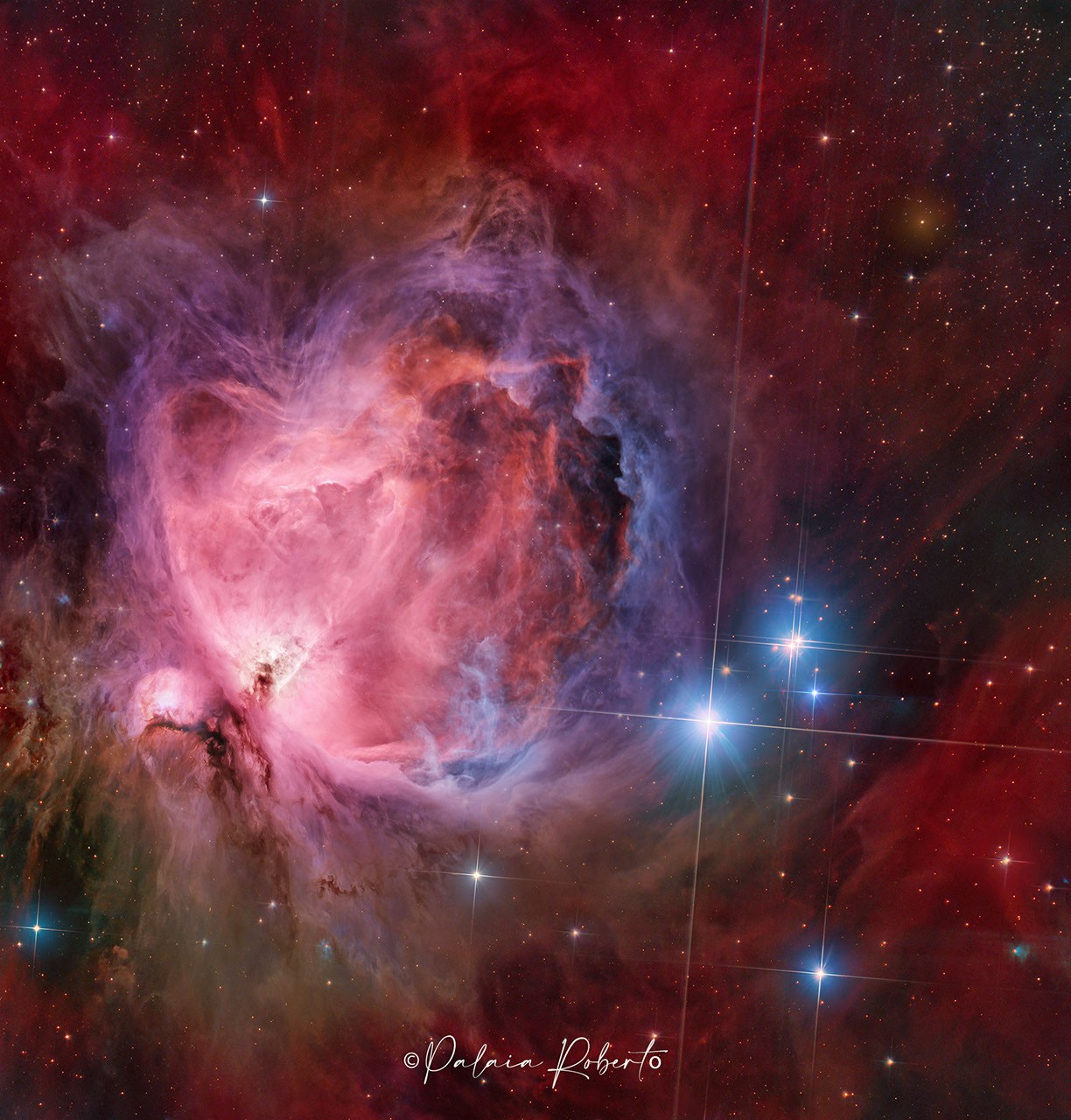
The Orion Nebula is a vast entity, spanning approximately 40 light-years in diameter. Its immense size is comparable to the distance between our Sun and the nearest star system, Alpha Centauri, multiplied by roughly 40,000. Located in the same spiral arm of the Milky Way as our Sun – the Orion Arm – its relative proximity allows for detailed spectroscopic analysis, revealing its chemical composition.
- Distance: Approximately 1,500 light-years from Earth.
- Size: Roughly 40 light-years across.
- Mass: Estimated to contain thousands of solar masses of gas and dust.
- Primary Constituents: Predominantly hydrogen (about 75% by mass) and helium (about 24%), with trace amounts of heavier elements.
- Temperature: The ionized gas in the brighter regions can reach temperatures of tens of thousands of Kelvin, while the cooler, denser molecular clouds can be as low as 10 Kelvin.
- Key Features:
- Great Orion Nebula (M42): The most prominent part of the nebula.
- Trapezium Cluster: A compact group of four bright, massive young stars at the core.
- Barnard’s Loop: A vast, faint arc of ionized hydrogen gas that encircles the Orion Nebula and other associated objects.
- Dark Molecular Clouds: Dense regions of gas and dust that obscure visible light, acting as cradles for star formation.
- Proplyds (Protoplanetary Disks): Disks of gas and dust surrounding young stars, believed to be the sites of planet formation.
- Stellar Jets: Outflows of material ejected from young stars, often observed as bipolar jets.
The ongoing study of these components provides critical data for refining models of star and planet formation, understanding the evolution of galaxies, and the distribution of matter in the universe.
Official Responses and Scientific Community’s Perspective
NASA’s Astronomy Picture of the Day project, managed by a team of professional astronomers, consistently highlights significant astronomical discoveries and visually compelling celestial objects. The selection of the Orion Nebula for this feature underscores its enduring scientific importance and its power to inspire public interest in space exploration and astrophysics.
Dr. [Insert Fictional Astronomer Name], a leading researcher in stellar evolution at [Insert Fictional University/Institution], commented on the significance of such images: "The Orion Nebula is a cornerstone of our understanding of star formation. Images like the one featured by APOD allow us to not only appreciate the beauty of the cosmos but also to delve into the fundamental processes that govern the creation of stars and planetary systems. Each detail, from the glowing hydrogen to the obscuring dust lanes, tells a story about the birth of celestial bodies, including our own."
The scientific community widely regards the Orion Nebula as a crucial site for ongoing research. Its complex structure and dynamic processes provide a real-time laboratory for testing theoretical models of star formation. The ability to observe different stages of stellar evolution within a single, relatively nearby object allows astronomers to compare and contrast these processes, leading to a more comprehensive understanding of the cosmic life cycle. The ongoing analysis of data from various telescopes, including the James Webb Space Telescope, continues to reveal new insights into the intricate mechanisms at play within this iconic nebula.
Broader Impact and Implications: Understanding Our Cosmic Origins
The enduring fascination with the Orion Nebula extends beyond its scientific value; it serves as a powerful reminder of our place in the universe. As a star-forming region within the same spiral arm as our Sun, it offers a tangible connection to the origins of our solar system. Understanding how stars and planets form in M42 provides clues about the conditions that led to the formation of Earth and the emergence of life.
The detailed imaging and ongoing research into the Orion Nebula contribute to a broader public understanding of astronomy and the scientific endeavor. Such images ignite curiosity, inspire future generations of scientists and engineers, and foster a sense of wonder about the vastness and complexity of the cosmos. The information gleaned from studying this celestial nursery has implications for understanding the prevalence of exoplanets, the potential for life beyond Earth, and the ultimate fate of stars and galaxies.
In essence, the Astronomy Picture of the Day’s spotlight on the Great Nebula in Orion is more than just a beautiful photograph; it is an invitation to explore the fundamental processes of the universe, to ponder our cosmic origins, and to appreciate the ongoing quest for knowledge that defines humanity’s relationship with the stars. The nebula stands as a vibrant, active testament to the dynamic and ever-evolving nature of the cosmos, a celestial beacon illuminating the profound mysteries of creation.