London, UK & San Diego, USA – In a significant scientific breakthrough, an international team of researchers has meticulously uncovered the precise molecular interactions responsible for bestowing spider silk its unparalleled combination of strength and flexibility. This pivotal discovery is anticipated to not only accelerate the design and development of a new generation of high-performance, bio-inspired materials for diverse applications, from aerospace and protective gear to advanced medical uses, but also to offer unprecedented insights into the fundamental mechanisms underlying neurodegenerative disorders such as Alzheimer’s disease. The comprehensive study, which meticulously details these fundamental design principles, was recently published in the esteemed journal Proceedings of the National Academy of Sciences.
The collaborative effort brought together leading scientists from King’s College London in the United Kingdom and San Diego State University (SDSU) in the United States, marking a culmination of years of dedicated research into one of nature’s most enigmatic and resilient materials. Their findings illuminate, for the first time, how specific amino acids within spider silk proteins orchestrate a molecular dance, acting as sophisticated "stickers" that precisely hold the material together during its intricate formation process, ultimately dictating its extraordinary mechanical properties.
The Enduring Enigma of Spider Silk: Nature’s Engineering Marvel
For centuries, spider silk has captivated human imagination and scientific curiosity, lauded as one of nature’s most remarkable biological polymers. Its reputation as a material of exceptional performance is well-deserved; pound for pound, spider dragline silk—the robust fiber spiders use for the structural framework of their webs and as a lifeline—surpasses steel in tensile strength and outperforms synthetic materials like Kevlar, commonly used in bulletproof vests, in toughness. While steel can withstand immense pressure, spider silk can absorb significantly more energy before breaking, making it incredibly resilient. This unique combination of properties, particularly its ability to stretch considerably before fracturing, has made it a holy grail for material scientists striving to replicate its qualities in synthetic environments.
Despite its obvious advantages, the challenge of mass-producing synthetic spider silk has historically proven formidable. Spiders, unlike silkworms, are territorial and cannibalistic, making traditional farming impractical. Early attempts at synthetic replication struggled to mimic the intricate self-assembly process that occurs within the spider’s silk glands, often resulting in fibers that lacked the strength, elasticity, and overall toughness of the natural product. Scientists knew that the raw material, a thick liquid protein solution called "silk dope," undergoes a complex transformation as it is spun into solid fibers, but the precise molecular choreography dictating this transition remained shrouded in mystery. This new research provides a crucial missing piece of that puzzle.
Unveiling the Molecular "Stickers": A Breakthrough in Protein Assembly
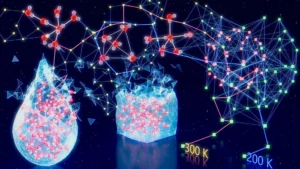
The core of this groundbreaking study lies in its atomistic-level explanation of how disordered proteins assemble into highly ordered, high-performance structures. The interdisciplinary research team, comprising chemists, biophysicists, and engineers, deployed an arsenal of advanced computational and laboratory techniques to peer into the nanoscale world of silk formation. Their methodology included sophisticated molecular dynamics simulations, which allow scientists to observe the movement and interactions of atoms and molecules over time; the cutting-edge AlphaFold3 structural modelling, an artificial intelligence tool that predicts protein structures with unprecedented accuracy; and nuclear magnetic resonance (NMR) spectroscopy, a powerful analytical technique that provides detailed information about the structure and dynamics of molecules at an atomic level.
Through this rigorous analysis, the researchers pinpointed two specific amino acids, arginine and tyrosine, as key players in the initial stages of silk protein clustering. These amino acids, with their distinct chemical properties, engage in highly specific interactions that initiate the phase separation of silk proteins from a dilute solution into concentrated liquid-like droplets. This initial clustering is not a transient event; rather, the study revealed that these crucial interactions persist and remain active as the silk dope is drawn into solid fibers. It is these sustained molecular "stickers" that guide the assembly of the proteins into the intricate nanostructure characteristic of spider silk, featuring regions of highly organized beta-sheets interspersed with more amorphous segments, which together confer its exceptional strength and flexibility.
Professor Chris Lorenz, Professor of Computational Materials Science at King’s College London and leader of the UK research team, underscored the profound nature of this discovery. "This study provides an atomistic-level explanation of how disordered proteins assemble into highly ordered, high-performance structures," Lorenz stated, emphasizing the fundamental principles revealed. The ability to understand and potentially control these interactions at such a fine scale represents a paradigm shift in materials science.
From Gland to Fiber: A Deeper Understanding of Nature’s Spinning Process
The spinning of spider silk is a marvel of biological engineering. Inside a spider’s silk gland, the silk proteins are stored as a highly concentrated liquid crystalline solution, the aforementioned "silk dope." When the spider needs to produce a fiber, this liquid is extruded through a narrow duct, undergoing a series of carefully controlled physical and chemical changes. These changes include variations in pH, water removal, and the application of shear forces, all of which contribute to the rapid transformation of the liquid dope into a solid fiber.
Prior to this study, scientists understood the macroscopic aspects of this process – the transition from liquid to solid, and the resulting mechanical properties. However, the molecular steps that connect the initial clustering of proteins to the final, highly ordered structure of the solidified fiber remained largely speculative. The current research fills this critical gap, demonstrating how the specific interactions between arginine and tyrosine drive the initial phase separation and then continue to stabilize the nascent fiber as it forms, guiding the self-assembly process that leads to the complex nanostructure. This continuous role of the "molecular stickers" ensures the precise arrangement of protein chains, creating a material that is not only strong but also incredibly tough and extensible.
Vast Potential in Bio-Inspired Materials: A New Era of Engineering
The implications of this discovery for materials science are vast and far-reaching, promising to usher in a new era of bio-inspired engineering. Understanding the fundamental design principles of spider silk opens doors to creating a new generation of high-performance, environmentally friendly fibers that can surpass the capabilities of many existing synthetic materials.
- Aerospace Industry: The demand for lighter, stronger materials is constant. Fibers engineered using these natural principles could lead to significantly lighter airplane components, reducing fuel consumption and emissions, and improving structural integrity. Imagine aircraft wings or fuselage sections constructed from materials with the strength-to-weight ratio of spider silk, offering both enhanced safety and environmental benefits.
- Protective Gear: The development of advanced protective clothing, including military body armor, sports equipment, and industrial safety gear, stands to benefit immensely. Materials that are not only stronger than Kevlar but also significantly lighter and more flexible could offer unprecedented protection without hindering mobility, a critical factor in high-stakes environments.
- Medical Applications: The biocompatibility and biodegradability of natural silk proteins make them ideal candidates for a range of medical uses. Potential applications include high-strength, biodegradable sutures that dissolve harmlessly after healing, advanced tissue scaffolds for regenerative medicine, drug delivery systems, and even artificial tendons and ligaments that mimic the body’s natural mechanics. Such materials could revolutionize surgical outcomes and patient recovery.
- Soft Robotics and Smart Textiles: The unique combination of strength and elasticity found in spider silk makes it highly suitable for emerging fields like soft robotics, where flexible yet robust components are essential. Furthermore, it could inspire the creation of next-generation smart textiles with integrated functionalities, capable of adapting to various conditions or even harvesting energy.
Professor Lorenz articulated the broad spectrum of these potential applications: "The potential applications are vast – lightweight protective clothing, airplane components, biodegradable medical implants, and even soft robotics could benefit from fibres engineered using these natural principles." Beyond performance, the bio-inspired nature of these materials also promises significant environmental advantages, reducing reliance on fossil-fuel-derived polymers and promoting sustainability through biodegradable alternatives. The global market for bio-inspired materials is projected to reach billions of dollars in the coming decade, driven by innovations like this that offer superior performance with reduced environmental impact.
Unexpected Links to Brain Science and Alzheimer’s Research
Perhaps one of the most surprising and profound aspects of this research lies in its unexpected implications for understanding and potentially treating neurodegenerative diseases. Gregory Holland, an SDSU professor of physical and analytical chemistry who spearheaded the US component of the study, expressed his astonishment at this unforeseen connection.
"What surprised us was that silk – something we usually think of as a beautifully simple natural fiber – actually relies on a very sophisticated molecular trick," Holland observed. He went on to highlight a critical overlap: "The same kinds of interactions we discovered are used in neurotransmitter receptors and hormone signaling." This revelation suggests that the fundamental molecular mechanisms governing the self-assembly of spider silk proteins might share commonalities with crucial biological processes within the human body.
The most compelling link emerges in the context of neurodegenerative disorders like Alzheimer’s disease. Holland further elaborated: "The way silk proteins undergo phase separation and then form β-sheet-rich structures mirrors mechanisms we see in neurodegenerative diseases such as Alzheimer’s." Alzheimer’s disease, a progressive neurodegenerative condition affecting millions globally, is characterized by the abnormal aggregation of proteins, specifically amyloid-beta and tau, into insoluble plaques and tangles. These aggregates often feature a high content of β-sheet structures, which are believed to contribute to neuronal dysfunction and death.
The striking parallel between the controlled β-sheet formation in spider silk and the pathological β-sheet aggregation in Alzheimer’s offers a unique research avenue. "Studying silk gives us a clean, evolutionarily-optimized system to understand how phase separation and β-sheet formation can be controlled," Holland explained. By investigating a natural system that precisely manages protein assembly into highly functional β-sheet-rich structures, scientists may gain critical insights into how to prevent or reverse the uncontrolled and detrimental protein aggregation seen in Alzheimer’s. This could lead to novel therapeutic strategies, including the development of drugs that modulate phase separation or inhibit aberrant β-sheet formation, offering new hope in the fight against this devastating illness. The research could also provide new models for studying the disease in a controlled, simplified environment, accelerating drug discovery and a deeper understanding of its progression.
The Path Forward: Challenges and Future Research Horizons
While the current discovery represents a monumental leap forward, the journey from laboratory breakthrough to widespread application involves significant challenges. A primary hurdle remains the scalable production of synthetic spider silk. Current methods, often relying on genetically engineered bacteria or yeast to produce silk proteins, still face difficulties in consistently replicating the complex spinning conditions found within the spider. Further research will focus on optimizing these biomimetic spinning processes to translate the molecular insights into industrially viable production methods.
Beyond scaling production, future research will undoubtedly delve deeper into the nuances of various spider silk types, each possessing unique properties adapted for specific functions within the spider’s ecosystem. Understanding these variations at the molecular level could unlock an even broader spectrum of bio-inspired materials.
On the biomedical front, the connection to Alzheimer’s disease opens up an entirely new research frontier. Scientists will now explore how the identified molecular interactions in silk proteins can inform strategies to interfere with pathological protein aggregation in the brain. This will require extensive collaboration between material scientists, biophysicists, neurobiologists, and pharmaceutical researchers to translate these fundamental insights into tangible therapeutic interventions.
The groundbreaking work by the teams at King’s College London and San Diego State University stands as a testament to the power of interdisciplinary science and the enduring inspiration found in the natural world. By unraveling the molecular secrets of spider silk, researchers have not only charted a course for the next generation of advanced materials but have also unexpectedly illuminated a potential new pathway in the urgent quest for understanding and treating complex human diseases. This discovery underscores the interconnectedness of biological systems and the immense value in observing and learning from nature’s most sophisticated designs.