The Breakthrough Prize Foundation has announced its latest cohort of laureates, honoring a distinguished group of Massachusetts Institute of Technology (MIT) faculty and alumni for their transformative contributions to the fields of life sciences, fundamental physics, and mathematics. Often referred to as the "Oscars of Science," the Breakthrough Prize is among the most prestigious and lucrative honors in the global scientific community, designed to celebrate the profound impact of research that pushes the boundaries of human knowledge. The 2024 and 2026 prize cycles featured a significant presence from the MIT community, highlighting the institute’s enduring role as a hub for groundbreaking discovery. The laureates were celebrated at a high-profile gala ceremony in Los Angeles on April 18, 2024, an event that brought together luminaries from the worlds of science, technology, and entertainment to recognize achievements that range from curing genetic blood disorders to mapping the earliest moments of the universe.
Revolutionizing Hematology: The Breakthrough in Sickle Cell Treatment
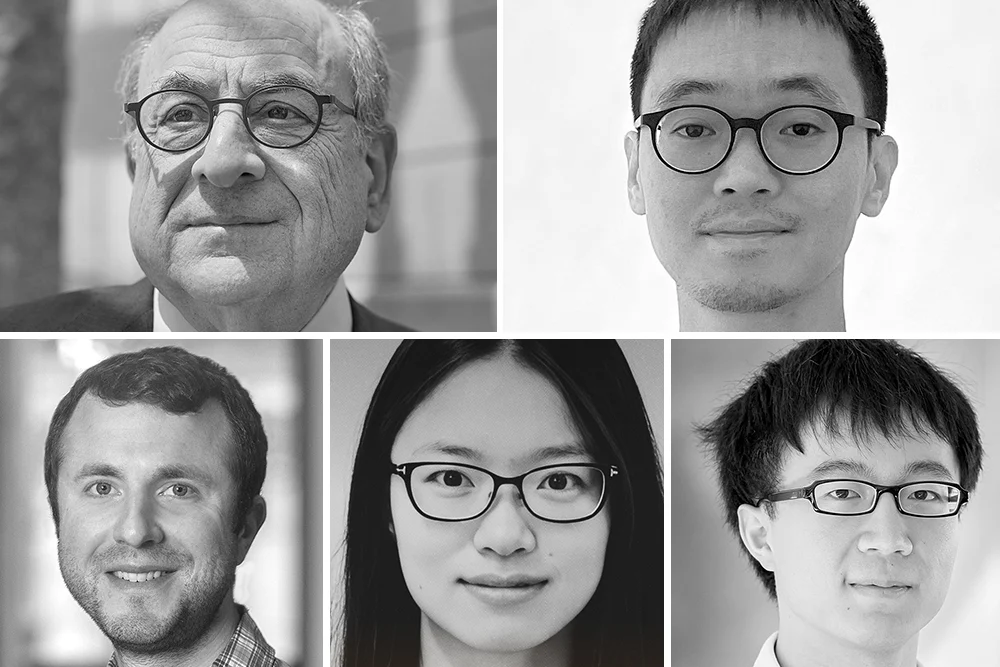
Among the evening’s most prominent honors was the Breakthrough Prize in Life Sciences awarded to Stuart H. Orkin ’67, a graduate of the MIT Department of Biology and currently a professor of pediatrics at Harvard Medical School. Orkin shared the prize with Swee Lay Thein of the National Institutes of Health. Their collaborative and independent research over several decades has fundamentally altered the medical landscape for patients suffering from sickle cell disease and beta-thalassemia—conditions that were once considered lifelong, debilitating, and often incurable.
Sickle cell disease, a group of inherited red blood cell disorders, affects millions of people worldwide, particularly those of African, Mediterranean, and Middle Eastern descent. For decades, the primary treatments were limited to pain management and blood transfusions. However, Orkin’s research focused on a biological phenomenon known as the "fetal hemoglobin switch." During early development, humans produce fetal hemoglobin, which has a high affinity for oxygen. Shortly after birth, the body switches to producing adult hemoglobin. In patients with sickle cell disease, the adult hemoglobin is mutated, causing red blood cells to take on a rigid, sickle shape that blocks blood flow and causes organ damage.
Orkin’s work identified the "master switch"—a protein known as BCL11A—that controls this transition. By understanding the genetic mechanism that silences fetal hemoglobin, Orkin and his team paved the way for gene-editing therapies that can "flip the switch" back on. This discovery led directly to the development of Casgevy, the world’s first CRISPR-based medicine to receive regulatory approval. This landmark therapy allows patients to produce healthy fetal hemoglobin, effectively bypassing the defective adult hemoglobin and providing a functional cure. The approval of Casgevy by the FDA in late 2023 marked a historic milestone in genomic medicine, validating decades of basic research as a viable pathway for complex gene therapies.
Theoretical Physics and the New Horizons in Quantum Field Theory
In the realm of fundamental physics, the foundation recognized the next generation of leaders through the New Horizons in Physics Prize. Shu-Heng Shao, an assistant professor of physics at MIT and a researcher within the MIT Center for Theoretical Physics—a Leinweber Institute—was named a recipient of the 2026 New Horizons in Physics Prize. Shao shared this recognition with Clay Córdova of the University of Chicago, Thomas Dumitrescu of the University of California at Los Angeles, and Yifan Wang PhD ’16 of New York University.
The group was cited for their work in discovering and developing the theory of "generalized symmetries" in quantum field theory (QFT). Quantum field theory is the mathematical framework that describes the behavior of subatomic particles and the forces of nature. Traditionally, symmetries in physics refer to properties that remain unchanged when a system undergoes a transformation, such as rotation or translation. However, Shao and his colleagues expanded this definition, identifying higher-form symmetries and non-invertible symmetries that were previously overlooked.
These generalized symmetries provide powerful new tools for understanding the phases of matter and the fundamental interactions of particles. By establishing a more comprehensive language for symmetry, Shao’s research allows physicists to classify different states of quantum matter with greater precision, potentially leading to breakthroughs in our understanding of high-temperature superconductivity and quantum gravity. The recognition of Shao and his peers underscores the importance of theoretical exploration in providing the bedrock for future experimental physics.
Mapping the Cosmos: Insights into the Early Universe
The 2024 New Horizons in Physics Prize also recognized J. Colin Hill ’08, an MIT alumnus who shared the honor with a team of researchers including Dillon Brout, Mathew Madhavacheril, Maria Vincenzi, Daniel Scolnic, and W. L. Kimmy Wu. This group was lauded for their collective efforts in measuring the expansion and composition of the universe with unprecedented accuracy.
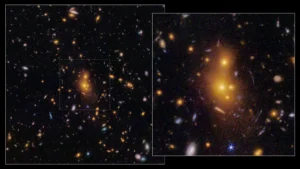
Hill’s specific contribution centers on the analysis of data from the cosmic microwave background (CMB) radiation. Often described as the "afterglow" of the Big Bang, the CMB is the oldest light in the universe, dating back to approximately 380,000 years after the universe began. By studying the minute fluctuations in the temperature and polarization of this radiation, Hill and his colleagues can extract vital information about the universe’s age, its rate of expansion (the Hubble constant), and the distribution of dark matter and dark energy.
The work of this team is crucial in resolving the "Hubble tension"—a current discrepancy in physics where different methods of measuring the universe’s expansion yield conflicting results. By refining the analysis of CMB data and combining it with supernova observations, Hill’s research helps build a more cohesive model of the cosmos, providing a clearer picture of how the universe evolved from a hot, dense singularity into the vast web of galaxies observed today.
Advancing Mathematical Foundations: The Power of Harmonic Analysis
In the field of mathematics, Hong Wang PhD ’19 was awarded a New Horizons in Mathematics Prize. Wang, an alumna of MIT’s doctoral program, was recognized for her significant contributions to harmonic analysis, a branch of mathematics concerned with the representation of functions or signals as the superposition of basic waves.
Specifically, Wang has made strides in resolving or advancing long-standing problems within the "Kakeya conjecture" family. The Kakeya problem, which originated in the early 20th century, asks for the minimum amount of space required to rotate a needle 360 degrees. While seemingly simple, it has deep implications for Fourier analysis, partial differential equations, and number theory. Wang’s research utilizes sophisticated geometric and algebraic techniques to tackle these notoriously difficult problems, which have stymied mathematicians for decades. Her work not only advances pure mathematics but also has potential applications in fields such as signal processing and medical imaging, where decomposing complex data into fundamental components is essential.
Deciphering the Genetics of Neurodegeneration
The Breakthrough Prize in Life Sciences also highlighted critical advancements in the understanding of neurodegenerative diseases. Bryan Traynor, a former student in the Harvard-MIT Program in Health Sciences and Technology (HST), shared a prize with Rosa Rademakers for their discovery of the most common genetic cause of both amyotrophic lateral sclerosis (ALS) and frontotemporal dementia (FTD).
Their research identified a specific hexanucleotide repeat expansion in the C9orf72 gene. This genetic mutation is now recognized as the most frequent cause of familial ALS and FTD, providing a unified genetic link between two seemingly distinct conditions—one affecting motor neurons and the other affecting cognitive function and behavior. This discovery has been transformative for the field of neurology, allowing for earlier diagnosis and providing a clear target for the development of antisense oligonucleotide (ASO) therapies and other gene-based interventions. For the thousands of families affected by these devastating diseases, Traynor’s work offers a roadmap for future treatments that aim to slow or halt disease progression at the molecular level.
The Breakthrough Prize: Background and Chronology
The Breakthrough Prizes were established in 2012 by a group of visionary technology entrepreneurs, including Sergey Brin, Priscilla Chan and Mark Zuckerberg, Julia and Yuri Milner, and Anne Wojcicki. The mission of the foundation is to celebrate the achievements of the world’s top scientists and to inspire the next generation to pursue careers in research. Unlike many other academic awards, the Breakthrough Prize is known for its gala format, which seeks to give scientists the same level of public recognition typically reserved for movie stars and athletes.
Each year, the foundation awards several main prizes in Life Sciences, Fundamental Physics, and Mathematics, each carrying a $3 million purse. In addition, the New Horizons Prizes in Physics and Mathematics, worth $100,000 each, are awarded to early-career researchers who have already made a substantial impact in their respective fields.
The timeline of the Breakthrough Prize reflects the rapid acceleration of scientific discovery in the 21st century. Since its inception, the foundation has awarded over $300 million to more than 3,000 scientists. The 2024 ceremony in Los Angeles represented a return to full-scale celebrations following the disruptions of the COVID-19 pandemic, emphasizing the global community’s renewed focus on the importance of scientific resilience and innovation.
Broader Impact and Implications for the Scientific Community
The recognition of these MIT affiliates carries significant implications for the future of global research. First, the awards emphasize the shift toward collaborative, interdisciplinary science. Whether it is the partnership between clinical researchers and geneticists in the case of Stuart Orkin and Swee Lay Thein, or the international teams of physicists analyzing cosmic data, modern discovery is increasingly a collective endeavor.
Second, the prizes highlight the growing importance of "translational" research—the process of taking basic laboratory findings and turning them into real-world medical or technological applications. The journey from Orkin’s identification of the BCL11A gene to the clinical approval of Casgevy serves as a blueprint for how fundamental biology can be harnessed to solve the most challenging medical puzzles.
Furthermore, the New Horizons Prizes awarded to younger researchers like Shu-Heng Shao and Hong Wang signal a commitment to the longevity of the scientific enterprise. By providing financial support and global visibility to early-career faculty and recent graduates, the Breakthrough Prize Foundation ensures that high-risk, high-reward theoretical research continues to flourish.
In official statements following the ceremony, the foundation emphasized that the work of these laureates represents the pinnacle of human curiosity. While the financial awards are significant, the true value of the Breakthrough Prize lies in its ability to focus public attention on the quiet, often painstaking work that happens in laboratories and classrooms. For MIT, the success of its faculty and alumni at the Breakthrough Prizes reinforces the institution’s mission to "advance knowledge and educate students in science, technology, and other areas of scholarship that will best serve the nation and the world in the 21st century."
As the scientific community looks forward, the discoveries honored this year will likely serve as the foundation for the next decade of innovation. From the potential for CRISPR to treat a wider array of genetic diseases to the possibility of a "Theory of Everything" informed by generalized symmetries, the work of these MIT affiliates continues to push the boundaries of what is possible, proving that the pursuit of fundamental truth remains one of humanity’s most noble and impactful endeavors.