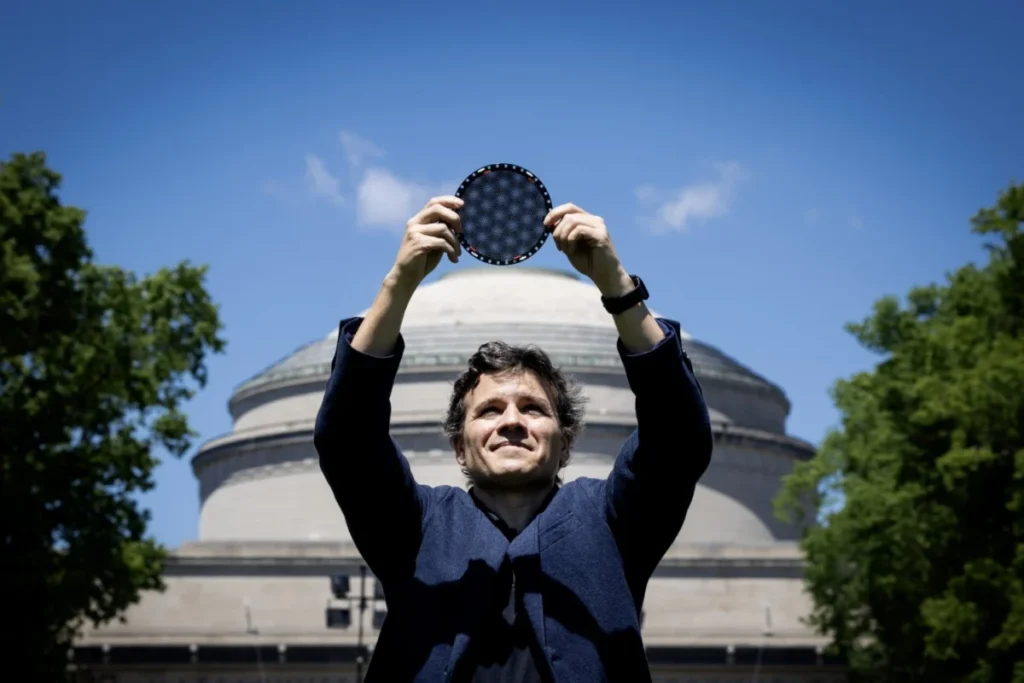
The Norwegian Academy of Science and Letters has announced that Pablo Jarillo-Herrero, the Cecil and Ida Green Professor of Physics at the Massachusetts Institute of Technology (MIT), is a co-recipient of the 2026 Kavli Prize in Nanoscience. This prestigious international award recognizes Jarillo-Herrero for his foundational contributions to the development of "twistronics," a revolutionary field in condensed matter physics that explores how the mechanical rotation of atom-thick layers can fundamentally alter the electronic properties of materials. Jarillo-Herrero shares the honor with Professor Eva Y. Andrei of Rutgers University and Professor Allan MacDonald of the University of Texas at Austin. The three laureates are cited for their collective work in providing the theoretical framework and experimental validation for a phenomenon where superconductivity and magnetism can be engineered by simply twisting two-dimensional materials to specific "magic angles."
The Kavli Prize, established in 2005 through a partnership among the Norwegian Academy of Science and Letters, the Norwegian Ministry of Education and Research, and the Kavli Foundation, is awarded biennially. It honors scientists whose breakthroughs in astrophysics, nanoscience, and neuroscience have significantly advanced the human understanding of the "big, the small, and the complex." Each of the three prizes carries a cash award of $1 million, which the laureates in each category share. For the 2026 cycle, the nanoscience selection committee highlighted the transformative nature of twistronics, a field that has transitioned from a theoretical curiosity to one of the most active and promising areas of modern physics in less than two decades.
The Scientific Foundation: From Graphene to Twistronics
To understand the magnitude of the work recognized by the 2026 Kavli Prize, one must look back at the history of two-dimensional materials. The discovery of graphene—a single layer of carbon atoms arranged in a hexagonal honeycomb lattice—in 2004 by Andre Geim and Konstantin Novoselov (who received the Nobel Prize in Physics in 2010) set the stage. Graphene is known for its extraordinary strength and high electrical conductivity, but for years, scientists sought ways to tune its electronic properties without changing its chemical composition.
The field of twistronics emerged as the solution to this challenge. The term refers to the "twist" or rotation between layers of two-dimensional materials. When two sheets of graphene are stacked on top of one another and rotated by a small angle, they create a moiré pattern—a complex geometric interference pattern. This pattern changes the environment in which electrons move, effectively slowing them down and forcing them to interact with one another in ways they otherwise would not.
The 2026 Kavli Prize honors the three distinct phases of this discovery: the initial experimental observation of twist-dependent electronic states, the theoretical prediction of "magic angles," and the definitive experimental proof of superconductivity within these systems.
A Chronology of Discovery: 2009 to 2018
The journey toward the 2026 Kavli Prize began in 2009 with the work of Eva Y. Andrei at Rutgers University. Using scanning tunneling microscopy and spectroscopy, Andrei’s research group investigated how the electronic structure of graphene changed when the material was placed on different substrates or layered. They were the first to demonstrate that even slight variations in the twist angle between graphene layers could profoundly modify the material’s electronic structure. This was a paradigm shift; it proved that the physical orientation of a material—rather than its chemical makeup—could be used as a "tuning knob" for its physical properties. This breakthrough is widely considered the experimental birth of what would later be named twistronics.
In 2011, Allan MacDonald and his colleagues at the University of Texas at Austin provided the mathematical and theoretical scaffolding for these observations. MacDonald’s team developed a model that quantitatively explained how the electronic structure of twisted bilayer graphene evolves as a function of the twist angle. Most significantly, MacDonald predicted the existence of "magic angles." He theorized that at a specific rotation—approximately 1.1 degrees—the electrons in the graphene layers would reach a "flat band" state. In this state, the electrons’ kinetic energy becomes nearly zero, allowing their mutual repulsion (electron-electron correlation) to dominate the material’s behavior. This theoretical framework became the roadmap for experimentalists worldwide.
The final piece of the puzzle arrived in 2018, when Pablo Jarillo-Herrero and his team at MIT published two landmark papers in the journal Nature. Jarillo-Herrero had spent years perfecting a "tear and stack" method to create graphene devices with unprecedented angular precision. By cooling a bilayer graphene device twisted to exactly 1.1 degrees to temperatures near absolute zero, his group observed two remarkable phenomena. First, the material became a "correlated insulator," where electron interactions prevented the flow of current. Then, by slightly increasing the electron density using an electric field, they observed the material transition into a superconducting state—meaning it could conduct electricity with zero resistance.
The Significance of the 2018 Breakthrough
The observation of superconductivity in magic-angle twisted bilayer graphene was a "watershed moment" for the physics community. Unlike traditional superconductors, which are often complex alloys or ceramics, Jarillo-Herrero’s system was made entirely of carbon. Furthermore, the superconductivity was "tunable." By simply changing the voltage on a gate electrode, the researchers could switch the material from an insulator to a superconductor and back again.
This discovery provided a new "quantum simulator" for studying high-temperature superconductivity. For decades, physicists have struggled to understand the mechanisms behind cuprates (copper-oxide materials) that exhibit superconductivity at relatively high temperatures. Because twisted graphene is a much simpler system than cuprates, it allows scientists to isolate and study the fundamental interactions that lead to superconductivity.
The Kavli Prize citation notes that Jarillo-Herrero’s platform "combining atomic-scale structural simplicity with electronic tunability, has enabled systematic investigations and has had broad and lasting impact across nanoscience and quantum material research."
Institutional and Academic Reactions
The announcement has been met with widespread acclaim within the MIT community and the broader scientific world. Nergis Mavalvala, the dean of the MIT School of Science and the Curtis and Kathleen Marble Professor of Astrophysics, praised the laureate’s contributions. "Pablo’s groundbreaking research has once again been given well-deserved recognition," Mavalvala stated. "Pablo and his co-recipients have pioneered twistronics, very fundamental scientific research that has opened up a new field with myriad possibilities for novel quantum materials."
Deepto Chakrabarty, the head of the MIT Department of Physics and the William A. M. Burden Professor in Astrophysics, emphasized the future potential of the work. "Pablo’s research has helped spark a revolution in condensed matter physics and nanoscience, inspiring physicists worldwide to explore superconductivity and other emergent phenomena in engineered quantum materials," Chakrabarty said. "This work could potentially lead to the creation of superconductors at room temperature, which would have an enormous technological impact."
Reflecting on the honor, Jarillo-Herrero expressed humility and emphasized the value of basic science. "I’m humbled and incredibly honored to be sharing this award with Eva Andrei and Allan MacDonald," he noted in an essay for the Kavli Foundation. He also highlighted the difficulty of the 2018 experiments, noting that while the concept was straightforward, the execution required years of meticulous lab work. "It is incredibly important for society to continue to support fundamental research: Although it often doesn’t have a direct near-term application, in the long run it happens to be the most transformative and impactful in society."
Broader Impact and Future Implications
The implications of twistronics extend far beyond the laboratory. The ability to engineer materials with custom-designed electronic properties could lead to a new generation of electronic devices.
- Quantum Computing: Magic-angle materials provide a unique platform for creating and manipulating qubits, the building blocks of quantum computers. The high degree of control over electron correlations could lead to more stable and scalable quantum architectures.
- Energy Efficiency: The ultimate goal of superconductivity research is the development of materials that function at room temperature and ambient pressure. If twistronics leads to such a discovery, it would revolutionize the global power grid, eliminating energy loss during transmission and enabling hyper-efficient electric motors and magnets.
- New Phases of Matter: Beyond superconductivity, researchers are using twistronics to explore other exotic states of matter, such as topological insulators and magnetic phases that do not exist in naturally occurring crystals.
Since Jarillo-Herrero’s 2018 discovery, the field has expanded to include "trilayer" graphene, twisted hexagonal boron nitride, and transition metal dichalcogenides. The "twist" has become a standard tool in the materials scientist’s toolkit.
MIT’s Legacy of Kavli Prize Excellence
With the addition of Pablo Jarillo-Herrero, MIT now counts nine faculty members among the all-time recipients of the Kavli Prize. This record highlights the institute’s role as a global leader in high-impact scientific research. The previous MIT laureates represent the three core pillars of the prize:
- Neuroscience: Nancy Kanwisher (2024) and Ann Graybiel (2012).
- Nanoscience: Bob Langer (2024) and Mildred Dresselhaus (2012).
- Astrophysics: Sara Seager (2024), Rainer Weiss (2016), Alan Guth (2014), and Jane Luu (2012).
The 2026 Kavli Prize ceremony is expected to take place in Oslo, Norway, where the laureates will receive their medals from the King of Norway. The event serves as a reminder of the global nature of scientific inquiry and the profound impact that individual curiosity, supported by institutional resources and theoretical foundations, can have on the future of technology and our understanding of the physical world. For Jarillo-Herrero, Andrei, and MacDonald, the prize is a testament to nearly two decades of persistence in exploring the hidden potential of the world’s thinnest materials.