The Open Source Hardware Association (OSHWA) has officially announced the addition of 26 new certifications to its global database for June 2026, marking a significant milestone in the continued expansion of the open-source hardware movement. With these latest additions, the OSHWA Certification Directory now encompasses a total of 3,352 individual certifications, reflecting a robust and growing ecosystem of transparent, user-modifiable, and community-driven technology. The June cohort of certified hardware spans a diverse array of categories, including advanced RISC-V microcontrollers, specialized gaming peripherals designed for environmental resilience, and innovative human-computer interaction tools.
The OSHWA certification program provides a formal framework for creators to verify that their hardware aligns with the community’s established definition of open source. This definition requires that the hardware’s design be made available to the public in a manner that allows anyone to study, modify, distribute, make, and sell the design or hardware based on that design. By utilizing a standardized logo and a searchable database, the program offers consumers and developers a reliable method for identifying hardware that truly respects user freedom and fosters collaborative innovation.
The Strategic Importance of the ElemRV Silicon Milestone
Among the most notable certifications issued in June 2026 is the ElemRV (UID: DE0000174), a project that represents a significant leap forward for the open-source silicon movement. Developed by aesc silicon, the ElemRV is a fully end-to-end open-source RISC-V platform. While many "open" hardware projects rely on proprietary integrated circuits (ICs) or "black box" components, the ElemRV distinguishes itself by maintaining openness from the high-level design down to the physical silicon layout.

The ElemRV utilizes a VexiiRiscv core, which is implemented using SpinalHDL, an advanced hardware description language. Perhaps most significantly, the project employs a complete RTL-to-GDSII (Register-Transfer Level to Graphic Data System II) flow using OpenROAD. This methodology ensures that the transition from logical design to the physical manufacturing files is handled entirely through open-source tools, removing dependencies on expensive and restrictive proprietary electronic design automation (EDA) software.
Industry analysts note that the certification of the ElemRV is a watershed moment for the OSHWA. As the first RISC-V-based chip to achieve this level of certified transparency, it serves as a proof of concept for "open silicon." This development has profound implications for national security, supply chain transparency, and educational accessibility. By removing the proprietary barriers to chip design, projects like ElemRV allow researchers and smaller enterprises to audit hardware at the gate level, ensuring there are no undocumented features or vulnerabilities embedded in the hardware itself.
Retrofitting and Sustainability: The SNES Controller Replacement
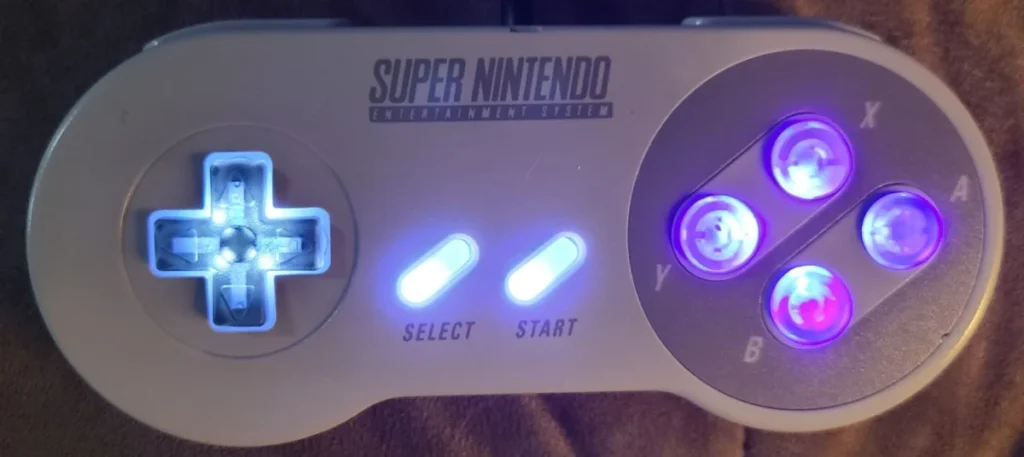
The June certifications also highlighted the role of open-source hardware in the "Right to Repair" movement and the preservation of legacy technology. The SNES OEM Controller PCB Replacement (UID: US002830), developed by Robert Taylor, provides a specialized solution for retro-gaming enthusiasts. This project was born out of a specific environmental challenge: the extreme dry and cold conditions of Alaska.
In such climates, static electricity buildup is a frequent occurrence, often leading to the premature failure of original Super Nintendo Entertainment System (SNES) controller boards due to electrostatic discharge (ESD). Taylor’s open-source replacement board allows users to salvage the plastic shells and buttons of original controllers while upgrading the internal electronics to be more resilient or simply to replace damaged components that are no longer manufactured by the original vendor.
This certification underscores a broader trend within the OSHWA community: the use of open-source design to solve niche problems that major manufacturers overlook. By publishing the PCB files and bill of materials (BOM), Taylor ensures that other users in similar climates—or those simply wishing to extend the life of their hardware—can manufacture their own boards. This approach reduces electronic waste and empowers consumers to maintain their devices indefinitely, independent of original equipment manufacturer (OEM) support cycles.
Innovation in Ergonomics: The Sponde Rotary Sensor
Innovation in human-computer interaction (HCI) was also represented in the June 2026 list through the Sponde (UID: NL000044), a scrolling peripheral designed by Tanmoy Dutta. While traditional computer mice utilize mechanical encoders for scrolling—which are prone to wear and debris accumulation—the Sponde utilizes a magnetic rotary position sensor.
The device functions by sensing the rotation of a permanent magnet mounted on a precision ball bearing. This contactless sensing method results in a significantly smoother user experience and higher durability compared to mechanical alternatives. The Sponde’s open-source certification ensures that the firmware and hardware layouts are available for others to adapt. This is particularly relevant for the development of assistive technologies, where custom-weighted or uniquely shaped scrolling tools can significantly improve accessibility for users with motor impairments.
Chronology and Growth of the OSHWA Certification Program
The Open Source Hardware Association was established to provide a central hub for the open-source hardware community, which had been growing sporadically since the mid-2000s following the success of platforms like Arduino and RepRap. The certification program was launched as a response to "open-washing," a practice where companies claimed their products were open source despite withholding critical design files or imposing restrictive licensing.

The growth trajectory of the database has been consistent:
- 2016-2018: The program established its foundational legal framework, defining the "Open Source Hardware Definition 1.0."
- 2019-2022: A surge in certifications occurred as major players in the maker movement, such as Adafruit and SparkFun, began certifying their entire product lines.
- 2023-2025: The focus shifted toward international expansion and complex systems, including medical devices and scientific instrumentation.
- June 2026: The database surpassed the 3,300-entry mark, with a noticeable increase in "open silicon" and infrastructure-level hardware.
The June 2026 data indicates a 0.8% month-over-month growth in total certifications, a steady pace that suggests the movement is maturing from a hobbyist niche into a recognized industrial standard.
Economic and Educational Implications
The rise of certified open-source hardware is increasingly viewed through an economic lens. For developing economies, open-source hardware provides a pathway to industrialization without the heavy burden of licensing fees. By accessing certified designs, local manufacturers can produce high-quality microcontrollers or consumer electronics tailored to local needs while contributing back to a global knowledge pool.
In the educational sector, OSHWA-certified hardware like the ElemRV provides students with an unprecedented look into the "black box" of modern computing. Educators can now move beyond teaching software programming to teaching the physical architecture of the processor itself, using hardware that students can legally and practically modify.

Furthermore, the transparency mandated by OSHWA certification addresses growing concerns regarding supply chain security. In an era where hardware-level "backdoors" are a theoretical and practical threat, the ability to verify a design against the physical product is invaluable for government and enterprise applications.
Future Outlook for Open Source Hardware
As the OSHWA moves into the second half of 2026, the association is expected to focus on deepening the integration between open-source hardware and open-source software. The success of the ElemRV suggests that the next frontier will be the standardization of open-source "building blocks" for complex machinery, such as electric vehicle components and renewable energy grid controllers.
The association continues to encourage developers to submit their projects for certification through its digital portal. The process remains free of charge, supported by a mix of corporate sponsorships and community donations. By maintaining a low barrier to entry, OSHWA ensures that the directory remains a comprehensive reflection of the global hardware innovation landscape.
With 26 new certifications in June alone, the message from the hardware community is clear: transparency is no longer an afterthought but a primary feature of modern engineering. As the database grows toward its next major milestone, the impact of these 3,352 projects will continue to resonate across the tech industry, challenging traditional notions of intellectual property and proving that collaborative design is a viable—and often superior—model for technological progress.