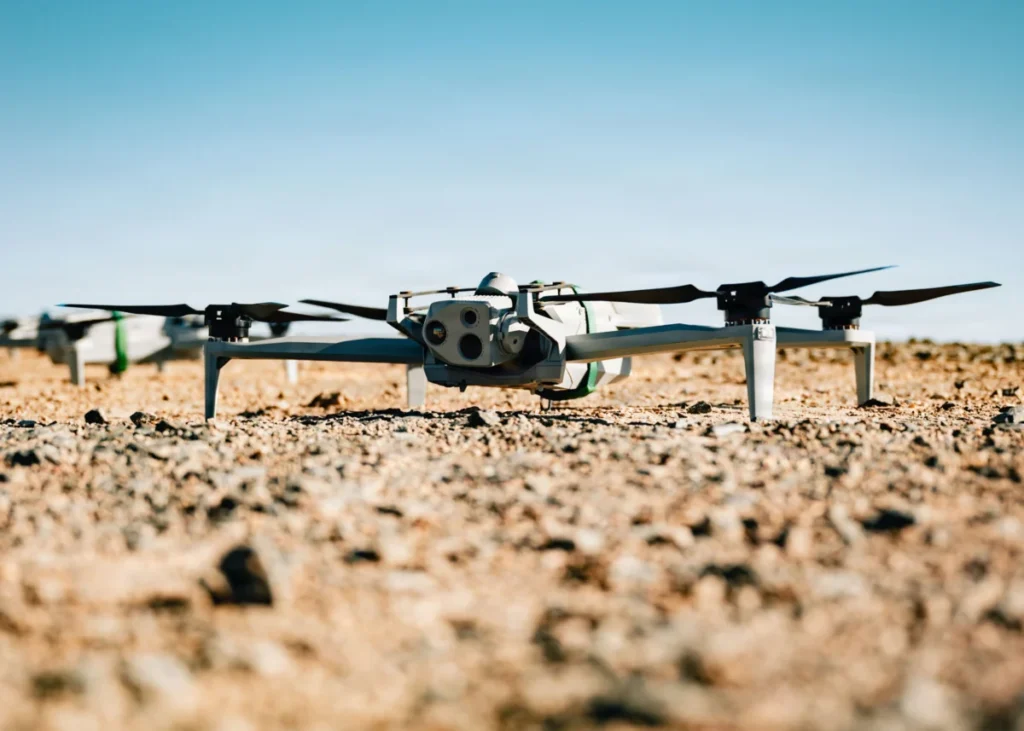
HUNTSVILLE, Ala. – One year after its establishment, the Pentagon’s dedicated interagency team tasked with enhancing drone defenses has finalized a comprehensive "global priorities list," identifying "a few hundred installations" requiring augmented counter-unmanned aerial systems (C-UAS) capabilities. The Joint Interagency Task Force 401 (JIATF-401), spearheaded by U.S. Army Brig. Gen. Matt Ross and comprising 15 interagency representatives, has initiated procurement processes for these critical sites, according to its executive director, David Bagnati.
During a panel discussion at the Space and Missile Defense Symposium held in Huntsville, Alabama, Bagnati detailed the task force’s progress. "We just started procurement for those installations to help the installations beef up their [counter-drone] capabilities," Bagnati stated. He further elaborated that the immediate focus is on the "top 46 sites across the U.S.," signaling a phased approach to addressing the most pressing vulnerabilities. JIATF-401, which operates under the purview of Deputy Defense Secretary Steve Feinberg, succeeds the former Joint Counter-Small Unmanned Aircraft Systems Office, indicating an evolution and consolidation of efforts in this vital security domain.
A Layered Approach to Counter-Drone Warfare
Bagnati emphasized JIATF-401’s commitment to a multi-faceted strategy for drone defense, highlighting the integration of advanced technologies. "We are now accepted to use high-energy lasers in the national airspace. We’re also working to now include in that high-power microwaves within the national airspace," he announced, underscoring a significant advancement in authorized defensive measures. This expanded authorization for directed energy weapons in national airspace represents a crucial step in countering the increasingly sophisticated and pervasive threat posed by drones.
To facilitate the rapid integration of new C-UAS technologies, a forthcoming memorandum of understanding (MOU) between the Pentagon, the Federal Aviation Administration (FAA), and the Department of Homeland Security (DHS) is set to formalize processes. This agreement, as described by Bagnati, "sets forth the process by which we’re going to fast-track capabilities, new counter-UAS capabilities, into the national airspace." Such an interagency framework is vital for streamlining the deployment of cutting-edge defensive systems, overcoming potential regulatory hurdles, and ensuring a cohesive national response to aerial threats. The development of this MOU is a critical component of a broader governmental strategy to modernize airspace security in the face of evolving aerial threats.
Beyond Hardware: Comprehensive Support for Installations
JIATF-401’s approach extends far beyond merely supplying equipment. Bagnati clarified the task force’s holistic support model: "We’re not dropping it off at the front gate." Instead, the initiative encompasses a comprehensive package of resources designed to ensure the effective and sustainable implementation of C-UAS capabilities. This includes extensive training for personnel, crucial funding for necessary infrastructure modifications, and ongoing technical expertise. "We bring with it training. We bring with it funding… if we have to make any changes on the installation in the infrastructure to support that capability. Maybe it’s a pad. Maybe it’s pulling power. Maybe it’s fiber," Bagnati explained, illustrating the detailed logistical and technical considerations involved. This integrated support system is designed to maximize the operational readiness and long-term effectiveness of C-UAS systems at vulnerable installations.
Furthermore, JIATF-401 is contributing invaluable "technical know-how" and, through a partnership with the U.S. Army, is providing sustainment funding for the newly acquired counter-drone equipment for an initial period of "one or two years." This sustained support is critical for ensuring that the technology remains operational and effective in the dynamic threat environment.
Establishing a Center of Excellence for Drone Defense Training
In a significant move to bolster training capabilities, JIATF-401 is assuming responsibility for the Joint Counter-UAS Training Center located at Fort Sill, Oklahoma. Previously aligned with the U.S. Army, the task force is actively working to transform this facility into a "center of excellence" for C-UAS training. This initiative aims to standardize and elevate the quality of training provided to military and interagency personnel, ensuring they are equipped with the most current tactics, techniques, and procedures to counter drone threats. The establishment of a dedicated center of excellence signifies a long-term commitment to developing a highly skilled and adaptable workforce capable of addressing the complexities of modern aerial surveillance and attack vectors.
Acknowledging Progress and Future Challenges
While acknowledging the significant strides made, Bagnati offered a candid assessment of the task force’s journey. "We are making progress with the interagency," he stated, yet he also cautioned, "we’ve got a long way to go." This sentiment underscores the ongoing and evolving nature of the drone threat, requiring continuous adaptation and innovation in defensive strategies. The rapid proliferation of drone technology, coupled with its accessibility to a wide range of actors, presents a persistent challenge that necessitates sustained attention and investment.
Background and Chronology of JIATF-401
The establishment of JIATF-401 on April 10, 2023, marked a pivotal moment in the U.S. government’s efforts to consolidate and enhance its counter-drone capabilities. This interagency task force was created in response to the growing recognition of the significant threat posed by small unmanned aerial systems (sUAS) to national security interests, critical infrastructure, and military operations. The formation of JIATF-401 represented a strategic consolidation of efforts that had previously been fragmented across various government agencies.
Prior to JIATF-401, the Department of Defense had established the Joint Counter-Small Unmanned Aircraft Systems Office (JCO) in 2019. The JCO was tasked with identifying, evaluating, and recommending C-UAS technologies and strategies. However, the increasingly complex and persistent nature of drone threats, particularly in contested environments and within domestic airspace, necessitated a more integrated and empowered interagency approach. The transition from the JCO to JIATF-401 reflects a strategic shift towards a more operational and globally focused entity with direct procurement and deployment authority.
Key Milestones:
- 2019: Establishment of the Joint Counter-Small Unmanned Aircraft Systems Office (JCO) to address the growing sUAS threat.
- 2022: Growing recognition of the need for a more unified and empowered interagency response to the evolving drone threat landscape.
- April 10, 2023: Formal establishment of the Joint Interagency Task Force 401 (JIATF-401) under the leadership of U.S. Army Brig. Gen. Matt Ross, reporting to Deputy Defense Secretary Steve Feinberg. JIATF-401 absorbs and expands upon the functions of the JCO.
- Late 2023 – Early 2024: JIATF-401 undertakes a comprehensive assessment of global C-UAS needs, leading to the development of a "global priorities list."
- Early 2024: Procurement processes initiated for the top-priority installations identified on the global list, focusing initially on the top 46 sites within the United States.
- Mid-2024: Announcement of progress in authorizing the use of high-energy lasers and high-power microwaves in national airspace, indicating advancements in directed energy countermeasures.
- Mid-2024: Preparations for a memorandum of understanding (MOU) between the Pentagon, FAA, and DHS to expedite the integration of new counter-UAS capabilities into national airspace.
- Mid-2024: JIATF-401 assumes responsibility for the Joint Counter-UAS Training Center at Fort Sill, Oklahoma, with plans to elevate it to a center of excellence.
Supporting Data and the Evolving Threat Landscape
The urgency behind JIATF-401’s mission is underscored by global trends in drone proliferation and utilization. The market for commercial drones is projected to grow significantly in the coming years, with estimates suggesting it could reach hundreds of billions of dollars by the end of the decade. This expansion includes a parallel increase in sophisticated drone capabilities, such as enhanced flight endurance, advanced sensor payloads, and autonomous navigation systems.
The military applications of drones have also expanded dramatically, ranging from reconnaissance and surveillance to precision strikes and electronic warfare. Adversaries have demonstrated increasing proficiency in employing swarms of drones for complex attack patterns, overwhelming traditional air defense systems. For instance, reports from recent conflicts highlight the widespread use of commercial drones modified for military purposes, posing a significant challenge to conventional military forces. The U.S. military itself relies heavily on drones for intelligence, surveillance, and reconnaissance (ISR) missions, making the defense of its own airspace against unauthorized drones a critical imperative.
Data from defense analyses indicate that the cost of countering drone threats is significantly lower than the potential cost of a successful drone attack on critical infrastructure or military assets. This economic disparity further emphasizes the need for robust and cost-effective C-UAS solutions. The development and deployment of advanced technologies like high-energy lasers and high-power microwaves represent a strategic investment in overcoming these challenges, offering the potential for scalable and efficient defense mechanisms.
Broader Impact and Implications
The successful implementation of JIATF-401’s strategy will have far-reaching implications for national security and domestic safety. By bolstering drone defenses at critical installations, the task force directly contributes to the protection of military personnel, sensitive government facilities, and vital infrastructure. This enhanced security is crucial for maintaining operational readiness and preventing disruptions to essential services.
The integration of advanced technologies like directed energy weapons into national airspace, under strict regulatory frameworks, represents a paradigm shift in air defense. This could pave the way for more comprehensive and effective protection against a wider array of aerial threats, not limited to drones.
Furthermore, the establishment of a dedicated center of excellence for C-UAS training at Fort Sill signifies a commitment to developing a highly skilled and adaptable workforce. This investment in human capital is essential for staying ahead of evolving threats and ensuring the long-term effectiveness of counter-drone operations.
The collaborative approach championed by JIATF-401, involving multiple government agencies and potentially private sector partners, is a model for addressing complex, multi-domain security challenges. The success of this interagency effort could serve as a blueprint for future initiatives requiring coordinated action across government sectors. As David Bagnati aptly concluded, while progress is being made, the ongoing nature of the drone threat necessitates sustained vigilance and continued investment in advanced defensive capabilities. The work of JIATF-401 is a critical component of the nation’s ongoing effort to secure its airspace in an increasingly complex and technologically dynamic world.