The European Space Agency (ESA) has announced a new initiative, the Lunar X-view challenge, set to launch on November 1, 2026, designed to push the boundaries of autonomous navigation for lunar exploration. This ambitious competition tasks the global space community with developing sophisticated algorithms capable of precisely locating a lunar rover using only its onboard panoramic camera and an orbital map of the Moon’s surface. The dramatic scenario, where a rover finds itself isolated with no communication and facing the imminent lunar night, underscores the critical need for robust self-localization capabilities in future deep-space missions.
The Challenge: Navigating the Lunar Frontier Without a Signal
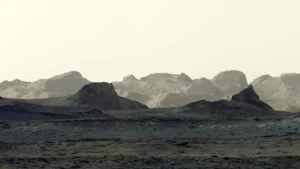
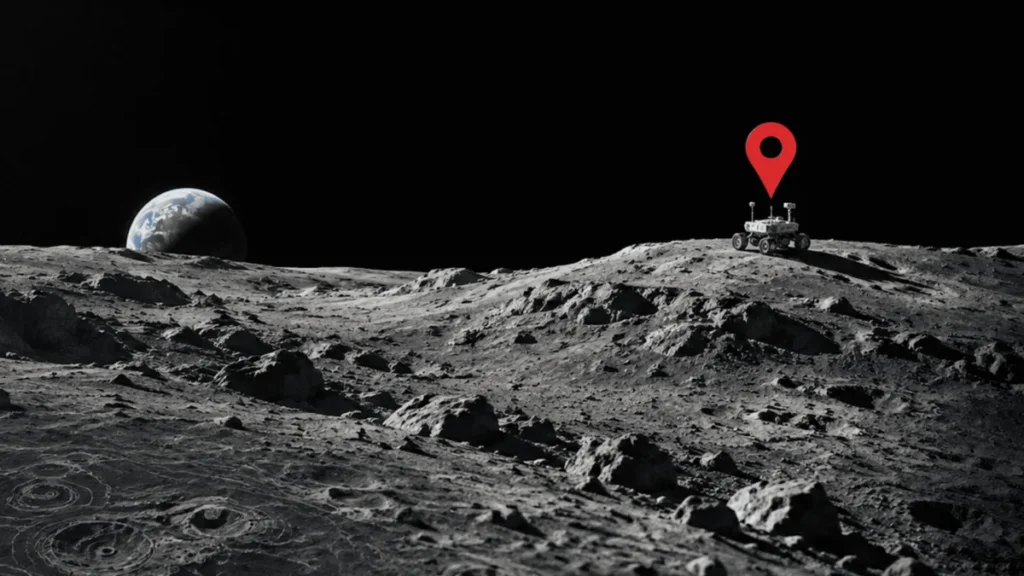
At the heart of the Lunar X-view challenge lies a compelling hypothetical situation: a lone rover, stranded on the lunar surface, has lost all contact with Earth. Its internal navigation systems are compromised, leaving it uncertain of its exact coordinates. With the unforgiving lunar night rapidly approaching – a period of extreme cold and darkness that can incapacitate unshielded equipment – the rover’s survival hinges on its ability to accurately determine its location. Its only tools are a 360-degree panoramic image captured by its camera and a detailed aerial map of the lunar terrain.
Dario Izzo, scientific coordinator for ESA’s Advanced Concepts Team (ACT), which is spearheading the challenge, eloquently sets the stage: "A rover is alone on the Moon, has no contact with Earth and is unsure of its position. Armed only with a ground-level panorama and an orbital map, it must work out where it is before the lunar night arrives." This stark scenario highlights a fundamental challenge in robotic exploration: achieving true autonomy. Without reliable GPS-like systems or constant ground control, future missions to the Moon, Mars, and beyond will depend on sophisticated onboard intelligence to navigate complex and potentially hazardous environments.

The core objective of the Lunar X-view challenge is to solicit algorithms that can effectively "match" the features observed in the rover’s ground-level panorama with corresponding features on the orbital map. This process, known as Visual Localization or Simultaneous Localization and Mapping (SLAM) in a broader context, is crucial for terrestrial robotics and is becoming increasingly vital for extraterrestrial exploration. The successful development of such algorithms will empower future lunar rovers to explore more extensively, reach scientifically significant locations autonomously, and enhance mission resilience in the face of communication blackouts or system failures.
Precedent and Parallel Innovations: Learning from Mars and Beyond
The challenge presented by ESA is not without precedent. Researchers at NASA’s Jet Propulsion Laboratory (JPL) have already made significant strides in this area. They have developed and rigorously tested systems that can correlate panoramic imagery from the Perseverance rover on Mars with orbital maps. This capability has been instrumental in correcting accumulated positioning errors that can occur during a rover’s extensive traverses, ensuring that mission scientists have an accurate understanding of the rover’s location for scientific investigations.
The Lunar X-view competition aims to democratize the development of such advanced navigation solutions by opening the problem to the wider scientific and engineering community. By leveraging the collective intelligence and diverse approaches of participants worldwide, ESA anticipates accelerating progress in this critical field. This collaborative approach mirrors the success of previous crowd-sourced scientific initiatives, where engaging the global community with well-defined problems and competitive frameworks has led to rapid and innovative solutions.
The Kelvins Platform: A Hub for Aerospace Innovation
The competition will be hosted on ESA’s Kelvins website (kelvins.esa.int), a dedicated online platform for public aerospace challenges. This portal has a proven track record of facilitating collaborative problem-solving in various domains of space exploration. Dario Izzo emphasizes the platform’s role: "The competition is run through the ACT’s Kelvins website, a portal dedicated to hosting public aerospace challenges. Just like the challenges we hosted in the past, it is open to space enthusiasts from all over the world."

The ACT has a history of leveraging crowdsourcing for technological advancement. Past competitions, such as the Pose Estimation challenges, ELOPE (Estimating Location of Objects in Planetary Environments), and the Collision Avoidance Challenge, have demonstrated the power of this model. "The lesson we learned from our past competitions is clear: hand the scientific community a hard problem and a scoreboard, and it will deliver in months what no single team could in years," states Dario Izzo, highlighting the efficacy of engaging a broad talent pool.
Empowering Future Lunar Rovers: A Step Towards True Autonomy
Stefano Silvestrini from Politecnico di Milano, who has contributed to the design of the Lunar X-view competition, views it as a pivotal moment for lunar exploration. "I see it as an opportunity for lunar rovers to grow up: to leave the comfort of constant navigation support and learn to find their own way. Go and explore, without GPS or guidance from Earth," he articulates. This sentiment underscores the broader implications of the challenge: fostering a new generation of highly autonomous robotic explorers capable of venturing further and operating more independently than ever before.
The ability for a rover to accurately determine its position is fundamental to its operational effectiveness. Without precise localization, a rover cannot:
- Plan efficient traverse paths: Avoiding obstacles and maximizing scientific discovery.
- Target scientific instruments: Ensuring that cameras, spectrometers, and drills are focused on precise geological features or samples.
- Conduct coordinated operations: Working in conjunction with other assets, such as landers or orbiting spacecraft.
- Return to safe havens: Navigating back to a charging station or sheltered area before adverse conditions arise.
- Perform complex maneuvers: Such as precise sampling or deploying equipment in specific locations.
The implications extend beyond lunar missions. The algorithms developed for the Lunar X-view challenge could have direct applications for future robotic missions to other celestial bodies, including Mars, the icy moons of Jupiter and Saturn, and even asteroid exploration. The principles of visual localization are universal and can be adapted to different terrains, lighting conditions, and sensor suites.

Supporting Data and Technological Context
The development of robust navigation systems for extraterrestrial environments is a complex undertaking. Unlike Earth, where global navigation satellite systems (GNSS) like GPS are readily available, celestial bodies lack such infrastructure. This necessitates reliance on:
- Inertial Measurement Units (IMUs): These sensors measure acceleration and angular velocity, allowing for dead reckoning (estimating position based on known starting point and measured motion). However, IMUs are prone to accumulating errors over time due to sensor drift.
- Star Trackers: These systems use celestial bodies to determine orientation, providing a stable reference frame.
- Terrain Relative Navigation (TRN): This technique compares real-time sensor data (e.g., from lidar or cameras) with pre-existing maps to refine position. The Lunar X-view challenge focuses on a specific form of TRN utilizing visual landmarks.
- Orbital Data: High-resolution orbital imagery provides a global context and detailed topographic information.
The effectiveness of visual localization algorithms depends heavily on the quality and resolution of both the panoramic images and the orbital maps. Factors such as lighting conditions (which vary dramatically on the Moon due to the lack of atmosphere), the presence of dust, shadows, and the distinctiveness of surface features all play a role. The challenge will likely involve participants developing algorithms that can robustly handle these variables.
Key Entities and Collaborators
The Lunar X-view competition is a testament to ESA’s commitment to fostering innovation through collaboration. The challenge is primarily driven by:
- ESA’s Advanced Concepts Team (ACT): This multidisciplinary think tank within ESA is dedicated to exploring emerging technologies and groundbreaking ideas that can shape the future of space exploration. The ACT serves as a crucial bridge between cutting-edge research and operational space missions.
- Politecnico di Milano: This renowned Italian university of technology is a leading institution in aerospace engineering and has a strong track record in space research. Stefano Silvestrini’s involvement signifies a direct academic partnership.
- Institute of Science Tokyo: This Japanese research institution contributes to the collaborative effort, bringing its expertise in scientific and technological advancement.
- University of Adelaide: This Australian university is another key academic partner, further broadening the international scope of the collaboration.
The datasets and detailed competition rules will be made publicly available on November 1, 2026, via the Kelvins website. Participation in the Lunar X-view challenge is free and open to individuals, academic teams, and industry professionals from around the globe. All submitted algorithms will be automatically scored on the platform, ensuring a transparent and objective evaluation process.

Timeline of the Lunar X-view Challenge
- November 1, 2026: Launch of the Lunar X-view challenge. Datasets and competition rules become available on the Kelvins website. The scenario is presented: a lone rover, no signal, facing imminent lunar night.
- November 2026 – [End Date to be Determined]: Participants develop and submit their algorithms. The challenge encourages a timeframe of several months to allow for thorough development and testing.
- Post-Competition: ESA and its partners will analyze the results, identify promising solutions, and potentially integrate successful algorithms into future missions. The knowledge gained will inform the development of next-generation autonomous navigation systems for lunar and deep-space exploration.
Broader Implications for Space Exploration
The success of the Lunar X-view challenge will have profound implications for the future of space exploration:
- Enhanced Mission Autonomy: Reducing reliance on constant human intervention, enabling missions to operate in challenging environments and over longer durations.
- Increased Exploration Reach: Allowing rovers to venture further from landing sites and explore more diverse and scientifically valuable terrains.
- Improved Mission Resilience: Providing critical fallback capabilities in the event of communication disruptions or navigation system failures.
- Cost-Effectiveness: Autonomous systems can potentially reduce the need for extensive ground support infrastructure and personnel.
- Democratization of Space Technology: Open challenges like this foster innovation and allow a wider community to contribute to space science and technology.
As humanity sets its sights on establishing a sustained presence on the Moon and venturing further into the solar system, the ability of robotic explorers to navigate independently will be paramount. The Lunar X-view challenge represents a significant step towards realizing this vision, empowering the next generation of lunar rovers to confidently chart their own course across the celestial landscape.