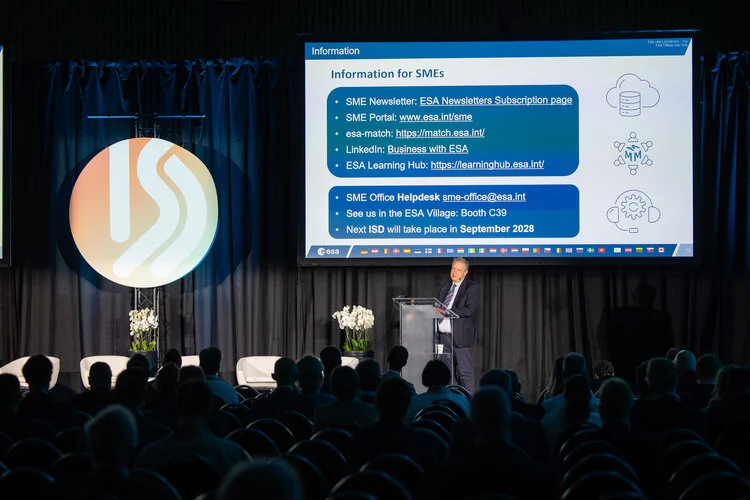
The European Space Agency (ESA) convened its annual European Space Days event on September 16th and 17th, 2026, a pivotal gathering designed to foster innovation, enhance competitiveness, and drive growth within the European space sector. This year’s edition, held across multiple dedicated halls, brought together a diverse array of stakeholders, from high-ranking ESA officials and representatives of the European Commission to industry leaders, small and medium-sized enterprises (SMEs), and technology developers. The event served as a crucial platform for discussing key strategic initiatives, showcasing technological advancements, and exploring new avenues for investment and collaboration.
Day One: Charting the Course for SME Empowerment and Investment
The inaugural day of European Space Days 2026 kicked off with a forward-looking address by Josef Aschbacher, Director General of ESA, setting the tone for two days of intensive discussions and strategic planning. The morning sessions were largely dedicated to empowering European SMEs, recognizing their critical role in driving innovation and ensuring the continent’s competitiveness in the global space arena.
Championing European SMEs: A Cornerstone of Space Sector Growth
A significant highlight of Day 1 was the session titled "European Space SMEs: Powering Innovation, Competitiveness and Growth." This panel, featuring Jens Kauffmann, Head of ESA’s SME Section, Hans Bracquenjé, Chairman of SME4SPACE, Linn Friis-Liby from AAC Clyde Space, Fabiana Milza of T4i, and Ernst K. Pfeiffer of HPS GmbH, underscored ESA’s commitment to nurturing and supporting its smaller industrial partners. The discussions likely revolved around the unique challenges and opportunities faced by space SMEs, including access to funding, technology development, and market penetration. The presence of representatives from established companies like AAC Clyde Space and T4i, alongside a spokesperson for the Association of the European Space Industry’s cluster (AKRK), indicated a concerted effort to bridge the gap between emerging and established players. This initiative aligns with broader European Union strategies aimed at fostering a robust and self-sustaining space ecosystem, where SMEs are not just suppliers but key innovators and drivers of economic prosperity. Data from the European Commission has consistently shown that SMEs are vital engines of job creation and innovation, and their contribution to the space sector is increasingly recognized as indispensable for maintaining technological leadership and strategic autonomy.
Unlocking Capital and Commercialization: The European Joint Commercialisation Initiative
The afternoon sessions delved into crucial financial and commercial aspects of the space industry. The "European Joint Commercialisation Initiative, followed by Panel on Raising Growth Capital in the Space Sector" was a central focus. This session, featuring Stella Strataki from the European Commission’s DEFIS (Directorate-General for Defence Industry and Space), Fiammetta Diani from EUSPA (European Union Agency for the European Union Agency for Space Programmes), and a distinguished panel of venture capitalists including Wojtek Walniczek of OTB Ventures, Sebastian Bélanger Villanueva of NewSpace Capital, and Gianluigi Baldesi from ESA’s Ventures and Financing Office, aimed to demystify the process of securing investment for space ventures. The initiative likely presented strategies and frameworks designed to facilitate the commercialization of space technologies and services, while the subsequent panel provided direct insights into the investment landscape. The presence of representatives from EUSPA suggests a focus on downstream applications and market development, complementing ESA’s upstream technological and scientific endeavors. The discussion on raising growth capital is particularly pertinent, as the space sector, despite its rapid expansion, often requires significant upfront investment. This session, moderated by Kais Barmawi, an ESA Commercial Expert, provided a crucial link between technological innovation and market viability, offering practical advice to entrepreneurs and businesses seeking to scale their operations. The availability of a presentation PDF for this session indicates a commitment to transparency and knowledge dissemination.
Recognizing Excellence: The ESA Supplier Awards Ceremony
The day culminated with the prestigious ESA Supplier Awards Ceremony, recognizing outstanding contributions from companies that have demonstrated excellence in their collaboration with the Agency. Honored guests included Dietmar Pilz, Director of Technology, Engineering & Quality (TEC) at ESA, Christine Klein, Director of Contracts, Finance and Operational Procurement (CFO), and Michael Griffith, Senior Industrial Policy Officer. These awards not only celebrate individual achievements but also serve to reinforce the collaborative spirit that underpins ESA’s success. By acknowledging and rewarding top-performing suppliers, ESA incentivizes continued high standards and fosters long-term partnerships, which are essential for the complex and demanding nature of space missions.
Networking and Collaboration: Building Future Partnerships
Throughout the day, dedicated networking sessions, including "ISD Networking Drinks & Canapés," provided invaluable opportunities for attendees to connect, exchange ideas, and forge new collaborations. These informal gatherings are often as crucial as the formal sessions, fostering the cross-pollination of ideas and the development of informal alliances that can lead to significant future projects. The dual networking events in the Catering and Registration Tent, and the Catering and Reception Tent, highlight the scale and importance of these informal interactions.
Day Two: Exploring Technological Frontiers and Sustainable Space
The second day of European Space Days 2026 shifted focus to the cutting edge of space technology and the imperative of sustainability, demonstrating ESA’s dual commitment to pioneering new frontiers and ensuring responsible development.
Showcasing Technological Prowess: The Technology Tent
The "Technology Tent" served as a dynamic hub for showcasing results from ESA’s extensive technology development projects. This dedicated space offered a deep dive into a wide range of critical areas. Leopold Summerer, Head of ESA’s Technology Department, kicked off the day, emphasizing the importance of continuous technological advancement. Sessions covered Cybersecurity, with insights from Antonions Atlasis and Laurence Duquerroy, highlighting the increasing need for robust security measures in space systems. The "Innovative Propulsion" session, led by Jamila Mansouri, explored next-generation propulsion systems crucial for future exploration and operational capabilities. Electromechanical and Electronic Components (EEE) were addressed by Olivier Perat and Ali Zadeh, vital for the reliability and performance of space hardware. Antje Deckert introduced Very Low Earth Orbit (VLEO) concepts, signaling potential shifts in satellite operations. The "How to work with ESA Technology Programmes" session, featuring Alessandro Rapisarda, Nerea Socorro, King Lam, and Michele Castorini, provided practical guidance for industry players seeking to engage with ESA’s R&D initiatives. The inclusion of a signature for a GSTP (General Support Technology Programme) activity with Exail underscored tangible progress in technology maturation and industrial partnerships.
Driving Sustainability: A Core ESA Mandate
Sustainability emerged as a central theme throughout Day 2, reflecting a growing global recognition of the environmental impact of space activities and the need for responsible practices. In Conference Hall B, Andrea Vena, ESA’s Chief Sustainability Officer, and Tiago Soares, Head of the Clean Space & Circular Economy Office, led discussions on "Implementing Life Cycle Thinking and Ecodesign in ESA Space Projects." This session underscored ESA’s proactive approach to integrating environmental considerations into every stage of space project development, from design and manufacturing to operation and disposal. The call for "Q&A for BASS Enabling Applications Call," managed by Rita Rinaldo, further demonstrated ESA’s commitment to leveraging space for societal benefit, including environmental monitoring and sustainable development applications.
The "Sustainable Space" sessions in the Technology Tent, guided by Tiago Soares and Ross Findlay, explored practical strategies for minimizing the environmental footprint of space missions, including debris mitigation, responsible resource utilization, and the development of greener technologies. This focus is critical as the space economy expands, with increasing numbers of satellites and space debris posing significant challenges to the long-term sustainability of the space environment. ESA’s leadership in this domain is crucial for setting international standards and fostering a responsible approach to space exploration and utilization.
Exploring New Horizons: From Exploration Science to Digitalization
Day 2 also saw sessions dedicated to the future of space exploration and the transformative power of digital technologies. Angelique Van Ombergen presented "Exploration Science and Industrial Opportunities" in Conference Hall A, highlighting the scientific frontiers and the potential for industrial involvement in future exploration missions. The Technology Tent buzzed with discussions on "Artificial Intelligence and Digitalisation," led by Nicoletta Wagner, signaling ESA’s embrace of advanced digital tools to enhance mission design, operations, and data analysis. Sessions on "Earth Observation," "Optical Communications and 5G/6G Non-Terrestrial Networks," and "Industrialisation & Serialisation," further illustrated ESA’s forward-thinking approach, aiming to leverage space capabilities for terrestrial benefits and to streamline the production of space systems.
Transferring Innovation: Bridging Space and Everyday Life
A particularly unique session, "From Space to Textile and Back: Opportunities For Technology Transfer," held in the Einstein Hall, showcased the innovative potential of transferring space technologies to terrestrial industries. Featuring astronaut Matthias Maurer and representatives from STAM srl, an ESA Technology Broker, this session highlighted how advancements developed for the harsh environment of space can find surprising and valuable applications in everyday products, such as textiles. This interdisciplinary approach to technology transfer is vital for maximizing the return on investment in space research and development, demonstrating its tangible benefits for society beyond the immediate goals of space missions.
Financial Avenues and Cooperative Agreements
The Technology Tent also provided critical information on funding opportunities. Guiomar Perez and Giusy Menghini offered insights into "Q&A Opportunities under Calls for Proposals for GSTP and ARTES Programmes: Contracts and Cooperative Agreements." This session was vital for companies seeking to understand the pathways to securing ESA funding and engaging in collaborative projects, such as those within the Advanced Research in Telecommunications Systems (ARTES) program, which is crucial for the development of innovative satellite communication technologies.
Broader Impact and Future Outlook
European Space Days 2026 served as a powerful testament to the dynamism and forward momentum of the European space sector. The event successfully brought together diverse stakeholders, fostering a collaborative environment crucial for tackling complex challenges and seizing emerging opportunities. The emphasis on SME empowerment, the critical discussion on investment and commercialization, and the deep dives into cutting-edge technologies, all underscored ESA’s strategic vision.
The strong focus on sustainability signals a mature and responsible approach to space activities, recognizing the long-term implications of human presence in orbit and beyond. By integrating environmental considerations into its core strategies, ESA is positioning Europe as a leader in the responsible development of space.
The success of initiatives like the European Joint Commercialisation Initiative and the insights provided into venture capital underscore a growing recognition that innovation must be coupled with robust commercialization strategies to ensure the sector’s economic viability and sustained growth. As the global space economy continues to expand, events like European Space Days are indispensable for charting a course that is not only technologically ambitious but also economically sustainable and environmentally responsible, ensuring Europe’s continued leadership in this vital domain. The knowledge shared and partnerships forged during these two days will undoubtedly shape the trajectory of European space endeavors for years to come.