The ambitious quest to uncover signs of life on Mars, spearheaded by the European Space Agency’s (ESA) ExoMars Rosalind Franklin rover mission, hinges on an intricate and profoundly important process: the meticulous sterilization of its landing equipment. Albert Haldemann, ESA’s chief engineer for Mars missions, recently shed light on the complex procedures involved in rendering the rover’s massive parachutes not just clean, but virtually sterile, a critical step in preventing contamination of the Red Planet and ensuring the integrity of scientific discovery.
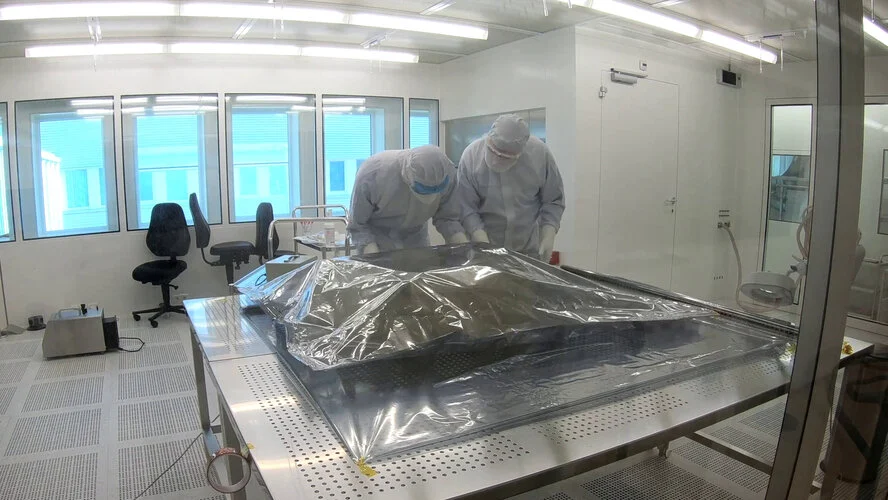
At the heart of this critical endeavor is a colossal parachute, a marvel of engineering designed to be the largest ever to deploy in the thin Martian atmosphere. Measuring a staggering 35 meters in diameter, this vital component is carefully encased within a donut-shaped bag, awaiting its transformation within a specialized dry-heat sterilizer oven. The magnitude of the cleanliness required for this parachute is almost unfathomable: it must be at least 10,000 times cleaner than a typical smartphone, a benchmark that underscores the extreme sensitivity of planetary protection protocols.
The necessity for such stringent cleanliness stems from a fundamental principle of space exploration: planetary protection. The overarching goal is to prevent the inadvertent transfer of terrestrial microbes to other celestial bodies, thereby safeguarding any potential indigenous Martian life from Earth-borne contamination. Conversely, it also aims to prevent the contamination of Earth with extraterrestrial life, should samples be returned. For the Rosalind Franklin rover, this means ensuring that no microscopic hitchhikers from Earth survive the journey and potentially skew the scientific findings regarding the existence of past or present Martian life.
The Rigorous Sterilization Process: A Multi-Layered Defense
The sterilization of the parachute is not a singular event but a culmination of rigorous procedures implemented at ESA’s ESTEC technical center in the Netherlands. Within the agency’s Life Support and Physical Sciences Laboratory, the parachute undergoes a critical heating process. This specialized oven, operating at precise temperatures and for defined durations, is designed to eliminate any microbial life that might have accumulated on the parachute’s surface during its manufacturing, assembly, and storage phases on Earth.
The environment in which these sensitive components are handled is equally paramount. The cleanroom facilities at ESTEC are maintained under the strictest conditions. All air circulating within these controlled environments undergoes a meticulous two-stage filtration process, designed to capture even the smallest airborne particles. Furthermore, any personnel entering these sensitive areas must adhere to an even more rigorous gowning protocol than that required of surgeons in an operating theater. This includes wearing specialized cleanroom suits, masks, gloves, and shoe covers to minimize the introduction of any biological contaminants. Before final entry into the chamber, individuals must pass through an air shower, a blast of filtered air that effectively removes any residual dust or microorganisms from their attire.
The parachute itself, weighing a substantial 74 kilograms, is primarily constructed from a blend of nylon and Kevlar fabrics. These materials are chosen for their strength, resilience, and ability to withstand the extreme conditions of atmospheric entry. The upcoming mission for this parachute is nothing short of extraordinary: a six-minute descent into Mars’ tenuous atmosphere, a feat that will demand its utmost performance to decelerate the ExoMars Rosalind Franklin rover for a safe landing. Upon successful deployment, it will be recognized as the largest parachute ever to be unfurled on the Red Planet, and indeed, the largest in the solar system outside of Earth’s own atmosphere.
The ExoMars Mission: A New Era of Martian Exploration
The ExoMars Rosalind Franklin rover mission, slated for launch in 2028, represents a significant leap forward in humanity’s exploration of Mars. After a journey spanning over 25 months, the rover will arrive at its destination with a singular, profound objective: to search for signs of life beneath the Martian surface. This ambitious undertaking acknowledges the compelling scientific evidence suggesting the potential for past, and perhaps even present-day, life on our neighboring planet.
The rover is equipped with a sophisticated drill capable of penetrating up to two meters into the Martian regolith. This depth is crucial, as it is theorized to be below the reach of harmful solar and cosmic radiation that bombards the Martian surface, potentially preserving evidence of life in a more protected environment. The samples collected by the drill will then be analyzed by an onboard suite of instruments, including a sophisticated laboratory that will search for organic molecules and other biosignatures.
The very premise of searching for life on Mars necessitates an uncompromising approach to planetary protection. The potential for "forward contamination"—the introduction of terrestrial microbes that could mimic or outcompete indigenous Martian life—is a significant concern for astrobiologists and mission planners alike. Any terrestrial microorganisms that prove hardy enough to survive the arduous journey through the vacuum of space and the rigors of atmospheric entry could, if present, lead to misleading results, potentially triggering a false positive for life. This would not only undermine the scientific integrity of the mission but also complicate future exploration efforts.
Planetary Protection: A Global Imperative
The importance of planetary protection extends beyond the scientific goals of a single mission; it is a global imperative guided by international agreements and protocols. Organizations like the Committee on Space Research (COSPAR) establish guidelines that govern the design, operation, and sample return policies for space missions. Adherence to these protocols is not merely a recommendation but a fundamental responsibility for all space-faring nations and agencies.
ESA’s commitment to planetary protection is deeply embedded in its mission planning and execution. The sterilization of the ExoMars Rosalind Franklin rover’s parachutes is a tangible manifestation of this commitment. It is a proactive measure to ensure that humanity’s quest for knowledge does not inadvertently compromise the pristine environments of other worlds or pose a risk to our own biosphere.
A Historical Context: Lessons from Past Missions
The stringent sterilization protocols for missions like ExoMars are not born out of a vacuum. They are the product of decades of experience and evolving understanding in space exploration. Early planetary missions, while groundbreaking, often did not have the same level of awareness or technological capability for biological containment. However, as our understanding of extremophiles on Earth—microorganisms capable of surviving in harsh conditions—grew, so did the recognition of the potential for life to exist in similar environments on other planets.
The Viking missions to Mars in the 1970s, for instance, included experiments designed to detect life. While their results were ambiguous and ultimately interpreted as not definitively indicating life, they highlighted the challenges of interpreting complex biological signals in an extraterrestrial context. Subsequent missions have placed an increasing emphasis on preventing contamination, both to protect potential alien life and to ensure the scientific validity of our findings.
The Voyager program, which explored the outer planets, also operated under planetary protection guidelines, particularly concerning the potential for life on moons like Europa. The meticulous sterilization of spacecraft components that might come into contact with the surfaces of these potentially habitable worlds reflects a growing maturity in our approach to interplanetary exploration.
The Parachute’s Herculean Task: Engineering for a Harsh Environment
The 35-meter parachute is more than just a deceleration device; it is a testament to advanced aerospace engineering. The thin Martian atmosphere, which is less than 1% the density of Earth’s atmosphere at sea level, presents a significant challenge for atmospheric entry. A parachute of this immense size is required to generate sufficient drag to slow the rover from its hypersonic entry speed to a velocity where the retrorockets can take over for a soft landing.
The design and material selection for such a parachute are critical. The extreme temperature fluctuations on Mars, the abrasive nature of Martian dust, and the sheer forces experienced during deployment all demand robust engineering. The nylon and Kevlar blend provides the necessary tensile strength to withstand these stresses, while the overall design must ensure reliable deployment and stability throughout the descent.
The process of testing and certifying such a parachute is itself a lengthy and complex undertaking. It involves numerous simulations, wind tunnel tests, and component-level stress tests to ensure that it will perform as intended under the unique Martian conditions. The sterilization process is an integral part of this certification, ensuring that the parachute is not only structurally sound but also biologically inert.
The Future of Martian Exploration and the Role of Sterilization
The success of the ExoMars Rosalind Franklin mission and its reliance on rigorously sterilized equipment underscore a broader trend in planetary science. As we venture further into the solar system and our scientific objectives become more sophisticated, the importance of planetary protection will only intensify.
The ongoing development of technologies for in-situ resource utilization (ISRU) on Mars, for example, will require careful consideration of planetary protection to avoid contaminating potential water ice reserves or other resources that might be crucial for future human settlements. Similarly, any future sample return missions from Mars will necessitate even more stringent containment protocols to prevent the accidental introduction of Martian life to Earth.
Albert Haldemann’s explanation of the parachute sterilization process is a window into the meticulous, behind-the-scenes work that underpins humanity’s most ambitious scientific endeavors. It highlights the intricate interplay of engineering, biology, and international cooperation that is essential for responsible and successful exploration of our solar system. The success of the ExoMars mission, and its quest for answers about life on Mars, is inextricably linked to the unseen, yet vital, efforts to keep our own world and the Red Planet pristine and scientifically uncompromised. The 35-meter parachute, soon to be a celestial spectacle, represents not just a feat of engineering, but a profound commitment to the principles of planetary stewardship.