The quest for sustainable and robust energy storage solutions has taken a significant leap forward as a team of researchers at the Massachusetts Institute of Technology (MIT) has unveiled a breakthrough in the development of sodium-metal batteries. This advancement, detailed in a recent publication in the prestigious journal Joule, addresses a critical bottleneck in the widespread adoption of these batteries: the delicate balance between stability and rapid charging capabilities. The findings hold the potential to revolutionize energy storage for electric vehicles (EVs) and grid-scale applications, moving away from resource-constrained lithium-ion technology.
The Critical Need for Advanced Energy Storage
Lithium-ion batteries have become the undisputed champions of the current energy landscape, powering everything from our smartphones to the burgeoning electric vehicle market and large-scale battery energy storage systems (BESS). However, their reliance on critical minerals such as lithium, cobalt, nickel, and graphite presents significant vulnerabilities. These materials are not only essential for economic prosperity and national security but are also susceptible to geopolitical tensions and supply chain disruptions. As the world pivots towards renewable energy sources, the expansion of electrified infrastructure, and the ever-increasing demands of high-power digital technologies, the imperative for energy storage solutions that are both cost-effective, readily abundant, and capable of rapid charge and discharge cycles has never been more acute.
This growing demand has spurred intensive research into alternative battery chemistries. At the forefront of this innovation is a dedicated group of researchers at MIT, led by Ju Li, the Carl Richard Soderberg Professor of Power Engineering in the departments of Nuclear Science and Engineering (NSE) and Materials Science and Engineering. Their focus is on developing complementary energy storage solutions that can supplement or even supplant current lithium-ion technologies.
Sodium-Metal Batteries: A Promising Alternative
Among the most compelling alternatives being explored are sodium-metal batteries. These systems offer a distinct advantage in terms of material availability and cost. Sodium, a far more abundant element than lithium, is approximately 1,000 times more prevalent in the Earth’s crust. This abundance translates to a significantly lower cost; pound for pound, sodium is estimated to be about one-hundredth the price of lithium.
However, the path to realizing the full potential of sodium-metal batteries has been fraught with challenges. A primary obstacle lies in the inherent reactivity of sodium metal. This high reactivity makes it difficult to achieve both long-term operational stability and the rapid cycling required for practical applications. Uncontrolled reactions between the sodium anode and the electrolyte can lead to dendrite formation, capacity fade, and ultimately, battery failure.
Electrolyte Engineering: The Key to Unlocking Performance
The breakthrough reported in Joule offers a compelling solution to this dilemma, focusing on the crucial role of the electrolyte. An electrolyte serves as the vital medium through which charged ions travel between the battery’s anode and cathode, akin to the "bloodstream" of the battery. Its primary function is to facilitate this ion transport while remaining chemically inert with the electrodes.
"The electrolyte is supposed to just transmit those ions," explained Professor Li. "It’s supposed to be an ion conductor." Unfortunately, in many battery systems, electrolytes engage in undesirable chemical reactions with the electrodes. These "side reactions" can significantly degrade battery performance and lifespan.
Weiyin Chen, a postdoctoral researcher in NSE and one of the four lead authors of the Joule paper, elaborated on the consequences of these detrimental interactions. "Insoluble compounds produced during the reactions can build up on the electrodes, creating a barrier that blocks ion transport and can eventually cause the battery to fail." Until recently, Chen noted, no electrolyte for sodium-metal batteries demonstrated complete stability against these reactions at both the anode and cathode – a prerequisite for achieving a long cycle life in rechargeable batteries.
A significant initial step towards this goal was made in 2021 when the Li group and their collaborators identified a "sulfonamide" molecule. This molecule, composed of sulfur, oxygen, and nitrogen atoms, exhibited remarkable stability when used as a solvent in lithium batteries. Professor Li described its performance as "magically stable at both electrodes in lithium batteries." This promising molecule is known as 2,2,6,6-tetramethylpiperidine-1-oxyl (TEMPO) or, more specifically in their work, a related compound which they found to be highly effective.
Building on this success, Li and his colleagues set out to investigate whether structurally similar molecules could enhance the performance of sodium batteries. Their ambition was twofold: to maintain electrolyte stability and, crucially, to enable faster charging and discharging rates. A battery that takes an entire night to recharge or cannot deliver sufficient power when needed is of limited practical value.
The "Small Backpack" Analogy: Optimizing Ion Transport
To explain the intricate relationship between solvent size and ion transport, Chen employed a relatable analogy. "Suppose you need to cross a street jam-packed with pedestrians, much like ions traveling from one electrode to another. You can move more quickly through the crowd with a small backpack that is snug against your body, rather than dragging a bulky suitcase on wheels," Chen illustrated.
In battery terms, this means that when sodium ions are surrounded by smaller solvent molecules, they can move more rapidly between the electrodes compared to when they are enveloped by larger, bulkier solvents. This enhanced ion mobility directly translates to faster charging and discharging capabilities. The research team’s objective, therefore, was to identify solvent molecules that were sufficiently small to facilitate swift ion transport while simultaneously upholding electrolyte stability.
However, this pursuit presented a classic scientific trade-off: faster ion transport often comes at the expense of electrolyte stability. Many highly conductive electrolytes are also more prone to reacting with the electrodes, thereby shortening the battery’s lifespan. Professor Li highlighted a key insight that allowed them to navigate this challenge: "reducing the size of solvents provides a new pathway to overcome this trade-off."
AI-Driven Discovery and Experimental Validation
The critical question then became how to discover a smaller solvent molecule that also possessed the necessary stability and electrochemical properties. The researchers adopted a strategy of seeking "congeneric" molecules – those belonging to a similar chemical family and exhibiting significant molecular similarity to the successful sulfonamide. Their search was specifically focused on molecules related to the previously identified stable compound, aiming to find smaller counterparts that could retain its desirable stability characteristics.
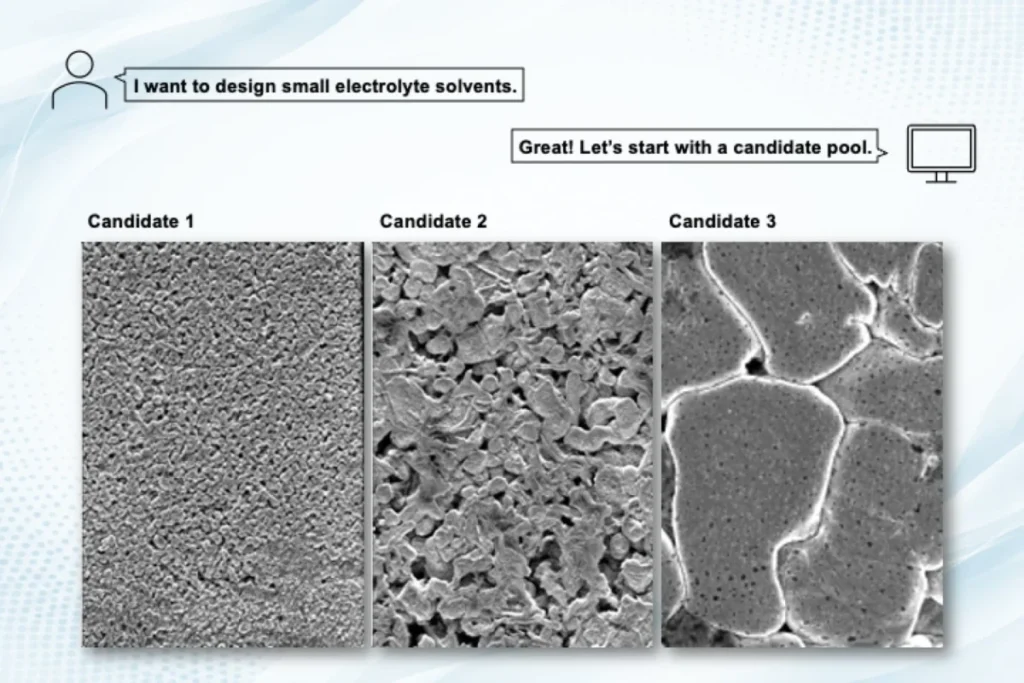
Chia-Wei Hsu, an MIT PhD student in materials science and engineering, played a pivotal role in this discovery phase. He developed an AI-guided algorithm that, within a mere 24 hours, designed an astonishing 100,000 candidate molecules on his computer. Hsu then meticulously filtered this vast pool down to 200 promising candidates by applying stringent technical criteria, including structural similarity to the benchmark molecule and comparable electronic properties. From this refined list, 27 representative candidates, spanning the full spectrum of possibilities, were selected for rigorous experimental testing.
"We tested them all under the same conditions to make it a fair, head-to-head competition," Chen stated. The results were decisive, with one solvent emerging as a clear frontrunner. This winning molecule, christened DMFSA (N,N-dimethylformamide sulfonamide), proved to be both the smallest and the most effective in achieving the desired balance of properties.
Expert Acclaim and Future Directions
The significance of this research has been recognized by the broader scientific community. Jinhyuk Lee, an associate professor of materials engineering at McGill University, who was not involved in the study, commented on its impact. "This work addresses one of the most persistent challenges in battery research: improving battery performance at high charging and discharging rates without sacrificing long-term stability," Lee observed. "By carefully tailoring the size of solvent molecules, the authors demonstrate a new design strategy that could enable lower-cost, higher performance batteries."
The MIT team is not resting on their laurels. A new phase of research is already underway, aiming to discover even more superior solvents. The methodology remains similar, but this time, DMFSA serves as the new starting point for molecular exploration. Chen expressed optimism about the potential of these ongoing efforts. "The new solvents they are uncovering could eventually lead to rechargeable sodium-metal batteries that combine low-cost, abundant materials with fast charging and high-power performance, opening the door to broader energy storage applications."
The overarching objective of this research extends beyond the specific advancement of sodium-metal batteries. The authors emphasize their intention to introduce a novel paradigm for electrolyte design, one that leverages solvent size and molecular similarity as primary guiding principles. In this context, sodium-metal batteries serve as a powerful model system for demonstrating a more general design philosophy applicable to a wide array of battery technologies.
"Because the concept is broadly applicable," Professor Lee further commented, "its impact could extend well beyond sodium batteries and influence the design of a wide range of future energy storage technologies." This broader applicability underscores the foundational nature of the MIT team’s contribution.
Broader Implications and Support
The implications of this research are far-reaching. A successful transition to more abundant and cost-effective battery chemistries like sodium-metal could significantly accelerate the decarbonization efforts of the transportation sector and bolster the reliability of renewable energy grids. By mitigating reliance on geographically concentrated and geopolitically sensitive materials, this work also contributes to enhanced energy security.
The research was made possible through crucial financial support, including a grant from the National Research Foundation of Korea, funded by the government of Korea, and a graduate research fellowship from the U.S. National Science Foundation. Furthermore, access to state-of-the-art characterization equipment at the MIT.nano Characterization Facilities was instrumental in achieving these groundbreaking results.
As the world continues its ambitious energy transition, innovations like the one spearheaded by Professor Li’s team at MIT are not just incremental improvements; they represent fundamental shifts that promise to reshape the future of energy storage, making it more sustainable, accessible, and powerful for generations to come. The journey from laboratory discovery to widespread commercial application is often long and complex, but the recent findings in Joule mark a significant and highly promising stride forward.